Kinosaki Onsen Fireworks
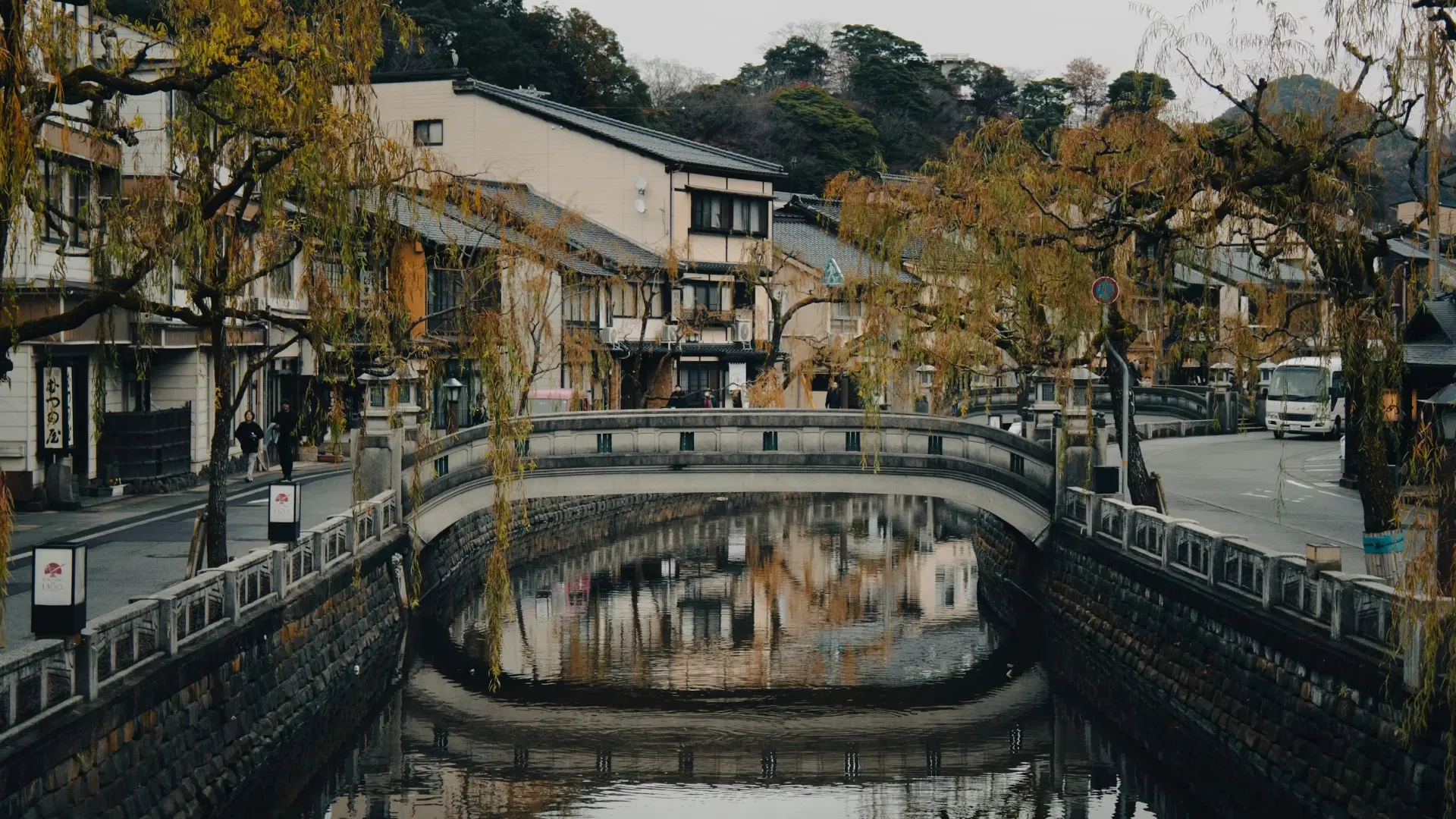
城崎温泉花火大会The summer fireworks at Kinosaki Onsen constitute one of the most intimate pyrotechnic experiences in Japan, their beauty amplified by the setting: a narrow river valley enclosed by forested mountains, the explosions of color reflected in the waters of the Otani River and in the seven public bathhouses whose steaming surfaces catch the light of each burst. Unlike the massive municipal fireworks displays of Tokyo and Osaka, where hundreds of thousands of spectators gather along riverfronts to watch industrial-scale pyrotechnics, the Kinosaki fireworks are scaled to the town's dimensions, their modest number of shells producing an effect that is poetic rather than overwhelming, the bursts unfolding above a landscape that is itself the primary subject of beauty.
The fireworks are launched from positions near the river that flows through the center of town, and the proximity of the launch sites to the viewing areas means that the shells explode almost directly overhead, their colors and shapes filling the sky from horizon to horizon rather than appearing as distant points of light. The sound is correspondingly close: the percussive boom of each launch, the crackling sizzle of the ascending shell, and the thunderous report of the explosion arrive as physical sensations as much as auditory ones, the vibrations felt in the chest and through the soles of the feet standing on the riverside paths.
The integration of the fireworks with Kinosaki's bathing culture creates an experience unique to this town. Many visitors watch the display from the windows of their ryokan or from the outdoor baths of the public bathhouses, the combination of warm mineral water, cool night air, and the cascade of color above producing a sensory synthesis that no other setting can replicate. The tradition of walking between bathhouses in yukata and geta, the town's year-round evening ritual, acquires an additional dimension during the fireworks nights, the bathers pausing on bridges and along the willow-lined riverbanks to watch the sky ignite before continuing to the next sotoyu.
History & Significance
Summer fireworks, or hanabi, have been a part of Japanese cultural life since the Edo period, when pyrotechnic displays were mounted along rivers and in the grounds of temples and shrines as both entertainment and spiritual observance, the explosions believed to ward off evil spirits and the diseases that plagued the hot summer months. Kinosaki's fireworks tradition developed within this broader cultural framework, the town's summer season, when visitors sought the cooling combination of mountain air and thermal bathing, providing the natural occasion for nocturnal celebration.
The modern fireworks program at Kinosaki evolved during the twentieth century as the town's tourism infrastructure matured and the desire to provide summer visitors with evening entertainment beyond the traditional sotoyu-meguri grew. The fireworks were calibrated to the town's character: smaller than the massive urban displays, more frequent throughout the August season, and designed to complement rather than compete with the existing pleasures of the onsen town. This restraint in scale has proven to be the fireworks' greatest asset, the intimacy of the display creating a quality of experience that the spectacular but impersonal urban events cannot match.
The continuation of the summer fireworks through periods of economic difficulty and social change testifies to the community's understanding that the tradition serves a function beyond entertainment. The fireworks mark the height of summer, the season when the town is most alive with visitors and when the evening atmosphere of yukata, lanterns, and warm water reaches its fullest expression. The display is an exclamation point in the seasonal calendar, a moment of collective joy that punctuates the quieter rhythms of the town's daily life.
What to Expect
The Kinosaki fireworks are launched on multiple evenings throughout August, typically with larger displays on designated dates and smaller shows on intervening nights. The schedule varies by year and is announced by the town's tourism association in advance of the summer season. The larger displays feature several hundred shells launched over approximately thirty minutes, while the smaller shows offer briefer but equally beautiful interludes of light and sound.
The viewing experience begins with the pre-fireworks atmosphere: the town's streets filling with yukata-clad visitors moving between bathhouses and restaurants, the paper lanterns of the ryokan glowing along the river, and the gradual darkening of the sky above the mountain ridges that frame the valley. As the first shell launches, the town falls briefly silent before the explosion draws a collective intake of breath, and from that moment the display proceeds in a rhythm that alternates between single, carefully placed shells whose colors unfold like opening flowers and rapid sequences of multiple launches whose overlapping bursts fill the sky with a complexity of color and shape that exceeds what any individual shell could achieve.
The most rewarding viewing positions are along the Otani River, where the water reflects each explosion in a shimmering double image, and on the bridges that cross the river at intervals, where the viewer stands suspended between the reflected fireworks below and the real ones above. The outdoor baths of Satono-yu and Mandara-yu, if one can time one's sotoyu circuit to coincide with the display, offer the supreme experience: immersion in hot spring water while fireworks explode overhead, the contrast between the water's warmth and the night air's coolness matched by the contrast between the bath's enclosure and the sky's infinite openness.