Awaji Island
淡路島Awaji Island occupies a singular position in Japanese mythology and geography: it is the first land created by the gods. According to the Kojiki, Japan's oldest surviving chronicle, the divine couple Izanagi and Izanami stirred the primordial ocean with a jeweled spear, and the drops that fell from its tip formed Onogoro-jima, the self-forming island that became Awaji, from which they subsequently created the remaining islands of the Japanese archipelago. This creation myth is not treated as a quaint legend but as a living element of the island's identity, commemorated at the Izanagi Shrine in the island's northern district, where the mythological founders are worshipped in one of Japan's oldest Shinto shrines.
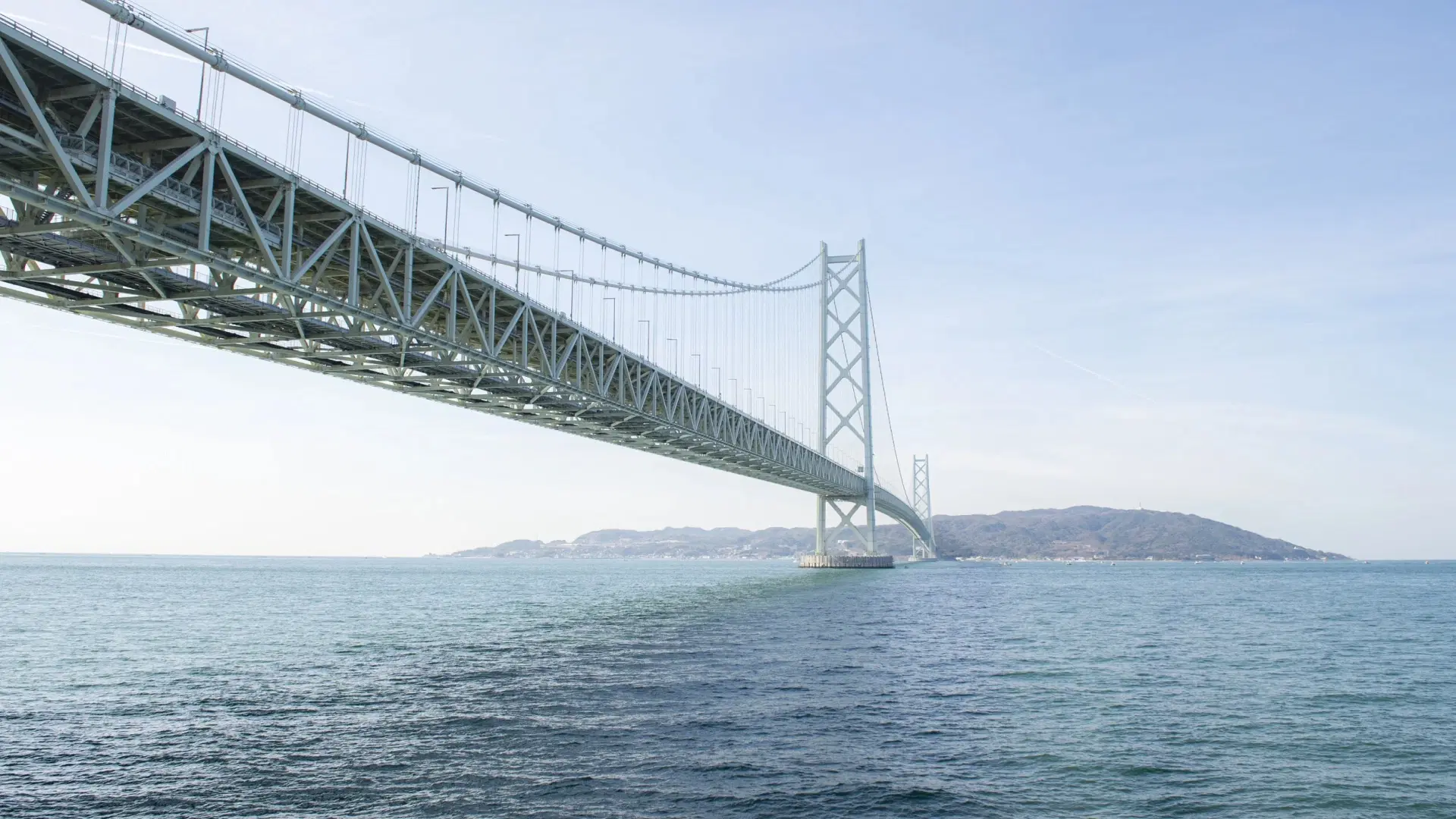
The island sits in the Seto Inland Sea between Honshu and Shikoku, its position at the eastern entrance to this sheltered waterway making it a nexus of maritime trade and cultural exchange throughout Japanese history. The Akashi Kaikyo Bridge, completed in 1998 and spanning nearly four kilometers from the island's northern tip to Kobe, is the longest suspension bridge in the world and has transformed Awaji from an island accessible only by ferry into a destination reachable by car within minutes of the Kansai metropolitan area. Yet the bridge has not urbanized Awaji; the island retains a rural character whose pastoral landscapes, fishing villages, and agricultural rhythms stand in stark contrast to the density of the mainland visible from its shores.
The island's cultural depth extends beyond mythology into the performing arts. Awaji Ningyo Joruri, a puppet theater tradition distinct from but related to the bunraku of Osaka, has been performed on the island for over 500 years, its troupes maintaining a repertoire and performance style that preserves elements lost in the urban evolution of the mainland tradition. The puppets are larger than their Osaka counterparts, the performance style more vigorous and emotionally direct, and the settings in which they are performed, including dedicated puppet theaters and outdoor shrine stages, connect the art to the agricultural and religious life of the community in ways that institutional theaters cannot replicate.
Awaji Island occupies a singular position in Japanese mythology and geography: it is the first land created by the gods.
Highlights
The Naruto whirlpools, formed by the tidal currents that surge through the narrow strait between Awaji's southern tip and Shikoku, are a natural phenomenon of mesmerizing power. The whirlpools form when the massive volume of water moving between the Pacific Ocean and the Inland Sea is forced through the Naruto Strait, creating vortices that can reach twenty meters in diameter during spring tides. Observation boats navigate among the whirlpools, approaching close enough for passengers to see the spiraling water and feel the turbulence through the hull, while the Uzu no Michi walkway, a glass-floored promenade suspended beneath the Onaruto Bridge, provides aerial views of the vortices churning below.
Awaji Yumebutai, designed by architect Ando Tadao on a hillside scarred by the excavation of fill material used to construct Kansai International Airport, transforms environmental damage into architectural meditation. The complex comprises a conference center, hotel, botanical garden, memorial, and a series of water gardens and terraced landscapes whose geometric precision imposes human order on the irregular contours of the excavated hillside. The Hyakudan-en, a garden of one hundred terraces cascading down the slope, each planted with different species, is Ando's most dramatic landscape intervention, the concrete geometry of the steps and channels framing the organic profusion of the plantings in compositions that change with each season.
The Izanagi Shrine, one of the oldest Shinto shrines in Japan, provides a spiritual encounter with the creation mythology that defines Awaji's cosmic significance. The shrine's forested grounds, its torii gates weathered to silver by centuries of sea air, and its main hall whose restrained architecture reflects the Shinto aesthetic of natural materials and simple forms create an atmosphere of age and reverence that more famous shrines, burdened by tourism infrastructure, have sacrificed to accessibility.
Culinary Scene
Awaji's culinary identity begins with the onion, a claim that might seem modest until one tastes an Awaji onion at the peak of its spring harvest and discovers a sweetness and juiciness that transforms the humble allium into something approaching a delicacy. The island's mild climate, sandy soil, and sea breezes create growing conditions that produce onions of exceptional sugar content, and restaurants across Awaji serve them in preparations that range from raw slices dressed with nothing but a splash of soy sauce to slow-roasted whole onions whose caramelized flesh dissolves on the tongue. The onion's dominance is so complete that it appears in the island's curry, its burgers, its soups, and even its desserts, each preparation a testament to the Japanese principle that the finest ingredients require the least intervention.
The surrounding waters provide a marine pantry of remarkable quality. Shirasu, the tiny translucent whitebait harvested from the strait between Awaji and the mainland, is served raw in bowlfuls over rice, its fresh, oceanic flavor a concentrated expression of the sea itself. The octopus caught off the island's western coast, firmed by the strong tidal currents in which it lives, is prized for a texture and sweetness that distinguish it from octopus harvested in calmer waters. Tai (sea bream), fugu (blowfish) in winter, and the various shellfish of the Inland Sea appear on restaurant menus and in the seafood markets that dot the island's coastal villages.
Awaji beef, raised on the island's pastures with the same Tajima bloodline that produces Kobe beef, offers a lesser-known but equally impressive expression of Hyogo Prefecture's cattle-raising heritage. The island's grass-fed animals produce beef whose marbling, while less extreme than the grain-finished Kobe product, carries a more complex, grassy flavor that many connoisseurs prefer.
Ryokans in Hyogo
There are no ryokans in our guide listed in Awaji Island. See our selection across Hyogo.
View ryokans in Hyogo