Himeji
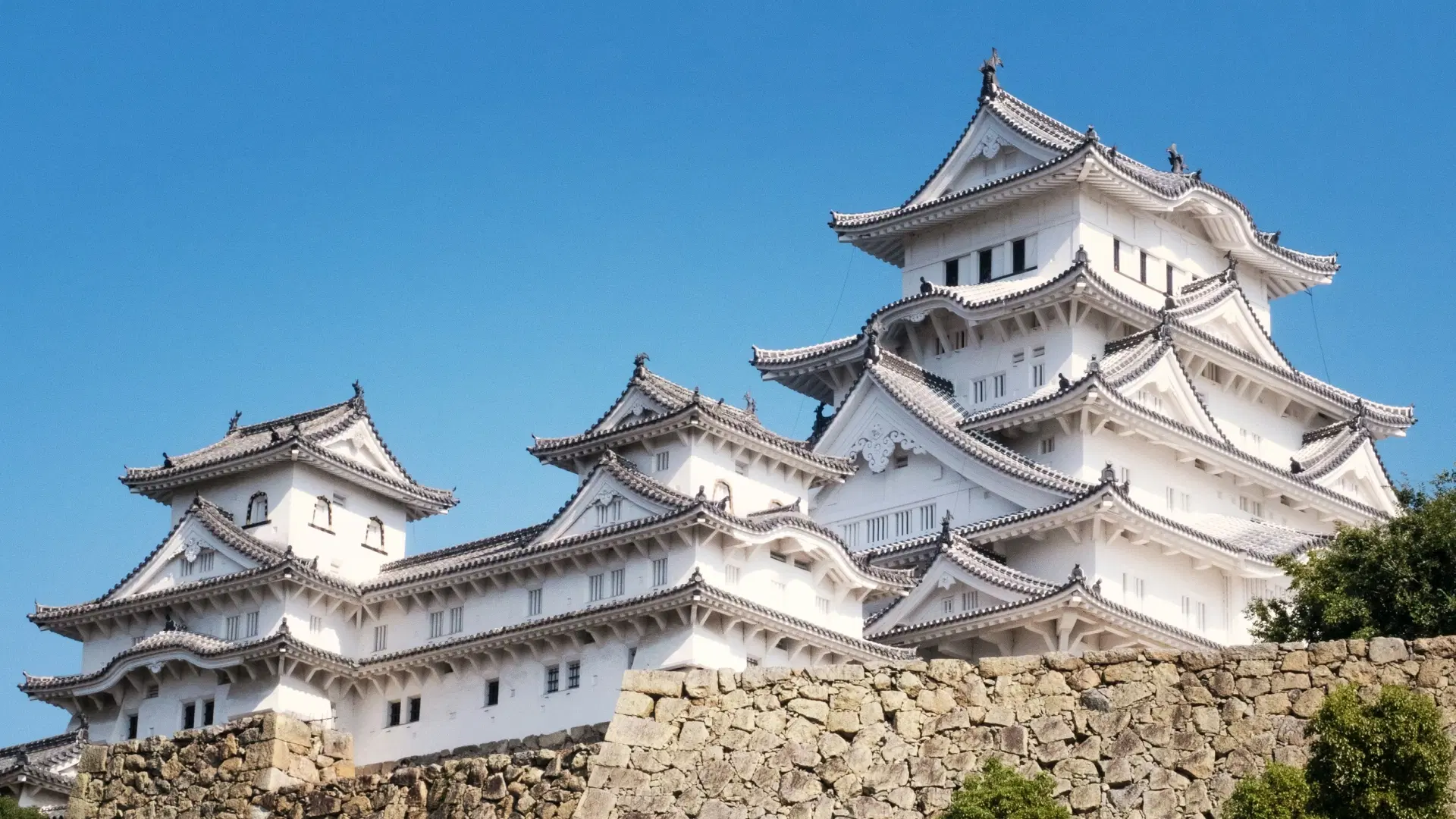
姫路Himeji exists in the service of its castle, and the castle, in turn, defines not merely the city's skyline but its spiritual geography. Himeji Castle is the finest surviving example of Japanese castle architecture, a designation that is not a matter of opinion but of observable fact: it is the largest, the most complex, the best preserved, and the most beautiful of the twelve original castles that survive with their main keeps intact, and its UNESCO World Heritage inscription in 1993, among the first in Japan, recognized what generations of Japanese had already understood. The castle's white plastered walls and tiered rooflines, rising above the city from a hilltop that provides natural elevation, have earned it the sobriquet Shirasagijo, the White Heron Castle, and the comparison is exact: seen from a distance, particularly against a sky of winter grey or spring blue, the castle does suggest a great bird in the moment before flight, its wings spread in a gesture that is simultaneously powerful and weightless.
The castle's survival is itself a story of improbable fortune. Completed in its present form in 1609 by Ikeda Terumasa, the castle was never besieged, never burned, never dismantled by Meiji-era demolition orders, and never struck by the firebombs that destroyed the castles of Osaka, Nagoya, Hiroshima, and dozens of other cities during the Second World War. American bombing raids devastated the city around it, but an incendiary bomb that landed on the upper floor of the main keep failed to detonate, a piece of luck that preserved not just a building but the architectural knowledge embedded in its construction: the carpentry joints, the defensive innovations, the aesthetic decisions that make it possible to study Himeji Castle not as a reconstruction but as the original object, its timbers and plaster and stone walls continuous with the hands that placed them four centuries ago.
For the contemporary visitor, Himeji offers the rare experience of encountering a Japanese castle as its builders intended it to be encountered. The approach from the main gate through a series of progressively narrowing passages, the defensive logic of the layout revealing itself as one climbs through gates designed to slow and confuse attackers, the sudden openness of the upper floors where the panorama of the Harima Plain stretches to the horizon: these are not reconstructed experiences but original ones, the spatial narrative of the castle unaltered since the Edo period.
Himeji exists in the service of its castle, and the castle, in turn, defines not merely the city's skyline but its spiritual geography.
Highlights
The castle complex itself demands the greater part of a visit, its scale and complexity rewarding unhurried exploration. The main keep, or tenshu, rises five stories externally but contains six floors internally, a discrepancy created by hidden floors designed for defensive storage and troop concealment. The ascent through the keep is accomplished via steep wooden staircases whose narrowness and gradient increase with each floor, the experience of climbing them a physical reminder that this was a military structure designed to be difficult to penetrate. The uppermost floor, reached after a climb that leaves modern visitors breathless, opens onto a panoramic viewing platform from which the defensive logic of the castle's placement becomes clear: the hilltop commands views in every direction, and the approaching roads and river crossings that an attacking army would need to use are all visible.
The Nishinomaru, the western enclosure that once housed the private quarters of the castle lord's family, provides a complementary experience. The long corridor connecting the quarter's rooms, stretching approximately 240 meters along the castle's western wall, offers views of the main keep from angles that reveal the castle's most photogenic face, the white walls and grey tile rooflines stacked in diminishing tiers against the sky. The corridor's rooms, stripped of their original furnishings but retaining their spatial proportions, convey the scale of domestic life within a fortress, the contrast between martial purpose and residential refinement that characterizes the finest Japanese castle architecture.
Koko-en, a set of nine traditional gardens constructed in 1992 on the site of the former samurai residences adjacent to the castle, provides a designed landscape that complements the castle's architectural beauty with botanical and horticultural art. Each garden explores a different theme and style, from the pond-and-hill compositions of the main garden to the tea ceremony garden to the bamboo garden, the collection offering a condensed survey of Japanese garden traditions that serves as both aesthetic pleasure and educational resource.
Culinary Scene
Himeji's culinary landscape is anchored by the Harima Plain's agricultural bounty and the Seto Inland Sea's marine harvest. Anago, the conger eel caught in the waters off the Harima coast, is the city's signature ingredient, its preparation here favoring grilling over the steaming more common in Edo-style preparation, the charcoal heat crisping the skin while the flesh remains tender and sweet. Anago-meshi, grilled eel served over rice in a lacquered box, is Himeji's contribution to the canon of Japanese regional rice dishes, the eel's delicate flavor distinguished from the richer, fattier taste of freshwater unagi.
Himeji oden, a style of the simmered fish cake and vegetable stew found throughout Japan, distinguishes itself through the use of a ginger soy sauce for dipping, the heat of the ginger cutting through the richness of the broth-soaked ingredients with a sharpness that refreshes the palate between bites. The dish is served at dedicated oden restaurants and at the yatai stalls that appear in the streets around the castle during festival seasons, its warmth and simplicity embodying the comfort-food tradition that Himeji shares with the broader Kansai culture.
The Harima Plain's rice, combined with the region's clean water sources, supports a sake brewing tradition of quiet distinction. Several small breweries in the Himeji area produce jizake local sake whose character reflects the terroir of the surrounding countryside, their output consumed primarily within the region and therefore unfamiliar to most visitors, who discover in these local bottles a freshness and specificity that mass-produced brands cannot offer.