Awaji Island Naruto Whirlpool Boat Season
淡路島鳴門渦潮観潮船The Naruto whirlpools are among the most powerful tidal phenomena on Earth, and the spring months bring them to their most dramatic expression. Where the Seto Inland Sea meets the Pacific Ocean through the narrow Naruto Strait between Awaji Island and Shikoku, the collision of tidal currents moving at speeds exceeding 20 kilometers per hour generates whirlpools that can reach 20 meters in diameter, their spinning forms appearing and dissolving across the surface of the strait in a display of hydraulic force that has inspired awe, mythology, and ukiyo-e masterpieces for centuries. The sightseeing boats that operate from the Awaji Island side carry visitors directly into this turbulence during the peak spring tide season, the experience of approaching and then entering the field of whirlpools providing an encounter with natural power that no photograph or film can adequately convey.
The spring tide period, when the gravitational alignment of sun and moon produces the most extreme tidal differentials, generates the largest and most numerous whirlpools of the year. The strait becomes a theater of competing currents, the water's surface broken by swirling vortices, standing waves, and chaotic turbulence that transforms the narrow passage into something resembling a river rapid of oceanic scale. The boats navigate through this chaos with a practiced confidence that allows passengers to observe the whirlpools from close range, the vessels rising and falling on the disturbed water while the spinning forms open and close around them.
The Naruto whirlpools occupy a significant place in Japanese culture and art. Hiroshige's famous woodblock print of the whirlpools, with its dramatic spiral forms and the tiny boats navigating among them, established an image that has shaped the popular imagination of the strait for two centuries. The experience of the sightseeing boat confirms Hiroshige's essential accuracy while adding the dimensions of sound, motion, and the visceral awareness of the water's power that no visual representation can include. The roar of the current, the tilting of the deck, and the sight of the water spiraling downward into a vortex whose center is visibly lower than its rim produce an experience that is as much physical as visual.
The Naruto whirlpools are among the most powerful tidal phenomena on Earth, and the spring months bring them to their most dramatic expression.
History & Significance
The Naruto whirlpools have been observed and documented since at least the eighth century, when the Nihon Shoki and Man'yoshu recorded the strait's powerful currents with a mixture of practical warning and poetic admiration. The whirlpools' cause, the extreme tidal differential created by the narrow strait connecting two bodies of water with different tidal cycles, was understood intuitively by the fishing communities of Awaji and Shikoku long before the physics of tidal dynamics was formally described. These communities developed navigation techniques for crossing the strait safely, their knowledge of the tidal schedule and the location of the most dangerous currents constituting a body of maritime expertise passed through generations of practical necessity.
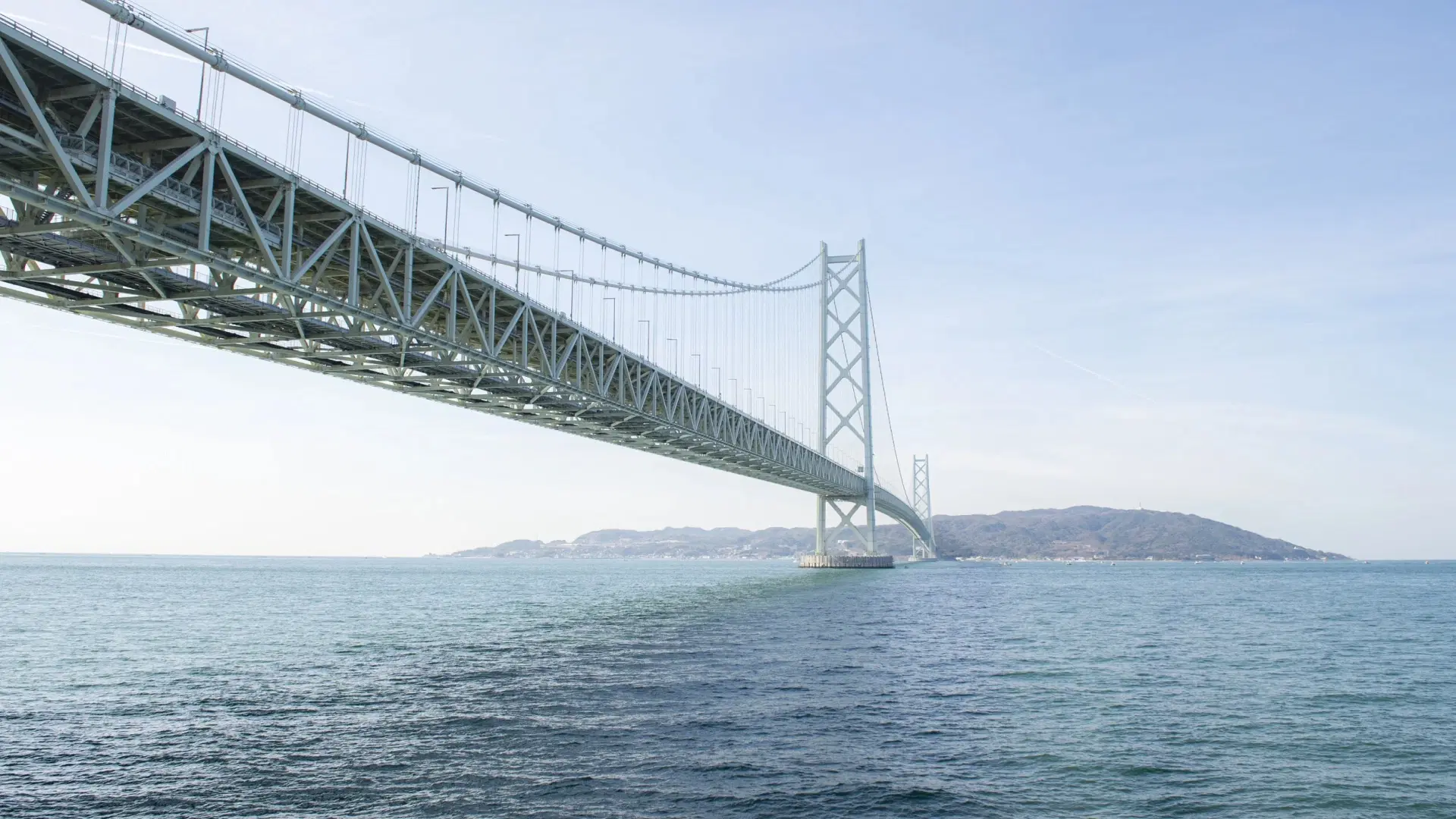
The development of whirlpool sightseeing as a tourist activity began in the postwar period, when the construction of purpose-built observation boats allowed visitors to approach the phenomena safely. The opening of the Onaruto Bridge in 1985, connecting Awaji to Shikoku across the strait, added an aerial perspective through the Uzu no Michi walkway built within the bridge's structure, but the boat experience remains the definitive encounter, the proximity to the water's surface and the physical sensation of the boat's movement through the disturbed strait providing an immediacy that observation from above cannot match.
What to Expect
The sightseeing boats depart from Fukura Port on the southern tip of Awaji Island, with departures timed to coincide with the peak tidal flows that generate the largest whirlpools. The voyage typically lasts approximately one hour, including the transit to the strait and the time spent among the whirlpools. The boats range from large, stable vessels with enclosed observation decks to smaller craft that sit closer to the water and provide a more intimate, if more turbulent, encounter with the currents.
The approach to the whirlpool zone is a gradual intensification of the water's disturbance. The calm harbor gives way to increasingly agitated seas as the boat enters the strait, the surface showing first ripples, then standing waves, then the distinctive circular patterns that announce the presence of active vortices. The captain navigates toward the most prominent whirlpools, and the boat passes close enough to observe the water's surface curving downward into the spinning center, the spiral motion visible in the foam and debris carried on the current. On the strongest spring tides, multiple whirlpools form simultaneously across the strait, their competing rotations creating a landscape of turbulence that stretches from shore to shore.
The Uzu no Michi walkway within the Onaruto Bridge provides a complementary perspective. Located 45 meters above the strait, the walkway's glass-floored observation points allow visitors to look directly down onto the whirlpools, the aerial view revealing the geometric perfection of the spiral forms and the contrast between the spinning water and the calmer surface surrounding each vortex. The combination of the boat experience from below and the bridge view from above provides a comprehensive understanding of the phenomenon that neither perspective alone can achieve.