Arima Onsen
有馬温泉Arima Onsen is the oldest documented hot spring in Japan, its waters referenced in the Nihon Shoki, the eighth-century chronicle of Japanese history and mythology, and its therapeutic reputation established so early that it belongs to the foundational narrative of Japanese civilization itself. The three deities of medicine, Okuninushi, Sukunahikona, and Yakushi Nyorai, are said to have discovered the springs, and the historical record confirms that emperors, monks, warriors, and scholars have bathed here in an unbroken chain of visitation that stretches back at least 1,400 years. Toyotomi Hideyoshi, the warlord who unified Japan in the sixteenth century, was Arima's most famous patron, visiting the springs repeatedly and funding the construction of bathhouses and infrastructure whose legacy shapes the town to this day.
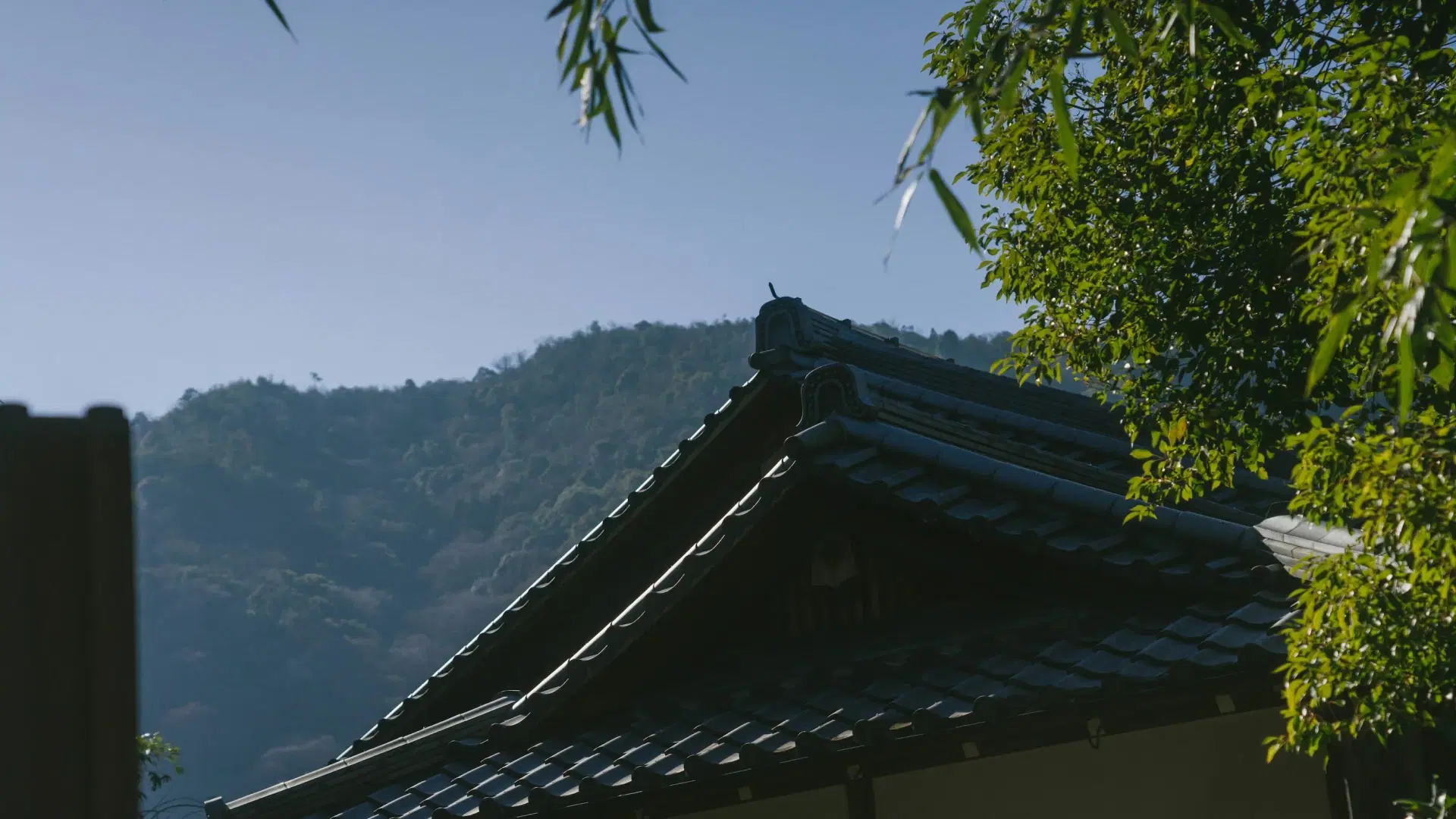
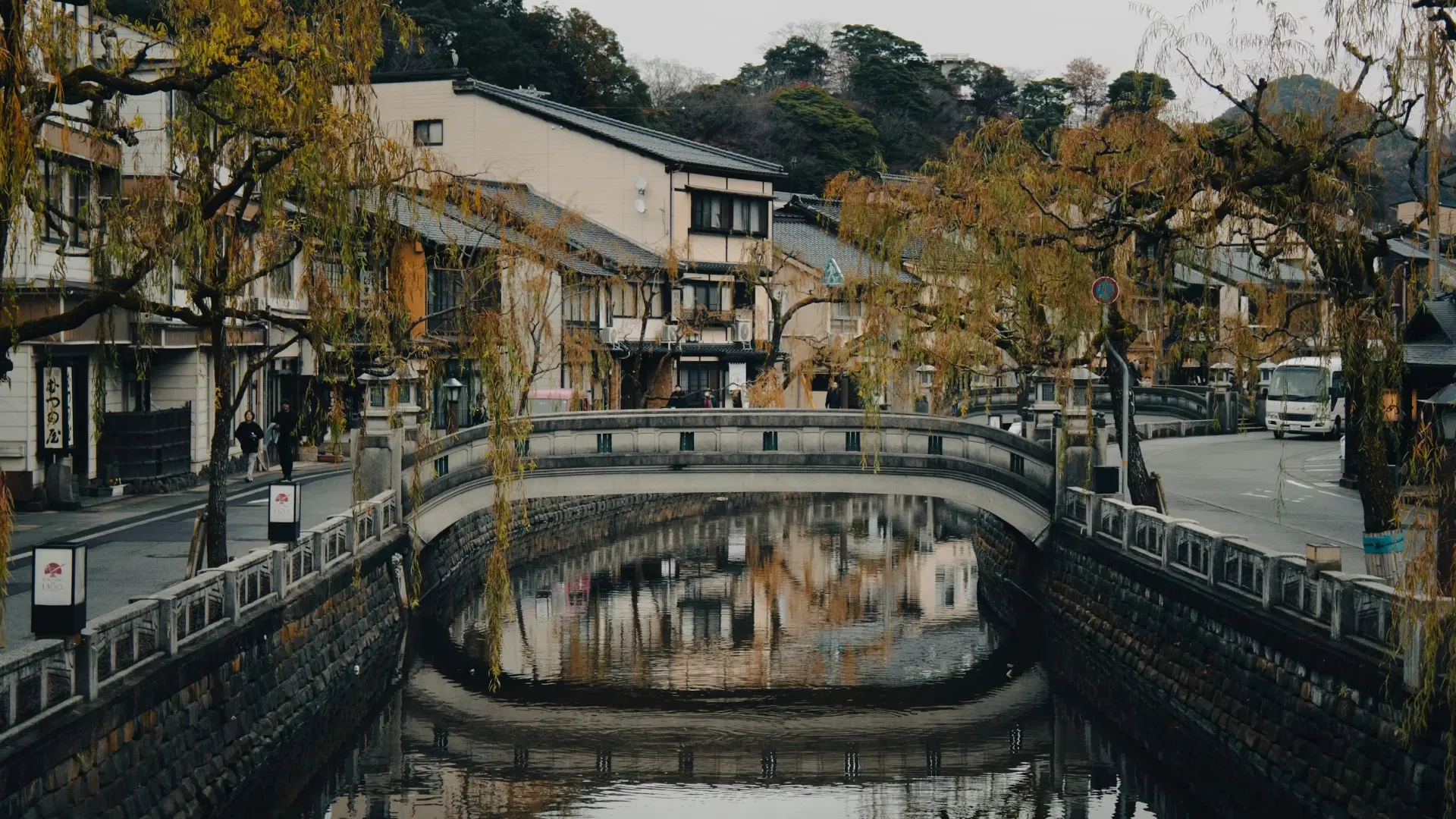
The town occupies a steep valley on the northern slopes of Mount Rokko, its narrow streets climbing the hillside in a labyrinth of stone steps, wooden ryokan facades, and temple gates that compress centuries of architectural history into a walkable area of extraordinary density. The geography is vertical rather than horizontal, the buildings stacked against the mountainside in a way that gives each ryokan a different relationship to the valley and a different view of the forested slopes above. This compactness is Arima's gift: everything is close, every turn reveals a new perspective, and the sense of being enclosed by mountains and history produces an intimacy that larger, more spread-out onsen towns cannot replicate.
Arima's waters are distinguished by their chemical diversity, a rarity among Japanese hot springs. The town produces two distinct types of thermal water: kinsen, the "gold spring" whose iron-rich, sodium-chloride waters emerge at temperatures exceeding 98 degrees Celsius and whose reddish-brown color gives the water its name; and ginsen, the "silver spring" whose clear, carbonated, and radium-containing waters offer a completely different bathing experience. The geological conditions that produce these two chemically distinct springs in such close proximity are unusual, the result of deep faulting in the Rokko granite that brings water from different mineral strata to the surface within meters of each other.
Arima Onsen is the oldest documented hot spring in Japan, its waters referenced in the Nihon Shoki, the eighth-century chronicle of Japanese history and mythology, and its therapeutic reputation established so early that it belongs to the foundational narrative of Japanese civilization itself.
Highlights
The Kin no Yu and Gin no Yu, the two public bathhouses that serve as Arima's communal bathing centers, provide the most direct encounter with the town's distinctive waters. Kin no Yu, the gold spring bathhouse, offers immersion in the iron-rich water whose opacity and reddish-brown color are startling to first-time visitors, the water so mineral-dense that it stains towels and skin with a ferrous residue that takes days to wash away. The sensation of bathing in kinsen is heavier and more enveloping than clear spring water, the mineral content giving the water a viscosity and warmth that penetrate deeply into muscle and joint. Gin no Yu, the silver spring bathhouse, provides the contrasting experience of clear, lightly carbonated water whose effervescence can be felt as a gentle tingling on the skin, the dissolved carbon dioxide creating a sensation of being bathed in a liquid that is somehow more alive than ordinary water.
The Zuihoji Temple and its surrounding park, dedicated to Toyotomi Hideyoshi, who died in 1598, preserve the memory of Arima's most powerful patron in a setting of mossy stone, ancient trees, and the quiet that settles over memorial spaces. The temple grounds contain the remains of Hideyoshi's wife, Nene, who continued to visit Arima after his death, and the garden reflects the tea ceremony aesthetic that both Hideyoshi and his tea master, Sen no Rikyu, championed. The nearby ruins of Hideyoshi's bathhouse, excavated in the 1990s, revealed the scale and sophistication of the bathing facilities he constructed, including a steam bath whose engineering anticipates modern spa design by four centuries.
The Tosen Shrine, founded in honor of the three deities credited with discovering Arima's springs, hosts the annual Arima Grand Tea Ceremony in November, an event that connects the town's bathing heritage with the tea ceremony tradition that flourished here under Hideyoshi's patronage. The ceremony, conducted in the outdoor setting of the shrine grounds, draws tea practitioners from across the Kansai region and creates a moment of intersection between the liquid arts of tea and bathing that is unique to Arima.
Culinary Scene
Arima's culinary tradition is shaped by the mountain environment and by the provisions culture that developed to serve the streams of visitors who have been arriving for over a millennium. Tansan senbei, crisp rice crackers made with the carbonated spring water that bubbles from the town's ginsen sources, are Arima's most iconic food souvenir, their light, crackly texture and subtle mineral flavor the edible expression of the springs themselves. The crackers are baked in traditional molds by shops whose recipes have been refined over generations, the process visible through shop windows where the batter is poured, pressed, and cooked in a rhythm that has not changed in a century.
The ryokan of Arima serve kaiseki meals that draw upon both the mountain ingredients of the Rokko range and the marine harvest of the Inland Sea and Japan Sea coasts, the town's position between two bodies of water providing a dual pantry. Wild boar from the Rokko forests appears in winter hot pots whose rich, gamey broth is a seasonal counterpart to the mineral-rich bathwater. Kobe and Tajima beef, produced in the surrounding prefecture, features prominently on ryokan menus, the proximity to the source ensuring a freshness and quality that even the finest Tokyo restaurants cannot guarantee. Mountain vegetables, including wild ferns, bamboo shoots in spring, and mushrooms in autumn, provide the seasonal vegetable courses that punctuate the kaiseki sequence with flavors of the forest floor.
The town's confectionery tradition, sustained by the tea culture that Hideyoshi fostered, produces wagashi whose quality reflects centuries of refinement. Arima's specialty shops offer tansan manju, steamed buns made with carbonated spring water whose dough achieves an airy lightness that ordinary water cannot produce, the filling of sweet bean paste providing the concentrated sweetness that tea ceremony convention demands.
Ryokans in Hyogo
There are no ryokans in our guide listed in Arima Onsen. See our selection across Hyogo.
View ryokans in Hyogo