Hokkaido
北海道Hokkaido exists apart from the rest of Japan: geographically, temperamentally, and aesthetically. The northernmost of the main islands was, until the Meiji era, largely the domain of the indigenous Ainu people, and that sense of frontier still permeates everything: the wide-open dairy pastures of Tokachi, the primordial silence of Shiretoko's old-growth forests, the raw volcanic theater of Daisetsuzan. Where Honshu's landscape is dense with centuries of cultivation, Hokkaido feels unfinished, elemental, as though the earth is still deciding what shape to take.
For the ryokan traveler, this wildness is the point. The island's onsen culture draws directly from its volcanic restlessness: Noboribetsu's Jigokudani belches sulfurous clouds from eleven distinct hot spring sources, while the remote lodges of Tokachidake offer rotenburo perched above a caldera where the only sound is wind and the hiss of geothermal steam. In winter, the landscape becomes something close to otherworldly: Niseko and Furano bury themselves under meters of the lightest powder snow on earth, and the drift ice that locks the Sea of Okhotsk coast each February transforms the shoreline into an Arctic tableau.
Yet Hokkaido is never merely austere. Its brief, incandescent summers flood the Furano lavender fields with color, turn the marshlands of Kushiro into a sanctuary for red-crowned cranes, and bring a warmth to the long evenings that makes the island's izakaya culture (built on incomparable seafood and the honest pleasures of Sapporo beer) feel almost Mediterranean in its conviviality.
Hokkaido exists apart from the rest of Japan: geographically, temperamentally, and aesthetically.
Geography
Hokkaido's terrain is shaped by fire and ice. The Daisetsuzan massif, often called the roof of Hokkaido, anchors the interior with peaks exceeding two thousand meters, their flanks carved by glacial cirques and laced with alpine meadows that bloom in fleeting July profusion. To the east, the Shiretoko Peninsula juts into the Sea of Okhotsk: a UNESCO World Heritage site where brown bears fish for salmon in rivers that tumble through forests of Sakhalin spruce. The Tokachi Plain stretches south in a patchwork of wheat, sugar beet, and dairy farms that feel closer to Scandinavia than to Tokyo.
Caldera lakes punctuate the volcanic landscape: the crystalline cobalt of Mashu-ko, the twin basins of Akan with their colonies of rare marimo algae, and Toya-ko's almost perfect circle reflecting Usu-zan's smoking cone. The coastline oscillates between the dramatic sea cliffs of Shakotan, where the water glows an impossible kelp-filtered blue, and the gentle arcs of sand along the Ishikari coast. In winter, the entire island becomes Japan's snow country par excellence: Niseko's annual fourteen meters of snowfall is merely the most famous expression of a phenomenon that blankets every valley and ridgeline in white silence.
Culture
Hokkaido's cultural identity is one of relative youth and deliberate reinvention. Formally colonized by the Meiji government only in the 1870s, the island carries fewer feudal-era traditions than any other region: no castle towns, no centuries-old shrine festivals in the Kyoto mold. What it possesses instead is a palpable Ainu heritage that is, after long suppression, finally receiving due recognition: the Upopoy National Ainu Museum in Shiraoi opened in 2020 as a landmark act of cultural restitution, and traditional Ainu crafts (intricate embroidery, carved wood prayer sticks called ikupasuy, and the haunting oral poetry of yukar) are increasingly visible in cultural programming across the island.
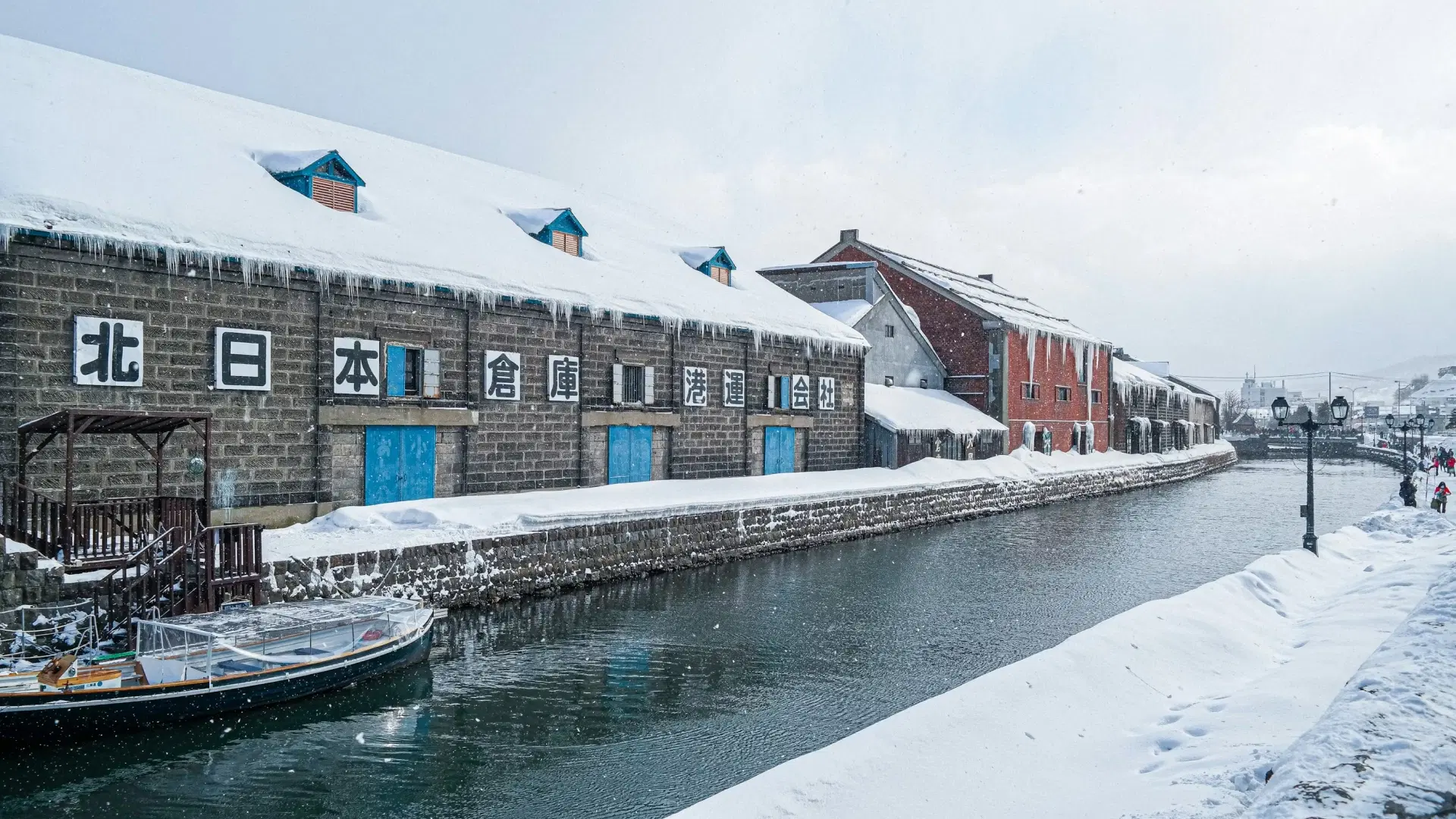
The settler legacy also shaped a character distinct from Honshu: a pragmatic openness, a certain informality, and an agricultural self-sufficiency that expresses itself in farm-to-table dining long before the term existed. Otaru's canal district preserves Meiji-era stone warehouses that speak to the herring-boom prosperity of the late nineteenth century, while Sapporo (planned on a rational grid by American advisors) feels more like a northern European capital than a Japanese city. The Yuki Matsuri, Sapporo's snow festival each February, draws millions, but the quieter pleasures (a glass of Yoichi single malt at the Nikka distillery, a morning at one of Asahikawa's small sake breweries) reveal a region building new traditions with patient, understated ambition.
Cuisine
Hokkaido's culinary reputation rests on an abundance that borders on the absurd. The cold, nutrient-rich waters where the Pacific meets the Sea of Okhotsk produce uni of staggering sweetness, king crab and hairy crab prized across the archipelago, and scallops from Saroma-ko so plump they need no embellishment beyond a whisper of soy. The island supplies much of Japan's dairy (Tokachi butter and cream have an almost cultish following among Tokyo pastry chefs) and its wheat fields yield flour that gives Hokkaido ramen its distinctively springy, full-bodied noodles.
The regional ramen traditions alone justify a journey: Sapporo's rich miso broth, Asahikawa's soy-based double soup layered with lard to insulate against the cold, Hakodate's delicate shio ramen with its clear, kelp-scented base. Genghis Khan (lamb grilled on a domed iron skillet) is the island's communal ritual, best experienced outdoors with a beer in hand. At the finest ryokan, kaiseki here takes on a distinctly northern character: courses built around Hokkaido corn in August, Rishiri kombu dashi of extraordinary depth, and autumn salmon prepared in ways that echo Ainu preservation techniques refined over centuries.