Furano Lavender Festival
富良野ラベンダーまつりThe Furano Lavender Festival is less a single organized event than a season-long celebration of a landscape in bloom, a period during which the rolling hills of central Hokkaido become saturated with the color and fragrance of lavender in quantities that overwhelm the senses with their abundance. The fields, planted across multiple farms in the Furano and Kamifurano area, reach peak bloom in mid-July, when the purple rows stretch to the horizon against a backdrop of the Tokachi and Daisetsuzan mountain ranges, their snow-capped peaks providing a white counterpoint to the violet foreground.
The festival's focal point is Farm Tomita, whose carefully maintained lavender fields have become the most photographed agricultural landscape in Japan. But the experience extends well beyond any single farm. The entire district participates, with roadside stands selling lavender products, local restaurants incorporating lavender into their menus, and smaller farms opening their fields to visitors who seek the beauty without the crowds. The Naka-Furano Lavender Festival, held on a hillside overlooking the town, adds fireworks, live music, and community celebrations to the floral spectacle.
The Furano Lavender Festival is less a single organized event than a season-long celebration of a landscape in bloom, a period during which the rolling hills of central Hokkaido become saturated with the color and fragrance of lavender in quantities that overwhelm the senses with their abundance.
History & Significance
Lavender was introduced to Furano in 1948 by Tadao Okabe of Farm Tomita, who planted the first commercial crops for essential oil extraction. For two decades, the fields served an industrial purpose, their purple bounty distilled into oil for perfumes and soaps. When synthetic lavender oils entered the market in the 1970s, the economic basis for cultivation collapsed, and most Furano farmers abandoned the crop. Okabe and a handful of others persisted, maintaining their fields out of aesthetic conviction rather than commercial logic.
The turning point came in 1976, when a photograph of Farm Tomita's lavender fields was selected for the cover of a Japan National Railways calendar, distributing the image across the country and igniting public fascination with the landscape. Visitors began arriving in numbers that justified the fields' continued existence, and the festival tradition gradually emerged as the town recognized that its lavender heritage had evolved from agricultural commodity to cultural treasure. Today, the lavender season is the economic engine of Furano's summer tourism, a transformation that has secured the survival of a landscape that market forces alone would have erased.
What to Expect
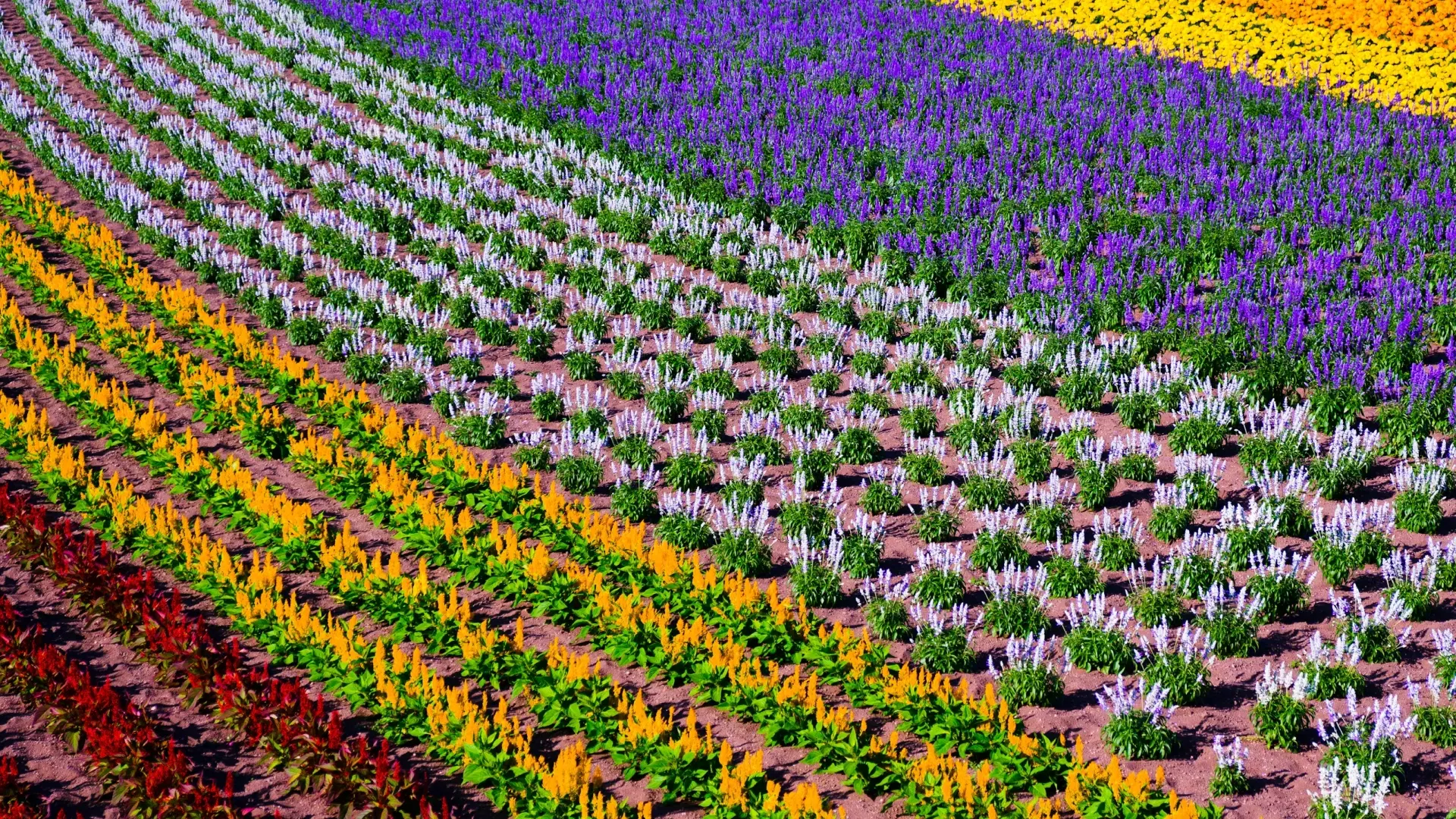
The visual experience is primary and overwhelming. At peak bloom, the lavender fields present an unbroken expanse of purple that modulates in intensity with the variety planted, from the deep violet of Okamurasaki to the paler tones of Hanamo Iwai and the white and pink of non-traditional cultivars. Farm Tomita arranges its fields in flowing rows that follow the hillside contours, creating stripe patterns that are most striking when viewed from the elevated walkways and observation platforms provided for visitors. The fragrance, carried on the warm summer air, is inescapable and genuinely therapeutic, a natural aromatherapy that relaxes with each breath.
Beyond viewing, the festival season offers lavender-themed products and experiences that range from the elegant to the whimsical. Lavender essential oil, distilled on-site at Farm Tomita, is the purest expression of the crop's original purpose. Lavender soft-serve ice cream, a Furano signature, succeeds because the flavor is subtle and floral rather than perfumed. Lavender honey, sachets, soaps, and cosmetics fill the farm shops, alongside seasonal foods that incorporate the herb into unexpected contexts.
The Naka-Furano town festival, typically held in mid-July, adds communal festivities to the floral backdrop. Fireworks launched against the summer twilight sky, taiko drumming performances on outdoor stages, and local food stalls serving Furano's agricultural specialties create an atmosphere that is both celebratory and deeply rooted in the community's identity. The slower pace of the surrounding countryside, where cycling between farms along quiet roads lined with potato fields and dairy pastures offers a physical immersion in the landscape, provides an essential counterpoint to the concentrated beauty of the lavender fields themselves.