Sapporo Snow Festival
さっぽろ雪まつりThe Sapporo Snow Festival is winter made monumental. Each February, the broad avenues of Odori Park are transformed into an open-air gallery of snow and ice sculptures that range from intricate miniatures to architectural constructions the size of buildings, their surfaces carved with a precision that seems impossible for a medium as impermanent as frozen water. The festival draws over two million visitors to Sapporo during its week-long run, making it one of Japan's largest annual events and the single most important cultural expression of Hokkaido's relationship with its defining season.
What distinguishes the Sapporo Snow Festival from other winter celebrations is the ambition and artistry of its constructions. The largest snow sculptures, built by teams from Japan's Self-Defense Forces and civic organizations, can reach heights of fifteen meters and widths exceeding twenty-five meters, reproducing famous buildings, cultural landmarks, and fantastical scenes in compressed snow hauled in by trucks from surrounding areas. The ice sculptures, concentrated at the Susukino site among the entertainment district's neon signs, are carved from crystalline blocks and illuminated from within, their translucency creating effects that shift between the ethereal and the spectacular.
The festival's third site, the Tsudome community venue, offers a more participatory experience with enormous snow slides, snow rafting, and interactive installations designed for families. Together, the three sites create a festival that operates simultaneously as public art exhibition, engineering demonstration, winter carnival, and civic celebration, a week in which the city's identity as a winter capital is affirmed with joyful extravagance.
The Sapporo Snow Festival is winter made monumental.
History & Significance
The Sapporo Snow Festival began in 1950, when six local high school students built snow sculptures in Odori Park as an informal project. The response was enthusiastic enough that the city adopted the concept the following year, and by the mid-1950s the Self-Defense Forces had begun contributing the large-scale constructions that would become the festival's signature. The timing was significant: postwar Sapporo was a city searching for identity and economic purpose, and the festival provided both, transforming the liability of extreme winter into an asset that attracted visitors and national attention.
The festival's international dimension expanded in 1974, when the first International Snow Sculpture Contest invited teams from other countries to compete alongside Japanese sculptors. This addition introduced new aesthetic approaches and techniques that enriched the festival's artistic range, and the competition has since become one of its most compelling elements. The 1972 Winter Olympics, held in Sapporo, provided global exposure that accelerated the festival's growth from a domestic event into an international winter tourism phenomenon. Today, the festival's economic impact on Hokkaido's winter economy is substantial, its role in establishing Sapporo as a winter destination inseparable from the city's contemporary identity.
What to Expect
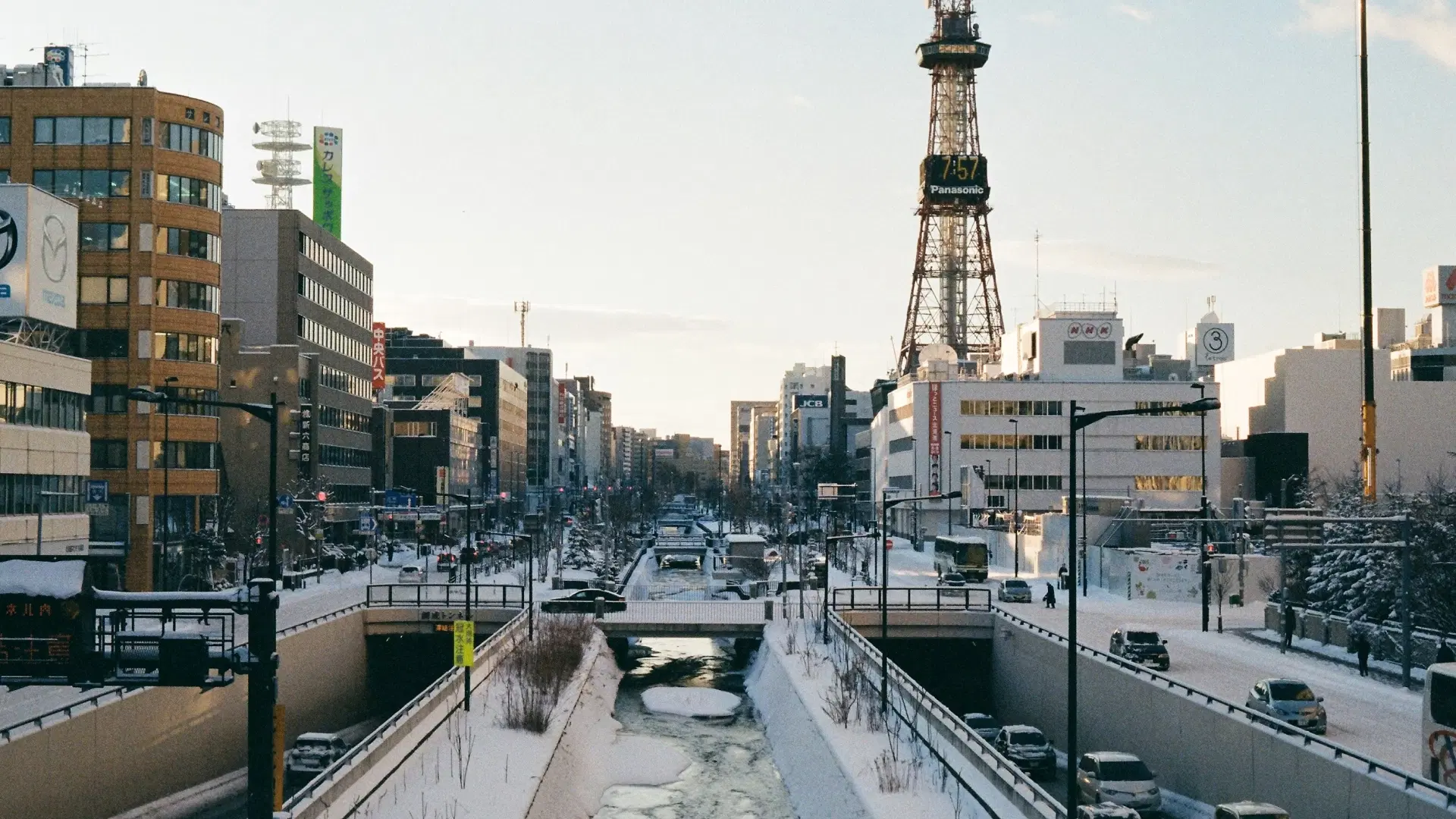
The Odori Park site stretches across thirteen blocks, each hosting different sculptures, stages, and food stalls. The large-scale snow sculptures anchor the eastern and central blocks, their surfaces sometimes serving as projection screens for evening light shows that add color and motion to the static forms. Competition sculptures, smaller in scale but often superior in artistry, occupy dedicated areas where visitors can observe the carving process during the days before the festival's official opening.
The Susukino ice sculpture site operates within the entertainment district, its illuminated carvings displayed along the central median and sidewalks of Ekimae-dori street. The juxtaposition of delicate ice art against the neon signage and nightlife bustle of Susukino creates an atmosphere that is uniquely Sapporo, the refined and the exuberant coexisting without contradiction. Many sculptures incorporate frozen seafood, a Hokkaido specialty that turns crab and fish into elements of transparent still-life compositions.
Visitors should prepare for cold. Temperatures during the festival period average minus four to minus seven degrees Celsius, and evening viewing, when the illumination is most dramatic, requires serious winter clothing. The festival grounds are outdoors and the walking distances significant; layered clothing, insulated boots, and hand warmers are practical necessities rather than optional comforts. The food stalls along Odori Park offer Hokkaido specialties including miso ramen, soup curry, grilled seafood, and Genghis Khan lamb, the eating itself a warming ritual that punctuates the viewing.