Hakodate
函館Hakodate occupies one of the most dramatic geographic positions of any Japanese city, built across a narrow isthmus connecting the mainland to the volcanic headland of Mount Hakodate, its streets climbing the slopes on both sides so that the sea is visible from nearly every elevated point. The city was one of the first Japanese ports opened to foreign trade in 1854, and this early cosmopolitanism left an architectural legacy that makes Hakodate unique in Hokkaido: the Motomachi district's churches, consulates, and merchant houses create a streetscape where Russian Orthodox domes, Gothic Revival spires, and traditional Japanese warehouses coexist with the easy confidence of a place accustomed to cultural mixing.
The city's history is layered with pivotal moments. Goryokaku, the star-shaped Western-style fort completed in 1864, was the site of the final battle of the Boshin War in 1869, where the last loyalists of the Tokugawa shogunate made their stand against the new Meiji government. The fort's geometric perfection, visible from the adjacent observation tower, has become Hakodate's most recognizable symbol, its moat reflecting cherry blossoms in spring and filling with snow in winter. The city's role as a trading port brought Chinese, Russian, and European influences that fused with Japanese traditions to create a culinary and architectural culture found nowhere else on the island.
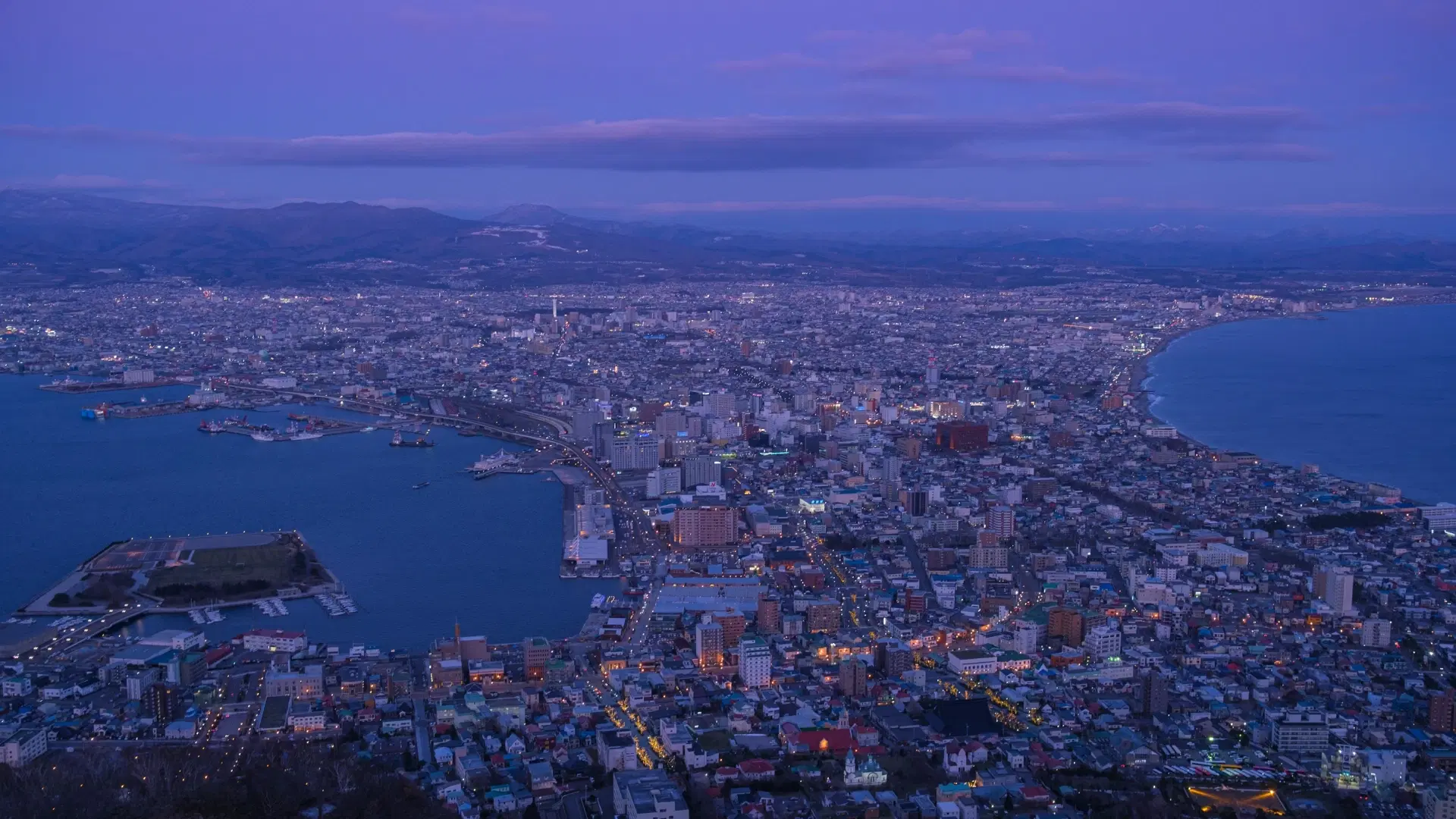
For the contemporary traveler, Hakodate offers an intimacy that Sapporo's scale cannot match. The city is walkable, its major attractions connected by the charming streetcar system that has been running since 1913. The pace is slower, the light softer, the relationship between city and sea more immediate. Morning at the fish market, afternoon in the historic district, evening ascending Mount Hakodate for what has been called one of the three finest night views in the world: this is a city that rewards a simple itinerary executed with attention.
Hakodate occupies one of the most dramatic geographic positions of any Japanese city, built across a narrow isthmus connecting the mainland to the volcanic headland of Mount Hakodate, its streets climbing the slopes on both sides so that the sea is visible from nearly every elevated point.
Highlights
The night view from Mount Hakodate is the city's defining experience, and justifiably so. The ropeway ascends 334 meters to the summit, where the observation platform looks down on the illuminated isthmus, the city's lights tracing the narrow land bridge between two dark expanses of ocean. The hourglass shape of the lit urban area, pinched at the center where the isthmus narrows, creates a visual drama that is genuinely unique. The view is finest in the thirty minutes after sunset, when residual daylight silhouettes the mountains while the city lights intensify below.
Motomachi, the hillside district above the port, is Hakodate's architectural jewel. The Old Public Hall of Hakodate Ward, a colonial-era building painted in blue and yellow, overlooks the harbor from its elevated position. The Russian Orthodox Church, with its distinctive onion domes and bell tower, the Episcopal Church of Japan, and the Roman Catholic Motomachi Church stand within blocks of one another, their varied styles documenting the international community that once flourished here. The stone-paved slopes connecting these buildings to the waterfront below are among the most photogenic streetscapes in Japan.
Goryokaku's star-shaped fort, best appreciated from the 107-meter observation tower adjacent to the park, is surrounded by over 1,600 cherry trees that bloom in late April to early May, making it Hokkaido's most spectacular hanami venue. The park's interior, accessible across the moat by a traditional bridge, contains the restored Hakodate Magistrate's Office and spacious grounds where the geometry of the fortification becomes a sensory experience rather than an aerial abstraction.
Culinary Scene
Hakodate's morning market, Asaichi, is a pilgrimage site for anyone serious about Japanese seafood. Operating since 1945, when fishermen began selling their catch to the public from makeshift stalls near the station, the market now comprises over 250 shops concentrated in an area just steps from JR Hakodate Station. The specialty is ikura, the glistening salmon roe that is scooped onto bowls of hot rice in portions so generous they border on the theatrical. Squid, pulled from the Tsugaru Strait waters that morning, is served as sashimi so fresh it is still translucent, the flesh firm with a sweetness that deteriorates within hours of the catch. The market's donburi restaurants compete for attention with displays of their kaisendon that stack crab, uni, squid, and salmon in compositions that approach still-life painting.
Beyond the market, Hakodate's culinary identity reflects its cosmopolitan history. The shio ramen tradition here, salt-based rather than miso or soy sauce, produces a broth of remarkable clarity and depth, the transparent golden liquid a counterpoint to Sapporo's robust miso style. Lucky Pierrot, the idiosyncratic local burger chain found only in Hakodate, has achieved cult status for its Chinese chicken burger and eccentric, maximalist restaurant interiors. The Kanemori Red Brick Warehouse district along the waterfront, converted from Meiji-era commercial warehouses, houses restaurants and beer halls where the maritime atmosphere persists in the architecture even as the menu has evolved.
Hakodate's confectionery tradition, influenced by the Western bakers who settled in the port district, produces pastries and chocolates that blend European technique with Hokkaido dairy. Trappistine Convent cookies, made by cloistered nuns using butter from local farms, are the city's most beloved edible souvenir.