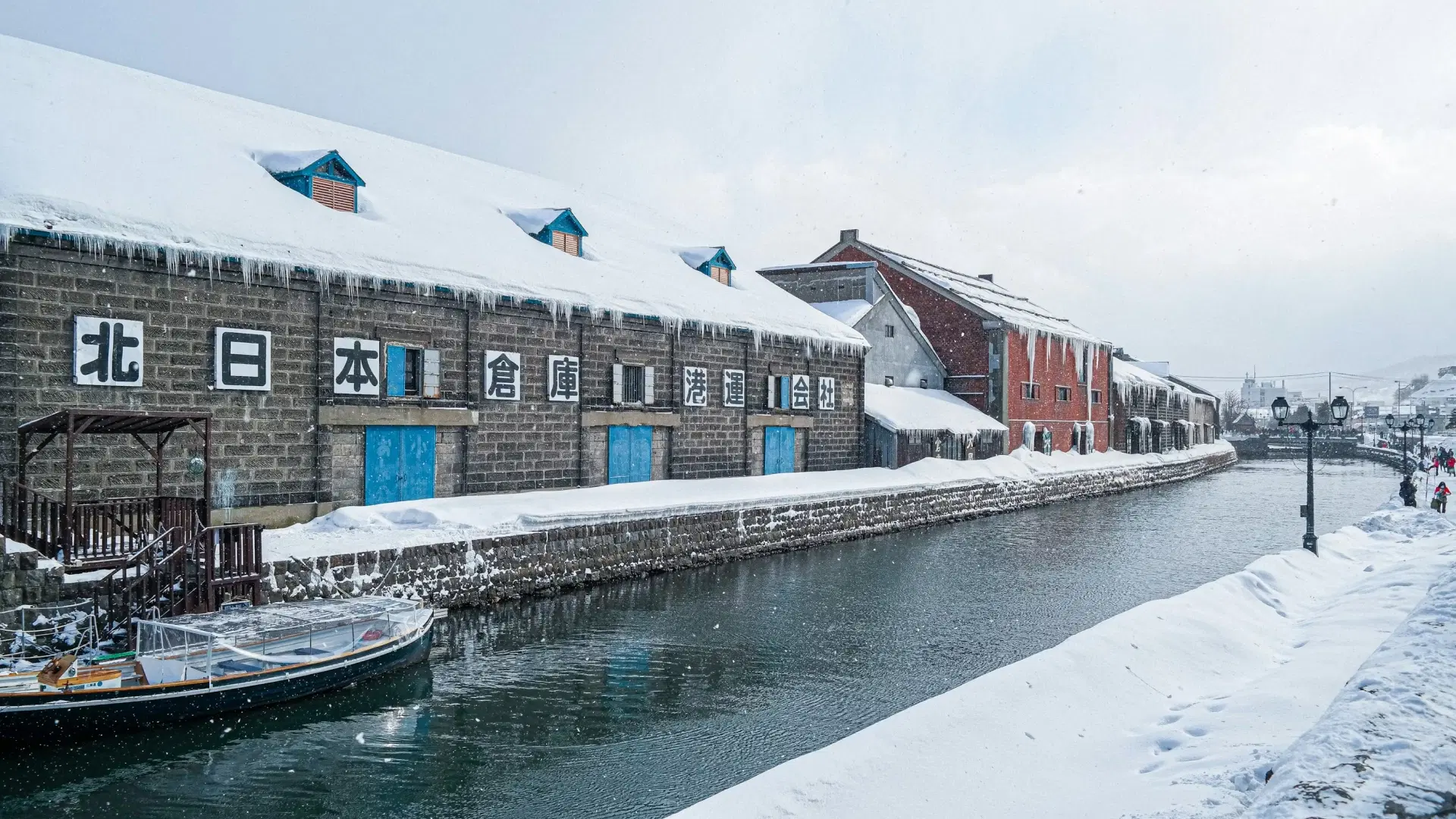
Otaru Snow Light Path
小樽雪あかりの路The Otaru Snow Light Path is a festival of intentional quietness, a deliberate counterpoint to the monumental spectacle of the Sapporo Snow Festival held simultaneously forty minutes away by train. Where Sapporo builds massive sculptures illuminated by electric floodlights, Otaru lines its historic canal and hillside streets with thousands of small snow lanterns and floating candles whose warm, flickering glow transforms the old port town into a landscape of intimate, handmade beauty. The effect is not of spectacle but of atmosphere, the soft light revealing the textures of snow, stone, and water with a gentleness that electric illumination cannot achieve.
The festival takes its name from a short story by Ito Nario, a local author whose work explores the relationship between light and memory in northern landscapes. This literary origin informs the festival's aesthetic sensibility: the Snow Light Path is an event conceived not by tourism marketers but by citizens who understood that their town's beauty was most fully expressed in the play of candlelight on winter surfaces. The result is a festival that feels personal and unhurried, its beauty requiring no explanation and rewarding slow, contemplative walking through streets where the primary sound is the crunch of boots on snow and the occasional murmur of other visitors moving through the same quiet enchantment.
The Otaru Snow Light Path is a festival of intentional quietness, a deliberate counterpoint to the monumental spectacle of the Sapporo Snow Festival held simultaneously forty minutes away by train.
History & Significance
The Otaru Snow Light Path began in 1999 as a community initiative to revitalize the port town's winter tourism and provide an alternative to the increasingly commercialized Sapporo Snow Festival. The founders, local volunteers and artists, drew inspiration from both the Japanese tradition of snow lanterns and the Korean practice of floating candle lights, creating a hybrid form that felt native to Otaru's particular combination of historic architecture, canal waterways, and heavy snowfall. The first event placed candles in hand-carved snow holders along the canal and through the old warehouse district, the simplicity of the concept proving more powerful than anyone anticipated.
The festival has grown steadily in both scale and reputation, with over half a million visitors now attending during its ten-day run. Crucially, it has maintained its volunteer-driven, handmade character. The snow lanterns and ice luminaries are created by community members, school groups, and visiting participants, each one unique in shape and placement. This human irregularity, the slight asymmetries and variations that distinguish handmade objects from manufactured ones, is central to the festival's beauty. International volunteers have joined the effort in recent years, adding snow lantern traditions from other cold-climate cultures and reinforcing the festival's quietly cosmopolitan spirit.
What to Expect
The Otaru Canal is the festival's iconic setting. Hundreds of glass fishing floats, repurposed as candle holders, float on the canal's dark water between the snow-covered stone embankments, their warm light creating trembling reflections that double the number of visible flames. The historic stone warehouses lining the canal, built during Otaru's prosperous years as Hokkaido's major trading port, provide architectural gravitas to the scene, their weathered surfaces catching the candlelight in textures of shadow and warm stone. Walking the canal path in the evening, when the snow absorbs ambient sound and the candles provide the primary illumination, is an experience of stillness rare in contemporary Japan.
The Temiyasen Kaijo, the former railway line that once connected Otaru's port to the national rail network, provides the festival's second major venue. The disused track, now a walking path, is lined with snow sculptures and lanterns created by volunteers, the former industrial corridor transformed into an outdoor gallery of light and ice. The scale is intimate, the artworks small enough to examine closely, their forms ranging from abstract geometric shapes to figurative scenes that tell stories in light and shadow.
Beyond the official venues, the festival's spirit extends through the town's residential streets and commercial district. Homeowners and shopkeepers place their own candles and lanterns outside, creating an informal extension of the festival that blurs the boundary between organized event and communal expression. The effect, walking through a town where every doorstep and garden wall carries a small flame against the snow, is of entering a community that has chosen, collectively and gently, to make beauty from the materials of winter.