Setsubun at Sensoji
浅草寺節分会Setsubun at Sensoji is Tokyo's most vivid enactment of the ancient rite of driving out evil and welcoming good fortune, a ceremony in which roasted soybeans are hurled from the temple's main hall by Buddhist monks, celebrity guests, and sumo wrestlers while thousands of outstretched hands reach to catch the projectiles and the luck they carry. The event transforms Sensoji's vast main hall and the plaza before it into a theater of joyful chaos, the solemnity of the Buddhist prayers that precede the bean-throwing giving way to a scramble that is competitive, comedic, and deeply communal.
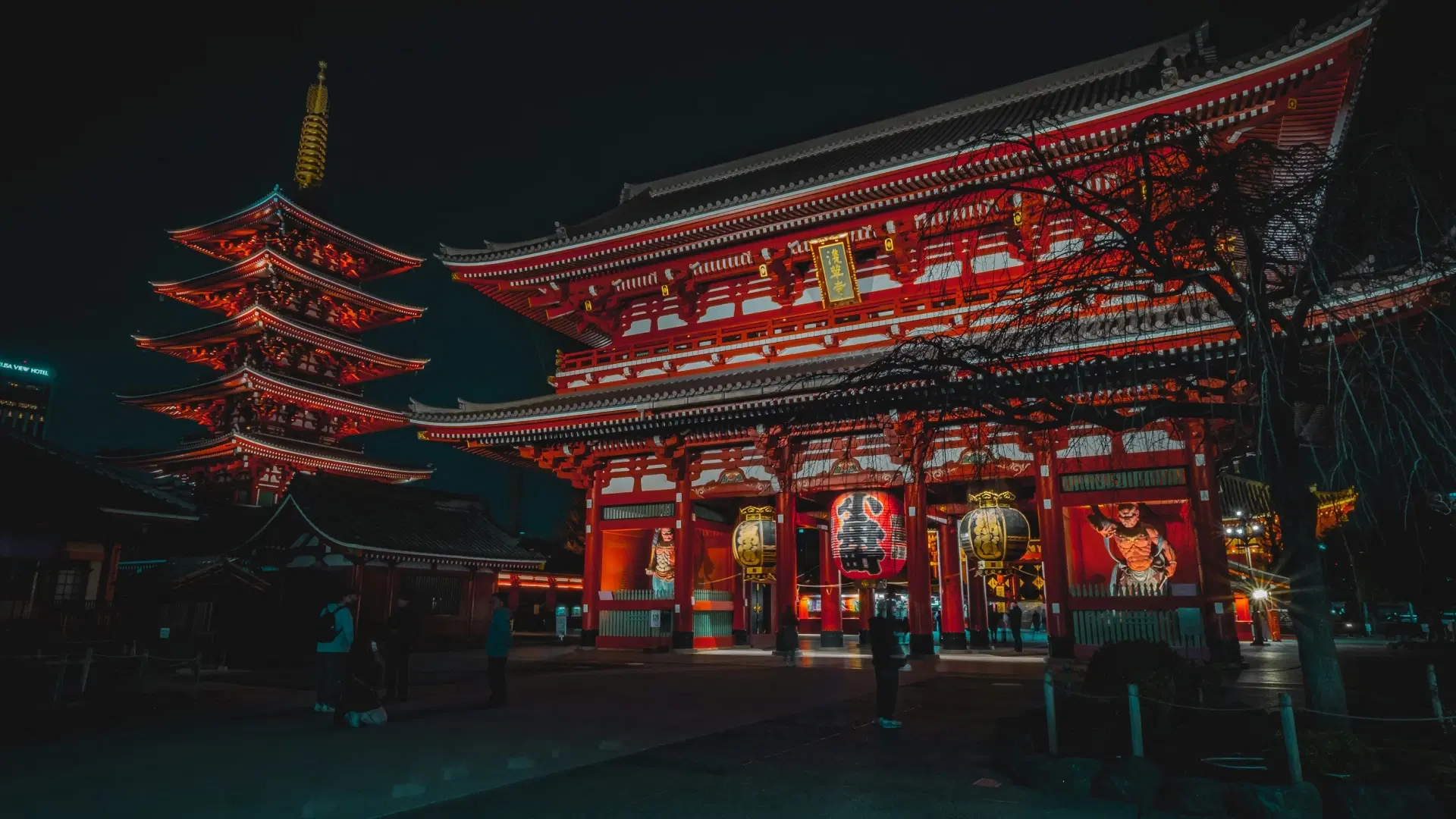
Sensoji, Tokyo's oldest temple and the spiritual anchor of the Asakusa district, provides a setting of appropriate grandeur for the ceremony. The main hall's elevated platform, from which the beans are thrown, gives the event a theatrical staging that amplifies its visual impact: the throwers arrayed above, the crowd surging below, the beans arcing through the cold February air in parabolas that trace the passage of fortune from the sacred to the secular. The spectacle is simultaneously religious and carnivalesque, its dual nature reflecting Asakusa's historical character as a district where the pious and the playful have always coexisted.
The presence of sumo wrestlers among the bean-throwers adds a distinctly Japanese dimension to the ceremony. The wrestlers, whose physical mass and cultural prestige give their throws a symbolic weight beyond the ordinary, are greeted with particular enthusiasm by the crowd. Their participation connects Setsubun to the broader world of Japanese traditional culture, in which sumo occupies a unique position as both sport and ritual, its practitioners regarded as possessing a spiritual potency that makes their involvement in ceremonies of purification especially auspicious.
History & Significance
Setsubun, literally "seasonal division," marks the day before the beginning of spring in the traditional Japanese calendar, a moment of transition believed since ancient times to be particularly vulnerable to the intrusion of malevolent spirits. The practice of mamemaki, bean-throwing, developed as a ritual response to this vulnerability: the beans, symbolizing the power to drive out oni, or demons, are thrown with the chant "oni wa soto, fuku wa uchi," meaning "demons out, good fortune in." The ritual's origins are traceable to Chinese court ceremonies adapted by the Japanese imperial court during the Heian period, subsequently spreading to temples and shrines throughout the country.
Sensoji's Setsubun ceremony draws on the temple's thirteen centuries of continuous operation and its deep roots in the popular culture of Edo and Tokyo. The temple's association with Kannon, the bodhisattva of compassion, gives its Setsubun observance a particular spiritual coloring: the expulsion of evil is framed not merely as a defensive act but as an expression of compassion's power to overcome suffering and misfortune. The modern ceremony, with its celebrity participants and media coverage, retains this spiritual foundation while functioning simultaneously as popular entertainment, a combination that Sensoji, located in the historic entertainment district of Asakusa, has always managed with characteristic ease.
What to Expect
The ceremony begins in the late morning with Buddhist prayers inside the main hall, their chanting establishing a devotional atmosphere that grounds the subsequent festivities in religious purpose. The prayers are followed by the bean-throwing itself, conducted in multiple rounds to accommodate the large crowd. Each round brings a different group of throwers to the platform: monks in ceremonial robes, invited sumo wrestlers in formal kimono, and celebrities whose presence draws particular excitement from the assembled spectators.
The bean-throwing is vigorous and theatrical. The throwers hurl handfuls of roasted soybeans and small packets containing beans and good-luck items into the crowd below, their throws accompanied by the ritual chant that echoes across the temple grounds. The crowd's response is enthusiastic, hands reaching upward in a collective gesture of supplication and competition, the catching of beans regarded as a harbinger of good fortune for the year ahead. The atmosphere is festive rather than solemn, laughter and exclamations mixing with the ceremonial chants in a soundscape that captures the Japanese genius for combining the sacred and the celebratory.
Beyond the main ceremony, the temple grounds host secondary activities that extend the Setsubun experience. Food stalls offer seasonal treats, including the ehomaki sushi rolls traditionally eaten on Setsubun while facing the year's auspicious direction. The Nakamise shopping street leading to the temple is festooned with seasonal decorations, and the surrounding Asakusa neighborhood provides ample options for dining and exploration before and after the ceremony.