Okutama
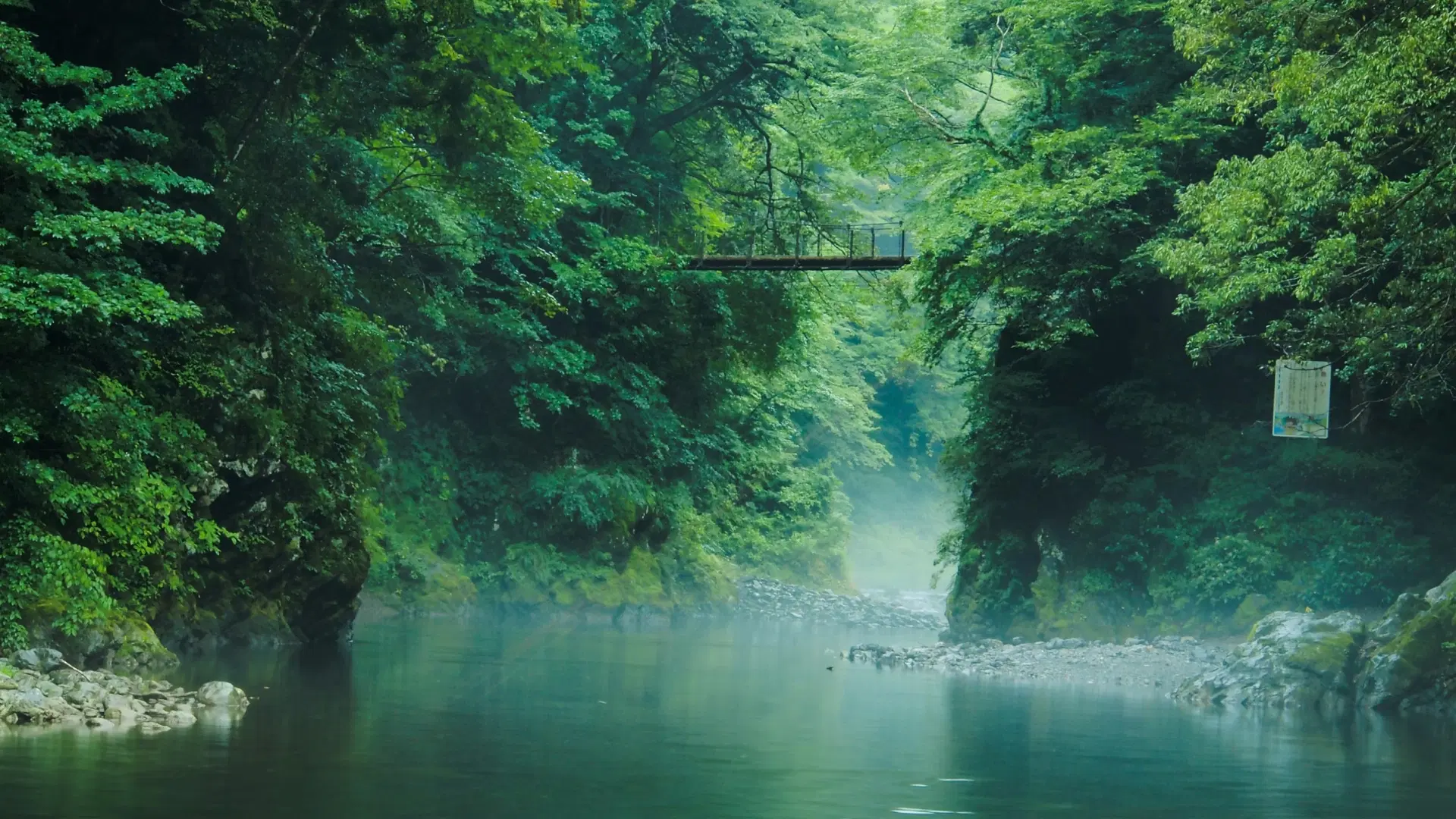
奥多摩Okutama is Tokyo's improbable wilderness. The westernmost municipality of the metropolis, sharing its postal code with Shibuya and Shinjuku, occupies a landscape of cedar-forested mountains, clear river gorges, and limestone caves that could not be further in character from the urban density ninety minutes to the east. The Tama River, before it becomes the broad, channelized waterway that flows through the suburbs, runs cold and clear through Okutama's valleys, its water quality sufficient for wild trout and the river swimming that draws Tokyoites in summer.
The area's mountains, rising to over 2,000 meters at Mount Kumotori on the border with Saitama and Yamanashi, offer serious hiking that ranges from gentle riverside trails to multi-day ridge walks requiring mountain hut stays. Mount Mitake, more accessible at 929 meters and served by a cable car, hosts the atmospheric Musashi-Mitake Shrine at its summit, a mountaintop sanctuary that has drawn pilgrims since the Heian period and whose guardian is the oinusama, a protective wolf deity unique to the Chichibu-Tama region.
Okutama's population has declined steadily as younger residents move to the city, and the empty farmhouses and quiet village streets carry a melancholy that is also, paradoxically, part of its appeal. This is depopulation not as crisis but as atmosphere, a thinning of human presence that allows the natural landscape to reassert itself with increasing authority.
Okutama is Tokyo's improbable wilderness.
Highlights
Mount Mitake and its shrine offer the most accessible mountain experience. The cable car ascends through cedar forest to a village of traditional minshuku and the shrine precinct, where the rock garden and ancient cedar trees create a sacred atmosphere amplified by altitude. In late April, the shrine's approach becomes a rock garden of natural beauty as catananche and other wildflowers bloom among the boulders. The trail from Mitake to Mount Otake extends the hike into deeper wilderness.
Nippara Limestone Cave, the largest in the Kanto region at over 1,300 meters of explorable passages, offers an underground experience of genuine wonder. The cave's formations, including curtain-like flowstones and mineral pools, have been developing for millions of years. The temperature inside holds at approximately 11 degrees Celsius year-round.
Okutama Lake, a reservoir created by the Ogouchi Dam, provides scenic kayaking and lakeshore walking. The Mukashi-michi, an old mountain trail following the river from Okutama Station toward the lake, is a gentle walk that passes through abandoned hamlets and along moss-covered stone walls that document the area's more populated past.
Culinary Scene
Okutama's cuisine is mountain fare in its most rustic form. River fish, particularly iwana char and yamame trout, are grilled whole over charcoal at the riverside restaurants and mountain lodges. Wild boar and venison appear on winter menus, prepared as nabe hotpots that warm after cold-weather hiking. The local soba, made from buckwheat grown in small mountain plots, has a toothsome character that reflects the cool-climate terroir.
Several of the village restaurants serve konnyaku in its freshest form, made from konjac root grown on the mountain slopes. The simplicity of the cooking here is its strength: the ingredients are local, the preparations traditional, and the portions designed for appetites sharpened by mountain air and river swimming.

Ryokans in Tokyo
There are no ryokans in our guide listed in Okutama. See our selection across Tokyo.
View ryokans in Tokyo