Sanja Matsuri
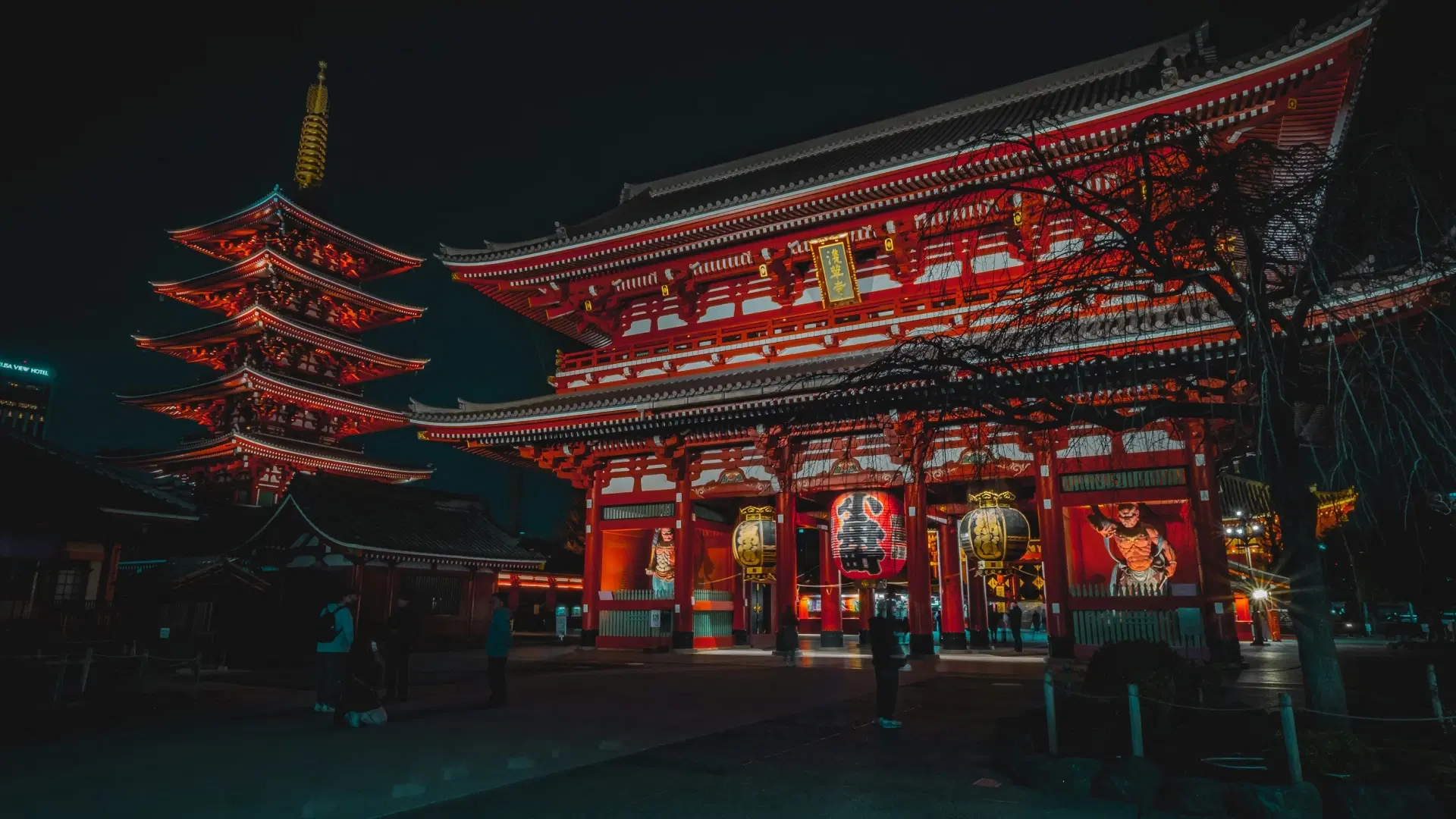
三社祭The Sanja Matsuri is Tokyo's most ferocious festival, a three-day eruption of communal energy centered on Asakusa's Senso-ji temple district in which approximately one hundred mikoshi portable shrines are carried through the streets by teams of bearers whose physical exertion and vocal intensity transform the ancient entertainment quarter into a theater of controlled chaos. The festival belongs to Asakusa Shrine, the Shinto sanctuary adjacent to the Buddhist Senso-ji, and its energy reflects the neighborhood's historical identity as a pleasure district where the boundaries between the sacred and the secular, the respectable and the disreputable, were always productively blurred.
The mikoshi, each representing one of Asakusa's forty-four town districts, are carried not with the measured solemnity of some shrine processions but with a rough, bouncing vigor that makes the portable shrines appear to dance and buck through the streets. The bearers, dressed in happi coats and headbands, chant rhythmic calls that coordinate their movements while expressing an ecstatic energy that borders on frenzy. The crowds lining the narrow streets are dense, the sound overwhelming, the physical proximity to the passing mikoshi close enough to feel the wooden shrine shake as it passes. Sanja Matsuri does not invite passive observation; it surrounds, jostles, and sweeps visitors into its current.
The climactic event on Sunday morning is the departure of the three main mikoshi of Asakusa Shrine, carried by selected bearers in a procession that begins before dawn and continues throughout the day. These three mikoshi, heavier and more ornately decorated than the neighborhood shrines, are the spiritual heart of the festival, their passage through the streets believed to distribute the blessings of the shrine's three founding deities across the community. The pre-dawn departure, witnessed by those willing to arrive in darkness, carries a solemnity that the day's subsequent celebrations overlay but never fully erase.
History & Significance
The Sanja Matsuri dates to the early Edo period and honors the three founders of Senso-ji temple, fishermen who, according to tradition, discovered the golden statue of Kannon that the temple enshrines. The festival's establishment formalized a connection between the temple's founding miracle and the community that grew up around it, a community whose identity as a center of entertainment, commerce, and popular culture gave the festival its distinctive character of uninhibited celebration.
The festival's history is inseparable from Asakusa's own. During the Edo period, Asakusa was the heart of the shitamachi, the low city where merchants, artisans, and entertainers created a culture of robust vitality that contrasted with the samurai culture of the yamanote uplands. The Sanja Matsuri expressed and reinforced this shitamachi identity, its energy serving as an annual assertion of the neighborhood's values: collective solidarity, physical courage, aesthetic exuberance, and a refusal to be constrained by the decorum expected in more refined precincts. This identity survived the firebombing of 1945, which destroyed much of Asakusa, and continues to animate the festival today, making Sanja Matsuri not merely a religious observance but a living expression of a specific Tokyo neighborhood's cultural DNA.
What to Expect
Friday's events include a procession of large floats carrying traditional musicians and dancers through the Asakusa streets, establishing the festival's ceremonial framework before the weekend's more kinetic energy takes over. The floats are accompanied by groups performing traditional dances that date to the Edo period, their movements formal and precise, providing a counterpoint to the raw energy that will characterize the following days.
Saturday is the day of the neighborhood mikoshi, when approximately one hundred portable shrines emerge from their respective communities and are carried through the streets in a day-long procession that fills Asakusa with sound, color, and physical energy from morning until evening. The mikoshi bearers' chant of "wasshoi, wasshoi" provides a continuous sonic backdrop, punctuated by the deeper sound of taiko drums and the occasional roar from a team negotiating a particularly difficult turn or challenging a rival team to a display of carrying prowess. The streets around Senso-ji and Nakamise-dori become rivers of happi-coated humanity, the sacred and commercial districts equally claimed by the festival's expansive energy.
Sunday's main mikoshi procession represents the festival's spiritual climax. The three shrine mikoshi, their gold surfaces glinting in the May sunlight, are carried through the streets with an intensity that reflects both the honor of bearing the festival's most sacred objects and the physical strain of supporting their considerable weight over hours of continuous carrying. The competition among bearing teams for the privilege of carrying the main mikoshi gives these processions an emotional intensity that exceeds even Saturday's neighborhood celebrations.