Asakusa & Ueno
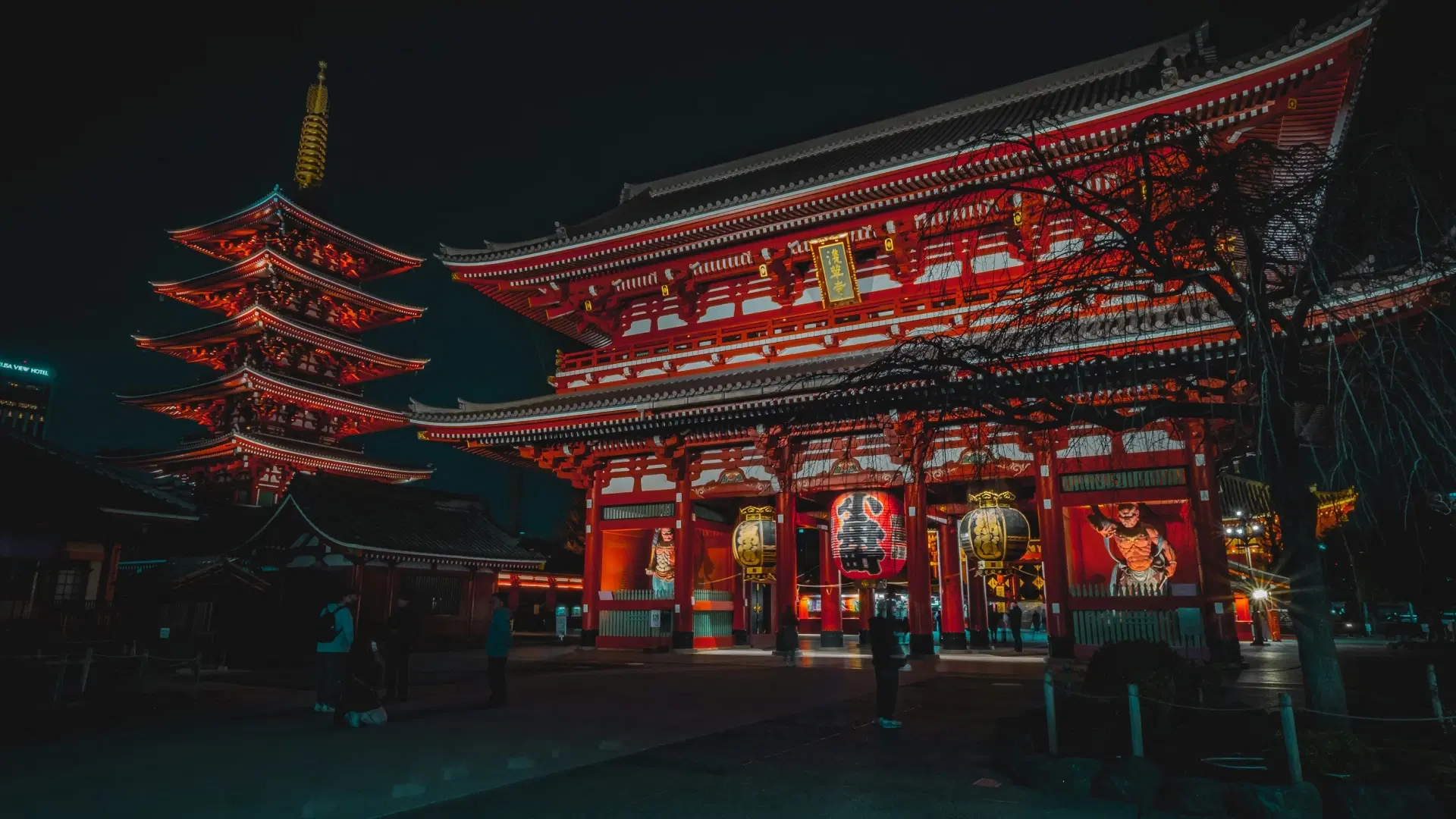
浅草・上野Asakusa and Ueno together form the cultural memory bank of Tokyo's eastern lowlands, the Shitamachi or "low city" where merchants, artisans, and common people built a civilization of extraordinary refinement beneath the castle walls of the shogunate. Asakusa's Senso-ji, founded in 645 AD and thus far older than the city that grew around it, remains the spiritual heart of this tradition. The temple's Kaminarimon thunder gate, with its massive red lantern, frames the approach to a complex that has been destroyed and rebuilt so many times that its permanence feels not architectural but spiritual, a place that exists because its community refuses to let it cease.
Ueno, a fifteen-minute walk north, concentrates Japan's highest density of museums into a single park built on the grounds of a former Tokugawa temple. The Tokyo National Museum holds the most comprehensive collection of Japanese art in existence. The National Museum of Western Art, designed by Le Corbusier and itself a UNESCO World Heritage Site, houses Impressionist and modern works collected by the industrialist Matsukata Kojiro. Between them, the National Museum of Nature and Science, the Tokyo Metropolitan Art Museum, and the Ueno Royal Museum create a cultural campus of staggering breadth.
Beneath the elevated tracks, Ameyoko market retains the raucous energy of the postwar black market from which it evolved. Vendors sell everything from fresh fish to leather goods to discount cosmetics, their shouted prices and theatrical bargaining creating an atmosphere that is Tokyo at its most unguarded.
Asakusa and Ueno together form the cultural memory bank of Tokyo's eastern lowlands, the Shitamachi or "low city" where merchants, artisans, and common people built a civilization of extraordinary refinement beneath the castle walls of the shogunate.
Highlights
Senso-ji's Nakamise-dori, the shopping street leading to the main hall, has been selling souvenirs and snacks to pilgrims since the Edo period. The ningyoyaki molds, crispy batter filled with sweet bean paste in shapes of temple lanterns and pigeons, are best bought fresh from the stalls. The temple precinct beyond is most atmospheric at dawn, before the crowds arrive, when the incense smoke curls through empty courtyards and the wooden halls creak in the morning air.
The Tokyo National Museum demands a full morning at minimum. The Honkan main gallery traces Japanese art from Jomon pottery to Edo-period screen paintings, while the Toyokan gallery covers broader Asian art. The Hyokeikan and the Gallery of Horyuji Treasures add architectural distinction and specialized collections. The museum garden, open only during spring and autumn, contains five historic tea houses and is among Tokyo's best-kept secrets.
Ameyoko market is best experienced with an empty stomach and a willingness to eat standing. The seafood stalls sell sashimi on styrofoam trays for a fraction of restaurant prices. The kebab stands, a legacy of the market's multicultural evolution, coexist with traditional pickle sellers and dried fruit vendors in a density that rewards repeated visits.
Culinary Scene
Asakusa's food culture is rooted in the Shitamachi tradition of honest, unpretentious cooking. Tempura, which reached its definitive form in Edo's street stalls, is served at establishments that have been frying battered prawns and vegetables in sesame oil since the nineteenth century. Daikokuya, perpetually queued, serves portions that satisfy both appetite and tradition. Unagi along the Sumida River follows the Kanto preparation, steamed and grilled to a softness that defines the style.
Ueno's museum district lacks the culinary depth of Asakusa, but the park's periphery contains several excellent tonkatsu restaurants and soba shops. Ameyoko, as noted, offers the freshest and most economical seafood eating in central Tokyo, along with the international street food that reflects the market's evolving character.
Ryokans in Tokyo
There are no ryokans in our guide listed in Asakusa & Ueno. See our selection across Tokyo.
View ryokans in Tokyo