Shibuya & Shinjuku
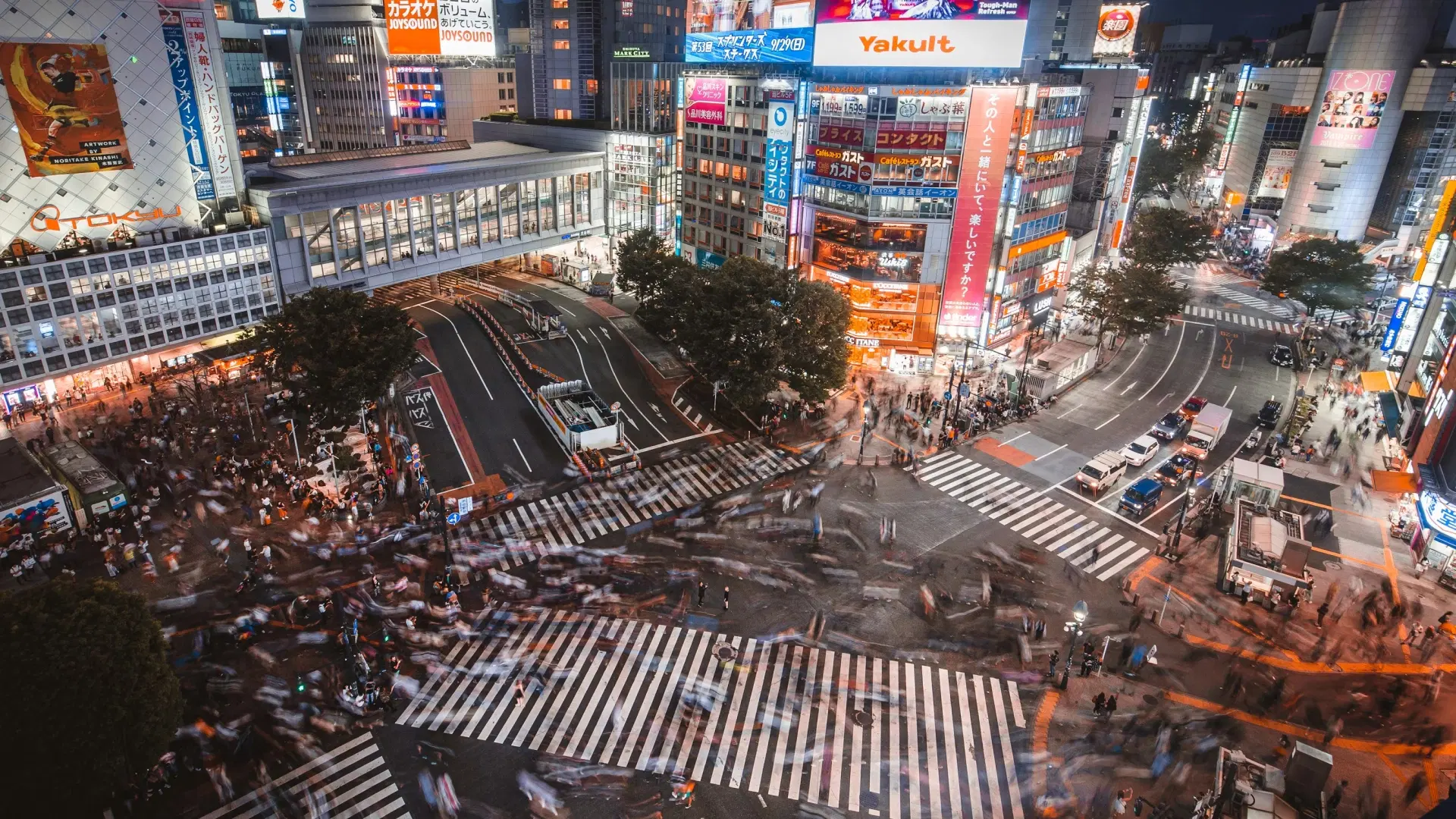
渋谷・新宿Shibuya and Shinjuku form the twin engines of Tokyo's western commercial axis, two districts separated by a single train stop on the Yamanote Line but each possessing a personality so distinct that moving between them can feel like changing channels. Shibuya is the younger sibling: its famous scramble crossing, where up to three thousand pedestrians move in every direction simultaneously when the light changes, has become the world's visual shorthand for urban Japan. But Shibuya's energy extends far beyond that single intersection, flowing up into the fashion streets of Harajuku, down into the vinyl shops of Udagawacho, and across into the residential calm of Daikanyama and Naka-Meguro.
Shinjuku is denser, louder, more complex. Its station, the world's busiest with over three million daily passengers, is a labyrinth of underground passages connecting department stores, government buildings, and the gateway to western Tokyo's suburbs. East Shinjuku's Golden Gai, a grid of over two hundred tiny bars crammed into six narrow alleys, preserves a drinking culture that dates to the immediate postwar period. West Shinjuku's skyscraper district, crowned by the Tokyo Metropolitan Government Building, offers free observation decks at 202 meters that provide panoramic views including, on clear days, the distant silhouette of Mount Fuji.
For the discerning traveler, these districts reward depth over breadth. A single evening in Golden Gai, finding the right bar where the mama-san decides you belong, can reveal more about Tokyo's social fabric than a week of sightseeing.
Shibuya and Shinjuku form the twin engines of Tokyo's western commercial axis, two districts separated by a single train stop on the Yamanote Line but each possessing a personality so distinct that moving between them can feel like changing channels.
Highlights
The Shibuya Scramble Crossing is best observed from the upper floors of the surrounding buildings, where the pattern of human movement becomes abstract and almost choreographic. The newly completed Shibuya Sky observation deck at 230 meters provides a rooftop perspective that extends to Tokyo Bay and beyond. At street level, the side streets between Shibuya and Harajuku contain independent fashion boutiques, vintage shops, and design studios that define Tokyo's streetwear culture.
Meiji Shrine, technically in Shibuya ward, occupies a 170-acre forest planted a century ago that has matured into a genuine woodland ecosystem in the heart of the city. The shrine approach, a wide gravel path beneath towering camphor trees, transitions visitors from the commercial intensity of Harajuku to the meditative silence of the inner precinct with remarkable efficiency.
In Shinjuku, the Golden Gai district is best experienced after 9 PM, when the bars are open and the alleys take on their intimate, amber-lit character. Each bar seats perhaps six to ten people, and many specialize in a particular theme: jazz, cinema, literature, a specific region's sake. Shinjuku Gyoen National Garden, a ten-minute walk east, provides the city's finest cherry blossom viewing in spring, with over a thousand trees in a landscape that blends Japanese, English, and French garden styles.
Culinary Scene
The dining density in these two districts approaches the incomprehensible. Within walking distance of Shibuya Station alone, thousands of restaurants operate across every conceivable cuisine and price point. The department store basement food halls, depachika, at Isetan in Shinjuku and Tokyu in Shibuya curate the finest Japanese ingredients with a merchandising art that makes grocery shopping feel like visiting a museum. For the traveler seeking a single defining experience, the standing sushi counters in Shinjuku's memory lanes and the ramen alleys beneath the train tracks offer the concentrated intensity that defines Tokyo eating.
The yakitori alleys beneath the Yurakucho tracks, technically in a neighboring district but spiritually connected, represent another essential Tokyo dining form: tiny counters where chicken is grilled to order over bincho-tan charcoal, each piece a different cut prepared with a specificity that Western cuisine rarely applies to poultry.
Ryokans in Tokyo
There are no ryokans in our guide listed in Shibuya & Shinjuku. See our selection across Tokyo.
View ryokans in Tokyo