Shimoda
下田Shimoda occupies a singular position in Japanese history: this is the place where the modern world arrived. In 1854, Commodore Matthew Perry's Black Ships anchored in the harbor of this small fishing town at the southern tip of the Izu Peninsula, and the Treaty of Shimoda that followed opened Japan's ports to American trade and set in motion the transformation from feudal isolation to global engagement. The weight of this history pervades the town, not as a burden but as a distinctive coloring, visible in the blend of Edo-period streetscapes and Western-influenced architecture, in the monuments that mark the sites of diplomatic encounters, and in a cosmopolitan openness unusual in a Japanese town of this size.
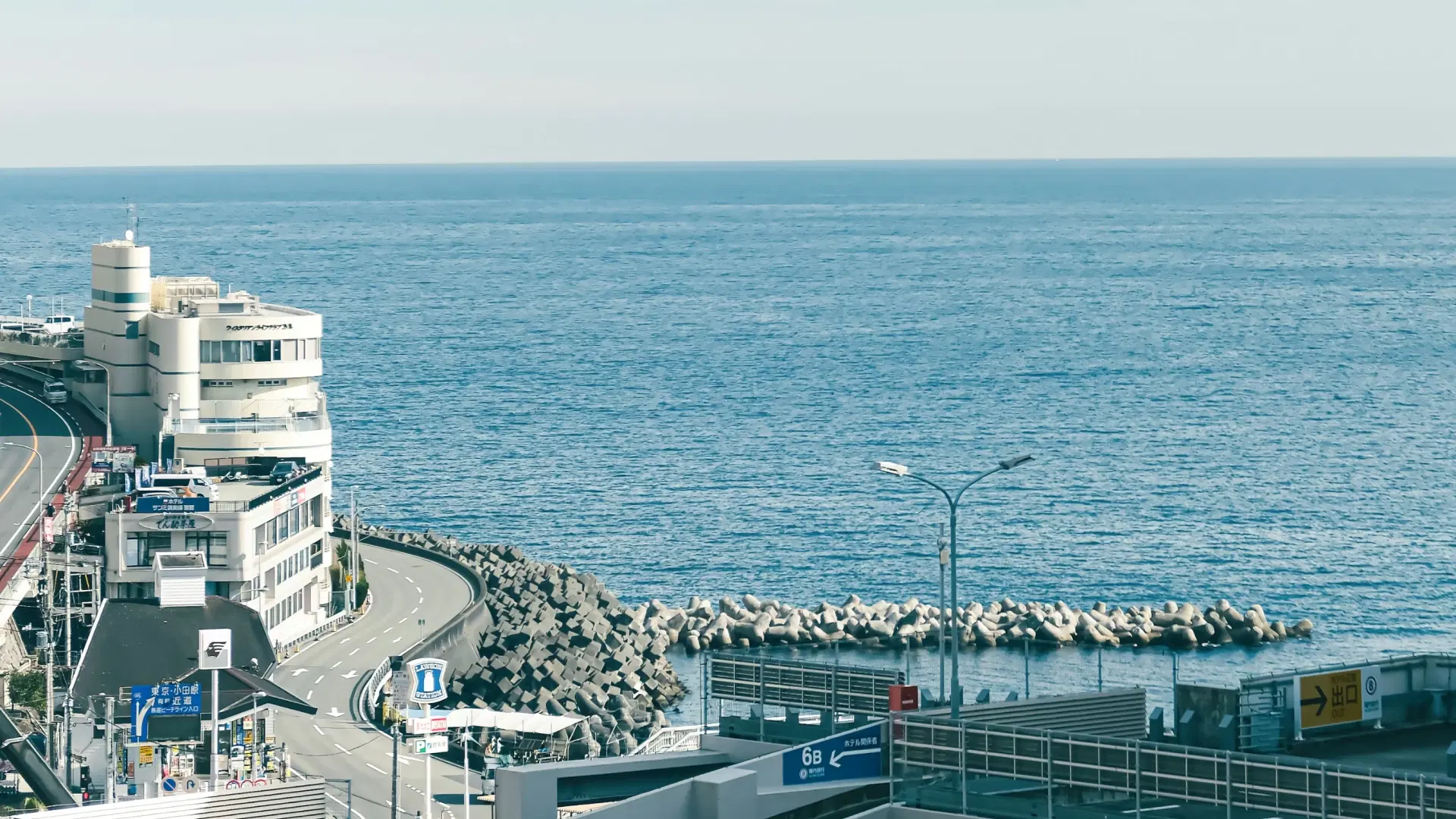
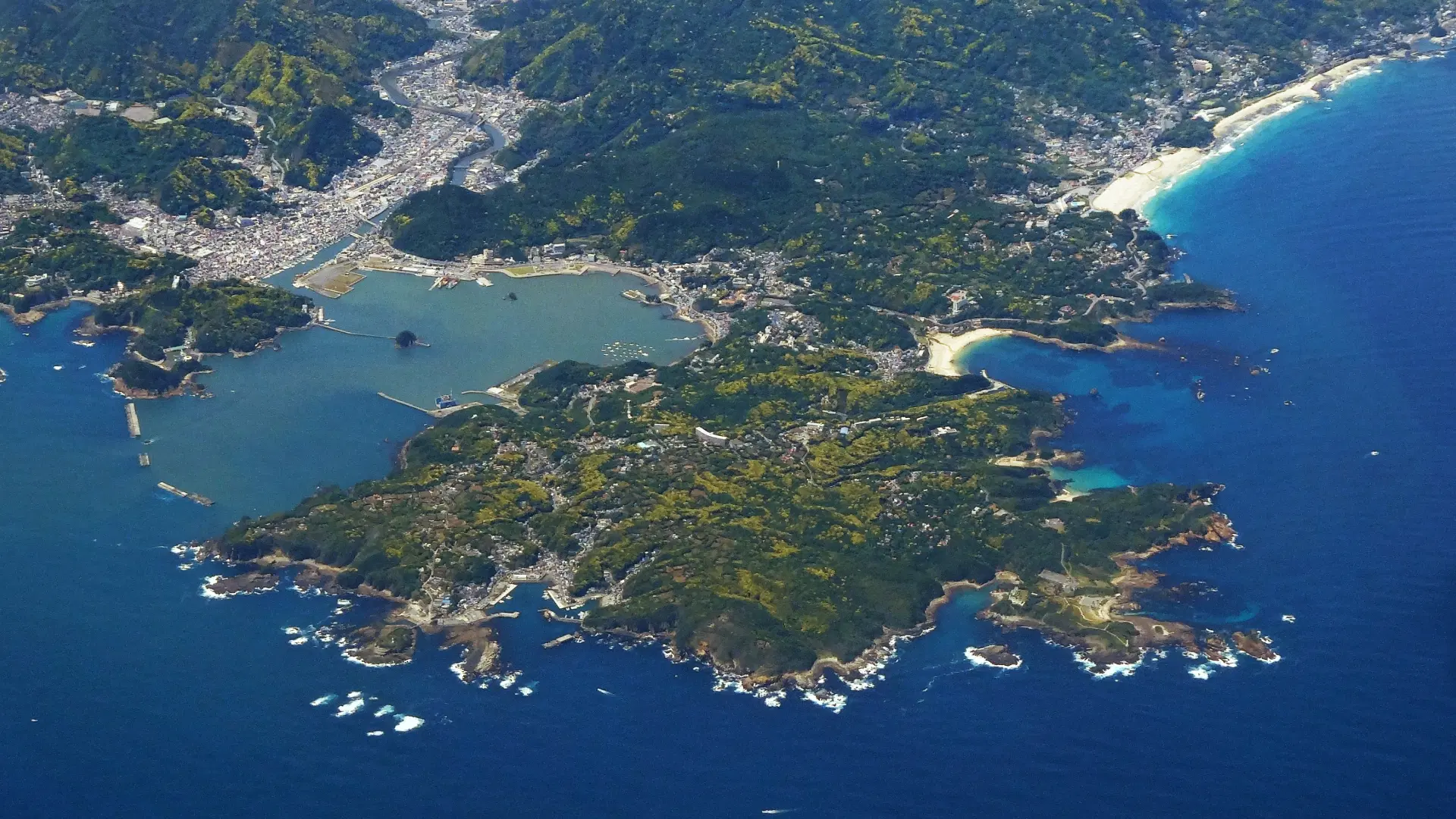
Beyond its historical significance, Shimoda is blessed with a natural setting of extraordinary beauty. The Izu Peninsula's southern coast, where the warm Kuroshio Current meets the volcanic landscape, produces white sand beaches, dramatic rock formations, and a subtropical botanical richness that sets it apart from the temperate shores to the north. The water is clear, the coastline is wild, and the light, filtered through maritime air that carries moisture from the Philippine Sea, has a luminous quality that softens the landscape without obscuring its forms.
The town itself retains the atmosphere of a prosperous Edo-period port, its namako-kabe walls, the distinctive black-and-white checkered plaster that protected buildings against fire and salt air, lining streets that have maintained their human scale despite the passage of centuries. Perry Road, a stone-paved lane beside the Inouzawa River that connects the harbor to the temple where the Treaty was negotiated, is the town's most evocative walk, its willows, antique shops, and cafes creating a passage between the maritime and the domestic that mirrors Shimoda's historical role as a threshold between worlds.
Shimoda occupies a singular position in Japanese history: this is the place where the modern world arrived.
Highlights
Perry Road and the surrounding historic quarter provide the essential introduction to Shimoda's layered identity. The lane follows the Inouzawa River from the harbor area to Ryosenji Temple, the site of the 1854 treaty negotiations, and the walk between them passes through a streetscape where Edo-period namako-kabe warehouses, Meiji-era Western-influenced buildings, and contemporary galleries and cafes coexist without dissonance. Ryosenji itself, a modest Jodo-shu temple, houses a museum documenting the Perry mission and the treaty negotiations, and the quiet of its grounds, shaded by ancient trees and bordered by hydrangeas that bloom spectacularly in June, provides a contemplative space in which to absorb the magnitude of the events that occurred here.
Shimoda's beaches are among the finest in eastern Japan. Shirahama Beach, a crescent of white sand backed by a Shinto shrine whose torii gate stands in the surf, offers swimming water of remarkable clarity, its color shifting from pale jade near the shore to deep sapphire at the headlands. Tatadohama and Kisami Ohama provide wilder alternatives, their rock formations and stronger currents attracting surfers and those seeking a less manicured coastal experience. The Shimoda Oceanographic Museum, perched on a cliff above the harbor, provides context for the marine environment whose richness supports both the fishing industry and the recreational life of the coast.
Mount Nesugata, accessible by ropeway from near the station, offers a panoramic view that encompasses the harbor, the town, the coastline stretching north and south, and, on clear days, the distant silhouette of the Izu Islands rising from the Pacific. The summit provides the perspective needed to understand Shimoda's geography: a protected harbor at the tip of a volcanic peninsula, facing the open ocean, perfectly positioned to receive the ships that changed Japan's history.
Culinary Scene
Shimoda's culinary identity is shaped by the Kuroshio Current that flows past its shores, bringing warm-water species into waters close enough to the coast that the morning's catch reaches the table by noon. Kinmedai, the golden-eyed snapper that has become the Izu Peninsula's most celebrated fish, achieves its finest expression in Shimoda, where the deep-water canyon just offshore produces specimens of exceptional size and fat content. Served as sashimi, simmered in a sweet soy broth as nitsuke, or grilled with salt, kinmedai reveals a richness and delicacy that justify its status as one of Japan's premier white-fleshed fish. The shimoda don, a rice bowl topped with a selection of the day's sashimi, has become the town's signature casual meal, its contents varying with the season and the catch.
Iseebi, the spiny lobster of the Izu coast, appears from October through March, its sweet, firm flesh served as sashimi, grilled, or in miso soup whose broth carries the concentrated flavor of the shell. The combination of iseebi and kinmedai in a single meal, the lobster providing sweetness and texture, the snapper contributing richness and depth, represents the Shimoda table at its finest and demonstrates why this small town punches far above its weight in the national seafood hierarchy.
The subtropical climate of the southern Izu Peninsula supports citrus cultivation, and Shimoda's ponzu, kosho, and marmalades made from locally grown citrus varieties add bright, aromatic notes to preparations that might otherwise lean toward the richly marine. The town's craft sake and shochu producers have begun to attract attention for expressions that incorporate local botanicals, reflecting a broader culinary creativity that honors tradition while remaining alert to new possibilities.