Mantoro
万燈籠Mantoro, the lighting of all lanterns at Kasuga Taisha, is one of the most ethereal spectacles in Japanese shrine culture, an event in which approximately 3,000 stone and bronze lanterns within and surrounding the shrine are lit simultaneously, transforming the ancient forest sanctuary into a corridor of flickering amber light that extends from the outermost approach path to the innermost sacred enclosure. The lanterns, donated over the course of centuries by devotees ranging from shoguns and emperors to merchants and farmers, each carry inscriptions identifying their donors and the prayers that accompanied their offering, and when their combined flames are lit on the nights of Mantoro, the shrine becomes a luminous archive of devotion, each point of light representing a specific act of faith preserved in stone or bronze.
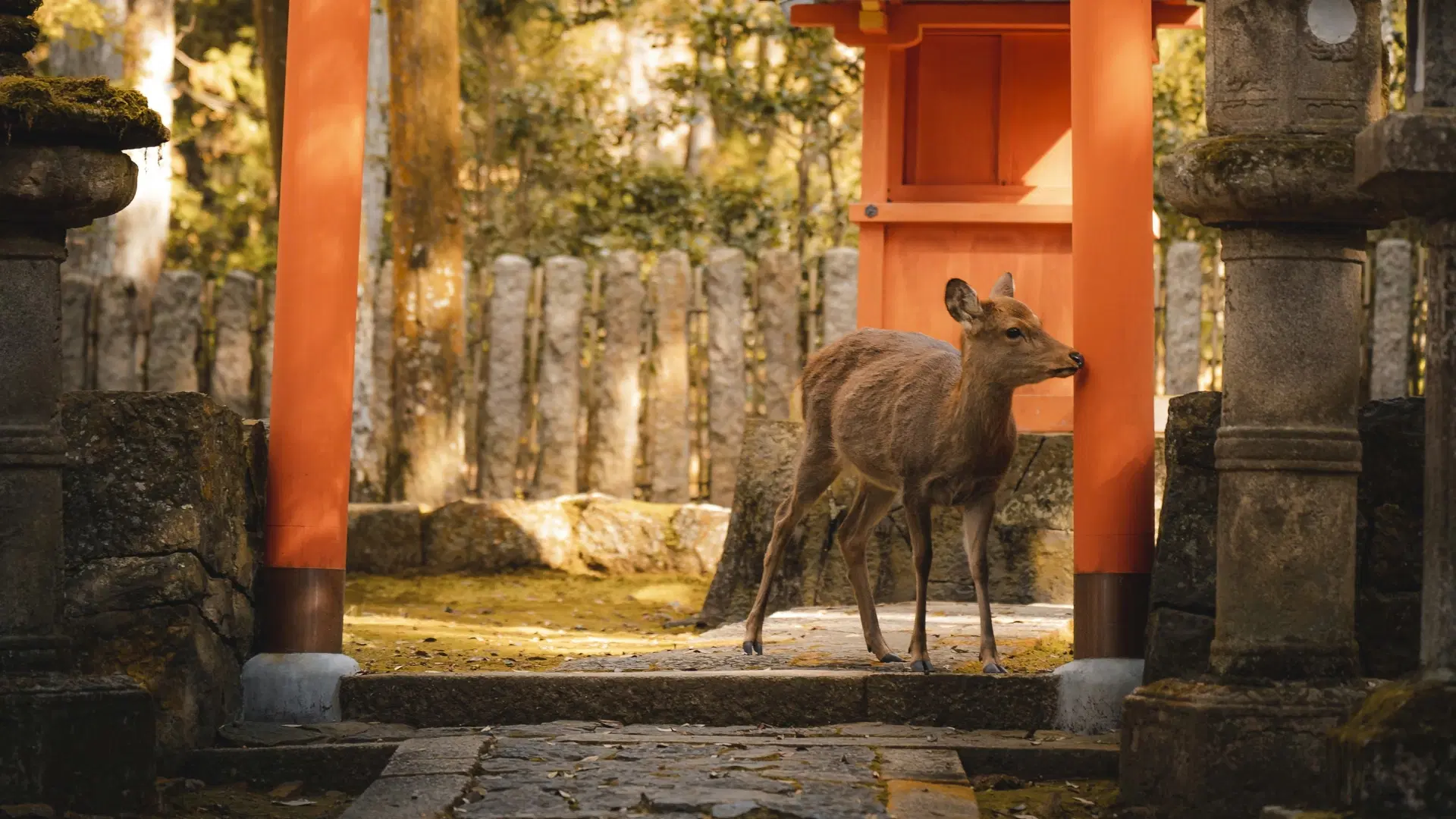
The experience of Mantoro is one of progressive immersion. The visitor enters the shrine's sando, the long approach path lined with stone lanterns, each one glowing with a candle flame that illuminates the moss and patina of its housing while casting long shadows across the path. The effect multiplies as the path approaches the inner shrine, the density of lanterns increasing until the corridors of the shrine's covered walkways become tunnels of golden light, the bronze hanging lanterns overhead creating an unbroken canopy of flame whose reflections dance on the polished wooden floors below. The darkness between the lanterns is as important as the light itself, the contrast between illumination and shadow creating a visual rhythm that guides the walker deeper into the shrine's sacred geography.
The two annual Mantoro observances serve different spiritual purposes that color the experience with distinct emotional registers. The February 3 Setsubun Mantoro coincides with the traditional boundary between winter and spring, the lanterns' fire understood as a purifying force that drives away the evil spirits of the old season and welcomes the energies of the new. The August Mantoro falls during the Obon period, when the spirits of the deceased are believed to return to the world of the living, and the 3,000 flames serve as beacons guiding ancestral spirits back to the shrine whose protection they sought in life.
History & Significance
The practice of donating lanterns to Kasuga Taisha began in the Heian period, when the shrine's status as the tutelary institution of the Fujiwara clan, the most powerful family in the imperial court, attracted offerings from the highest levels of Japanese society. The earliest lanterns were gifts from emperors, regents, and military commanders whose donations were simultaneously acts of piety and displays of political prestige, the size, material, and placement of each lantern reflecting the donor's status within the hierarchies of court and shrine. Over the following centuries, the practice expanded to include donations from all social classes, the stone lanterns lining the approach paths accumulating in a physical record of devotion that now numbers approximately 2,000, with an additional 1,000 bronze lanterns hanging within the shrine's inner corridors.
The Mantoro ceremony, the simultaneous lighting of all lanterns, has been observed for at least 800 years, its origins rooted in the belief that the concentrated light of thousands of flames creates a spiritual environment of exceptional purity and power. The logistics of the lighting, which requires the coordinated effort of shrine staff and volunteers to place and ignite candles in 3,000 individual lanterns within the hours before darkness, is itself a ritual of preparation whose collaborative nature reinforces the communal dimension of the observance. The twice-yearly schedule, at Setsubun and Obon, aligns the ceremony with the two moments in the Japanese ritual calendar when the boundary between the human and spirit worlds is considered most permeable, the lanterns' light serving as a medium of communication across that boundary.
What to Expect
The lanterns are lit in the late afternoon, and by the time full darkness arrives, the shrine compound and its approach paths are transformed into a landscape of continuous, gentle flame. The stone lanterns along the sando, the long approach from the park, create an avenue of light that stretches for several hundred meters through the ancient forest, the flames visible through the openings in each lantern's stone housing as individual points of warmth within the larger composition. The effect is of walking through a forest of light, each lantern a small architecture of stone and fire whose form varies subtly from its neighbors, the accumulated variety of centuries of donation visible in the different shapes, sizes, and decorative styles of the lantern housings.
The inner shrine's covered corridors provide the ceremony's most intensive experience. Here, the bronze hanging lanterns are spaced at intervals of less than a meter, their flames creating an overhead canopy of light that illuminates the lacquered columns and painted ceilings of the shrine's most sacred spaces. The warmth of the concentrated flames is physically perceptible, and the faint sound of the candles burning, a collective whisper that is audible only in the moments of silence between the footsteps of other visitors, creates an acoustic intimacy that matches the visual closeness of the flames. The shrine priests may be glimpsed conducting rituals within the inner sanctum, their white robes reflecting the lantern light in a way that makes them appear to glow from within.
The atmosphere during Mantoro is one of hushed reverence. The beauty of the illumination naturally quiets the voice and slows the pace, and the crowd moves through the shrine with a collective gentleness that honors both the sanctity of the space and the fragility of the flames. Many visitors pause at individual lanterns to read the inscriptions and to contemplate the span of time represented by the oldest donations, the awareness that some of these lanterns have been lit and relit for eight centuries adding a temporal dimension to the visual experience that deepens the beauty into something closer to wonder.