Ikaruga
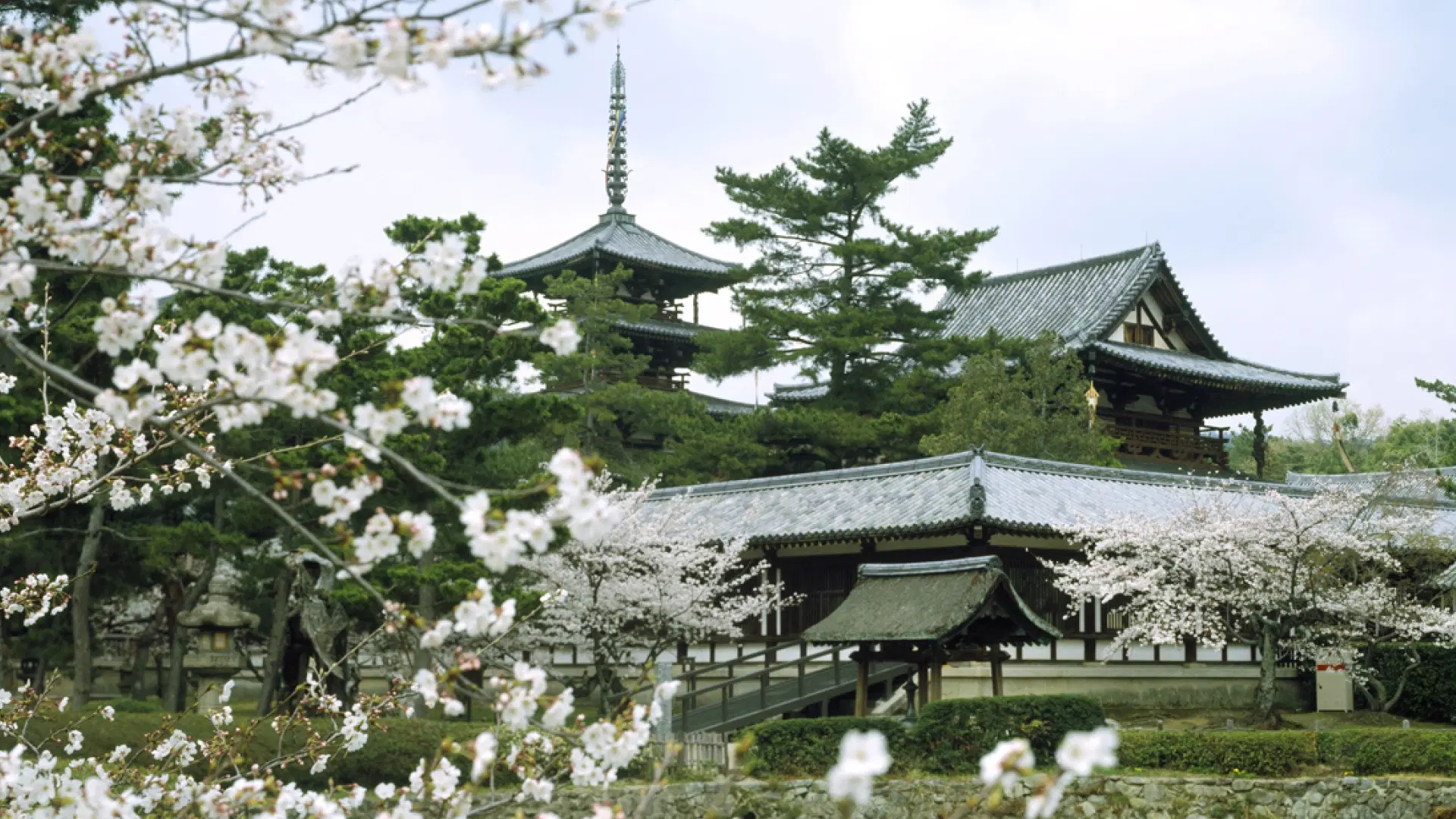
斑鳩Ikaruga is the town where Japanese civilization achieved its first masterpiece. Horyuji, the temple founded by Prince Shotoku in 607 AD, is the oldest surviving wooden structure on earth, its main hall, five-story pagoda, and inner gate constituting an architectural ensemble that has stood, continuously, for over 1,400 years. The fact itself defies easy comprehension: these buildings were already ancient when the cathedrals of Europe were being imagined, already venerable when the Normans invaded England, already historical monuments when the Mongol empire was assembling itself on the other side of the continent. Their survival through thirteen centuries of seismic activity, typhoon, fire, political upheaval, and the simple entropy that reduces all human construction to ruin makes Horyuji not merely a building but a testament to the power of continuous care, the daily, annual, and generational attention that has maintained the temple's structural integrity across a span of time that exceeds the lifespan of most civilizations.
Prince Shotoku, the regent who governed Japan in the early seventh century and who is credited with establishing Buddhism as a state religion, founding the constitutional principles that shaped Japanese governance, and opening diplomatic relations with Sui dynasty China, chose this site at the western edge of the Nara basin for his private temple and residence. The choice was characteristic of a mind that valued contemplation over display: Ikaruga is set apart from the political centers of the Yamato plain, its landscape of low hills and rice paddies providing a rural quietude that the power centers of Asuka and later Nara could not offer. The temple that Shotoku built here, and its successor buildings that replaced structures destroyed by fire in 670 AD, embody the architectural ideals of the Asuka period: the heavy tiled roofs, the entasis of the columns, the cloud-shaped bracket systems that support the eaves are all derived from Chinese and Korean models but adapted with a sensitivity that marks the beginning of a distinctively Japanese architectural language.
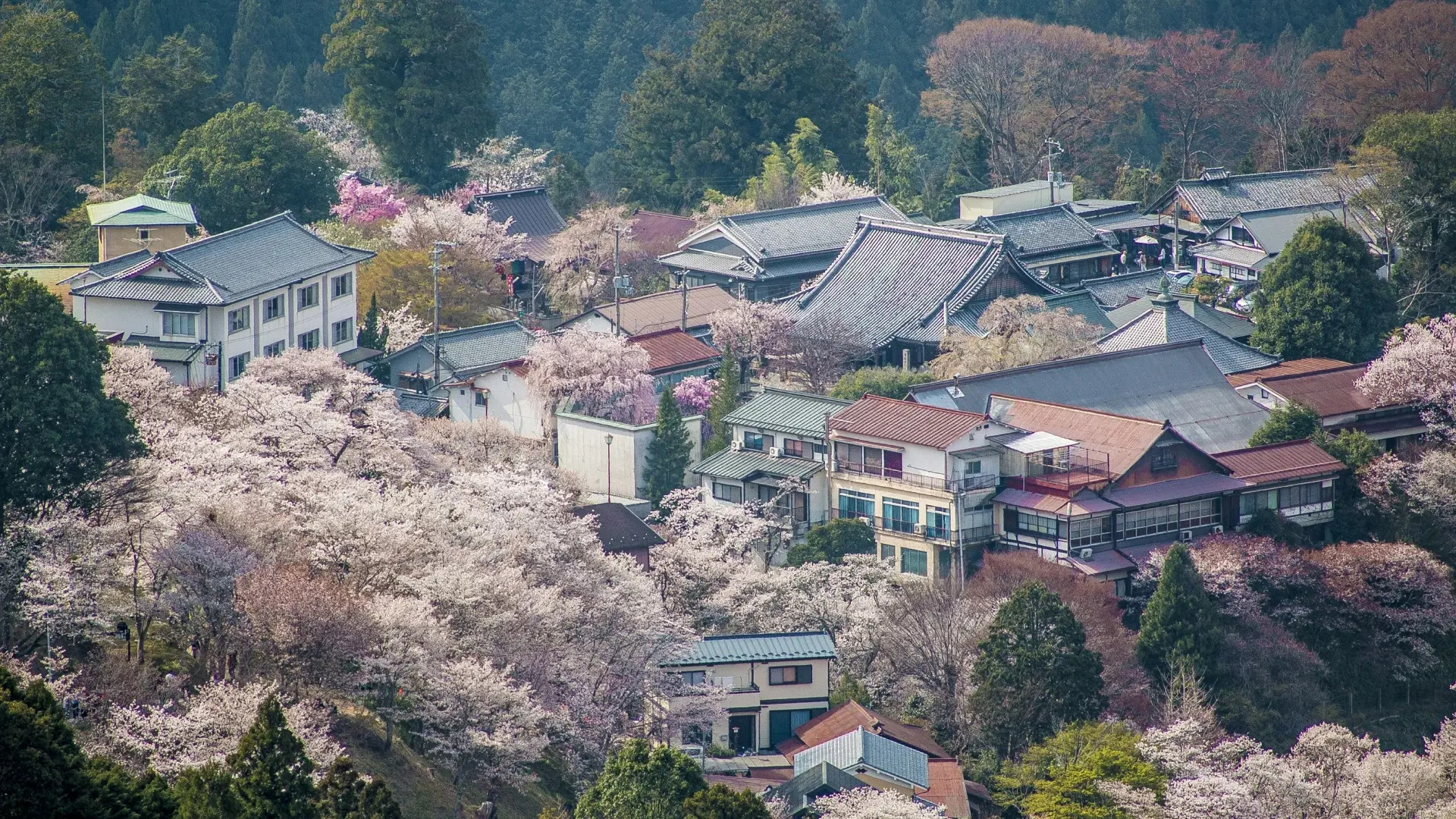
The town of Ikaruga, surrounding the temple complex, retains a rural character that makes the visit feel like a journey not merely to a historical site but to an earlier tempo of existence. The fields that stretch around the temple walls are still cultivated, the narrow roads still follow the routes laid out in the seventh century, and the pace of life, undisturbed by the tourism infrastructure that surrounds more famous sites, allows the visitor to approach the oldest buildings in the world with a quietness that their age deserves.
Ikaruga is the town where Japanese civilization achieved its first masterpiece.
Highlights
The Western Precinct of Horyuji, containing the Kondo (main hall), the five-story pagoda, and the Chumon (middle gate), is the architectural ensemble that constitutes the oldest surviving wooden construction in the world. The Kondo's interior houses bronze Buddhist statues dating to the seventh century, their gilded surfaces and serene expressions representing the earliest period of Japanese Buddhist art, the forms still closely derived from the Continental models that arrived with the religion from Korea and China. The pagoda, rising 32 meters in five stories that diminish in size from base to summit, achieves a visual harmony between mass and lightness that later, taller pagodas would strive for but rarely equal, its proportions representing an ideal that was established at the beginning of the tradition and has never been surpassed.
The Yumedono, the Hall of Dreams in the Eastern Precinct, is an octagonal hall built in 739 AD on the site of Prince Shotoku's former residence. The hall houses the Guze Kannon, a gilded camphor-wood statue that was hidden behind wrappings for centuries, revealed to the public only in the Meiji period when the art historian Ernest Fenollosa persuaded the monks to unwrap it against their belief that doing so would invite catastrophe. The statue's beauty, combining Buddhist serenity with an archaic smile that suggests pre-Buddhist spiritual traditions, was so startling upon its revelation that it immediately entered the canon of world art, its unwrapping becoming one of the legendary moments in the history of art historical discovery.
Chuguji, the small nunnery adjacent to Horyuji's Eastern Precinct, houses the Miroku Bosatsu, a wooden statue of the Future Buddha that is widely considered one of the most beautiful sculptures ever created by human hands. The figure sits with one leg crossed over the other, one finger touching its cheek in a gesture of contemplation that conveys a depth of thought so profound it seems to transcend the material from which it is carved. The statue's expression, a smile that is simultaneously joyful and melancholic, has been compared to the Mona Lisa and to the greatest Greek sculptures, though such comparisons flatten the specifically Buddhist quality of its beauty, which resides not in physical idealization but in the visible process of spiritual awakening.
Culinary Scene
Ikaruga's culinary offerings are modest and rooted in the rural traditions of the western Nara basin, the food reflecting a landscape where rice cultivation and small-scale farming have sustained communities for over a millennium. The restaurants near Horyuji serve simple, seasonal meals whose quality derives from the freshness of local ingredients rather than from elaborate preparation: hand-made soba noodles, vegetable tempura using produce from the surrounding fields, and the rice of the Yamato Plain served in ways that honor the grain's own character.
Shojin ryori, the Buddhist vegetarian cuisine that originated in temples like Horyuji and was refined over centuries of monastic practice, finds its most authentic expression in this area. The cuisine's restrictions, which prohibit meat, fish, and the pungent alliums (garlic, onion, leek, chive, and green onion), are not limitations but creative constraints that have produced a tradition of extraordinary subtlety, the flavors of seasonal vegetables, tofu, wheat gluten, and mountain plants arranged in compositions that satisfy without stimulating, nourishing the body while calming the mind.
Kakinoha-zushi is available at shops along the approach to Horyuji, the persimmon leaf wrapped sushi providing a portable meal whose connection to the broader Nara culinary tradition contextualizes the food within the same landscape of quiet persistence that the temple architecture embodies.