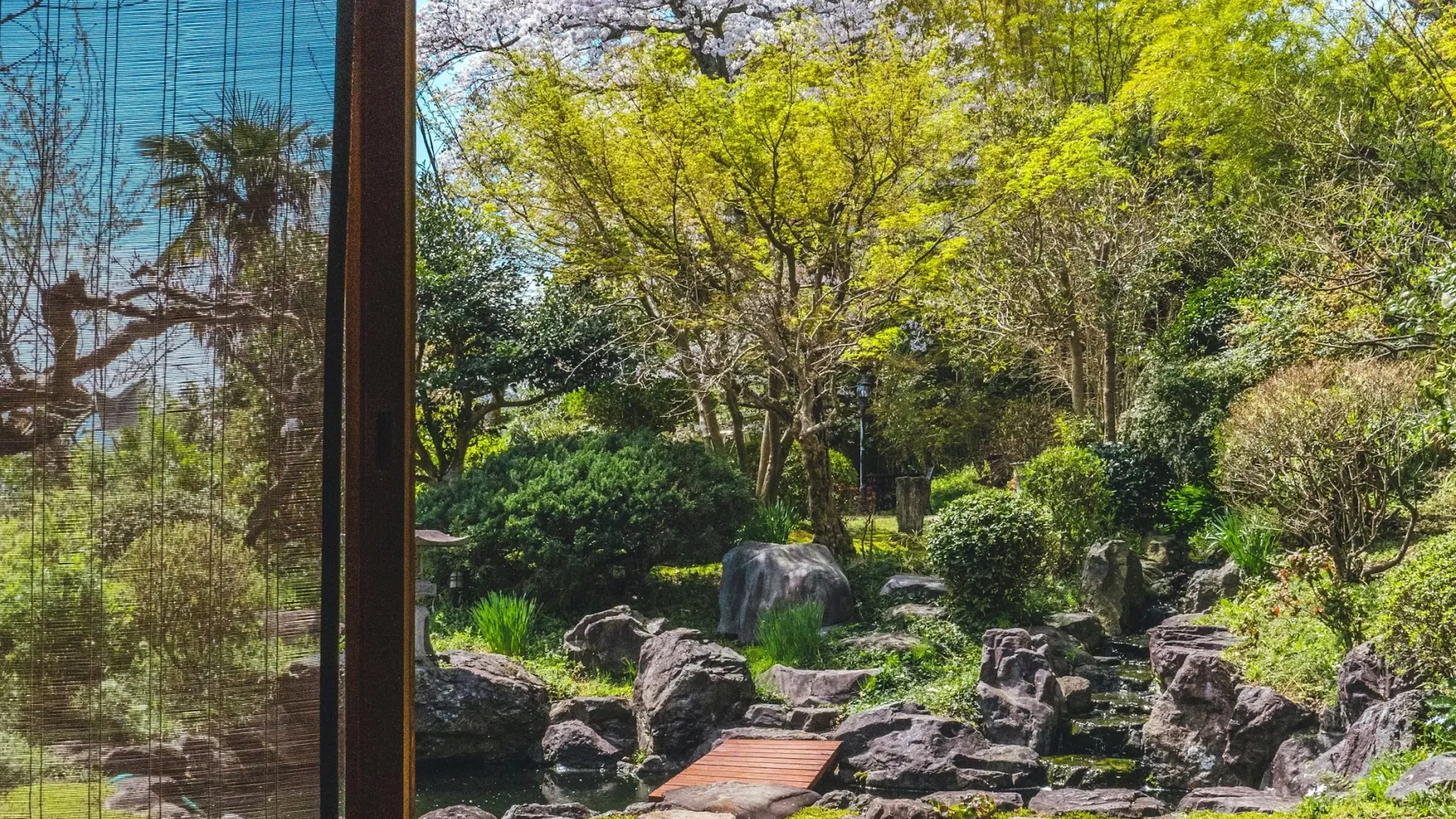
Asuka
飛鳥Asuka is the village where Japan's recorded history begins, the rural valley at the southern edge of the Nara basin where the first permanent capitals of the Yamato state were established in the sixth and seventh centuries and where the political, religious, and artistic foundations of Japanese civilization were laid. Before Nara, before Kyoto, before the idea of a fixed capital had solidified into architectural permanence, the emperors and empresses of Japan governed from palaces in this valley, their courts moving between sites with each succession in a practice that reflected both Shinto pollution taboos and the practical politics of clan rivalry. The result is a landscape scattered with palace ruins, tomb mounds, stone monuments, and temple foundations whose density of historical significance per hectare may be unmatched anywhere in East Asia.
The village today is almost impossibly peaceful, its rice paddies and vegetable gardens and narrow roads creating a pastoral setting that seems designed to maximize the contrast between the world-historical importance of what happened here and the modest, human scale of the place itself. The great events of Asuka's era, the introduction of Buddhism from Korea in 538 AD, the Taika Reforms of 645 that established centralized government, the compilation of the earliest law codes, the creation of the first permanent road system, took place in a landscape that a visitor can traverse on bicycle in an afternoon, the ruins and monuments appearing among the fields with a casualness that is the opposite of monumental display.
The stone monuments of Asuka are among its most enigmatic attractions. The Ishibutai Kofun, a megalithic burial chamber whose massive capstone, weighing approximately 77 tons, lies exposed to the sky after the earth mound that once covered it eroded away, is attributed to Soga no Umako, the powerful minister who helped introduce Buddhism to Japan. The Takamatsuzuka Kofun, a smaller tomb whose discovery in 1972 revealed brilliantly colored wall paintings depicting court ladies and celestial symbols in a style influenced by Tang dynasty China, demonstrated that seventh-century Asuka was connected to a cultural network that extended across the continent. These stones and paintings are fragments of a civilization that existed before Japan developed the written record to describe itself, their mute presence in the rural landscape generating a mystery that more thoroughly documented eras cannot provide.
Highlights
The Ishibutai Kofun is Asuka's most visually striking monument, a massive stone chamber whose exposure, created by centuries of erosion that stripped away the earth mound that once covered it, reveals the engineering of seventh-century megalithic construction with a clarity that buried tombs cannot offer. The chamber is composed of approximately thirty boulders, the largest of which weighs an estimated 77 tons, fitted together with a precision that required no mortar, the stones' weight and the exactness of their placement providing structural integrity that has endured for over 1,400 years. Visitors can enter the chamber and stand beneath the capstone, the experience of being enclosed by stones that were moved and placed by human effort in an era without mechanical power producing a visceral appreciation of the ambition and capability of the Asuka ruling class.
Asukadera, founded in 596 AD as the first full-scale Buddhist temple in Japan, houses the Asuka Daibutsu, a bronze Buddha statue cast in 609 AD that is the oldest known Buddha image in Japan. The statue, its surface darkened by fire and its features worn by the passage of nearly fifteen centuries, sits in a small, unadorned hall whose modesty amplifies the statue's presence. The face, despite the damage of time, retains an expression of archaic serenity that connects the viewer to the moment when Buddhism first established itself in this valley, the religion's promise of transcendence given physical form in bronze for the first time on Japanese soil.
The Takamatsuzuka Kofun, though the tomb itself is no longer open to visitors to preserve its fragile paintings, is represented in a nearby museum whose high-fidelity reproductions allow close examination of the wall paintings that stunned the archaeological world upon their discovery. The paintings depict groups of court ladies in flowing robes, a star chart of the night sky, and the four directional guardian animals of Chinese cosmology, their colors still vivid after thirteen centuries, their style demonstrating that Asuka's cultural connections extended far beyond the Japanese archipelago.
Culinary Scene
Asuka's culinary heritage includes one of the most unusual preparations in the Japanese kitchen: asuka nabe, a hot pot dish in which chicken and vegetables are simmered in a broth enriched with milk. The dish's origins are attributed to the Tang dynasty Chinese monks who resided in Asuka's temples and who, prohibited from consuming alcohol, used milk as a warming substitute during the cold winters. Whether the origin story is historically accurate or retrospectively invented, the dish itself is genuine and satisfying: the milk softens the broth's sharpness, enriches the chicken's flavor, and produces a creamy, comforting preparation whose mildness belies its nutritional depth.
The village's restaurants and farmhouse cafes serve meals built from the agricultural products of the surrounding valley: rice harvested from the paddies visible through the window, vegetables grown in the gardens of neighboring farms, and the simple preparations of country cooking whose appeal lies in the connection between plate and landscape. Seasonal specialties follow the agricultural calendar: spring bamboo shoots, summer cucumbers and eggplant, autumn persimmons and sweet potatoes, winter root vegetables simmered in dashi until they absorb the stock's umami depth.
The confectioneries of the Asuka area produce treats from local ingredients, including persimmon-based sweets and rice cakes that reflect the grain culture of the Yamato Plain. The simplicity of the food matches the simplicity of the landscape, both elements contributing to an experience whose power lies not in elaboration but in the authenticity of a place that has been producing food from the same soil for longer than most civilizations have existed.
Ryokans in Nara
There are no ryokans in our guide listed in Asuka. See our selection across Nara.
View ryokans in Nara