Totsukawa
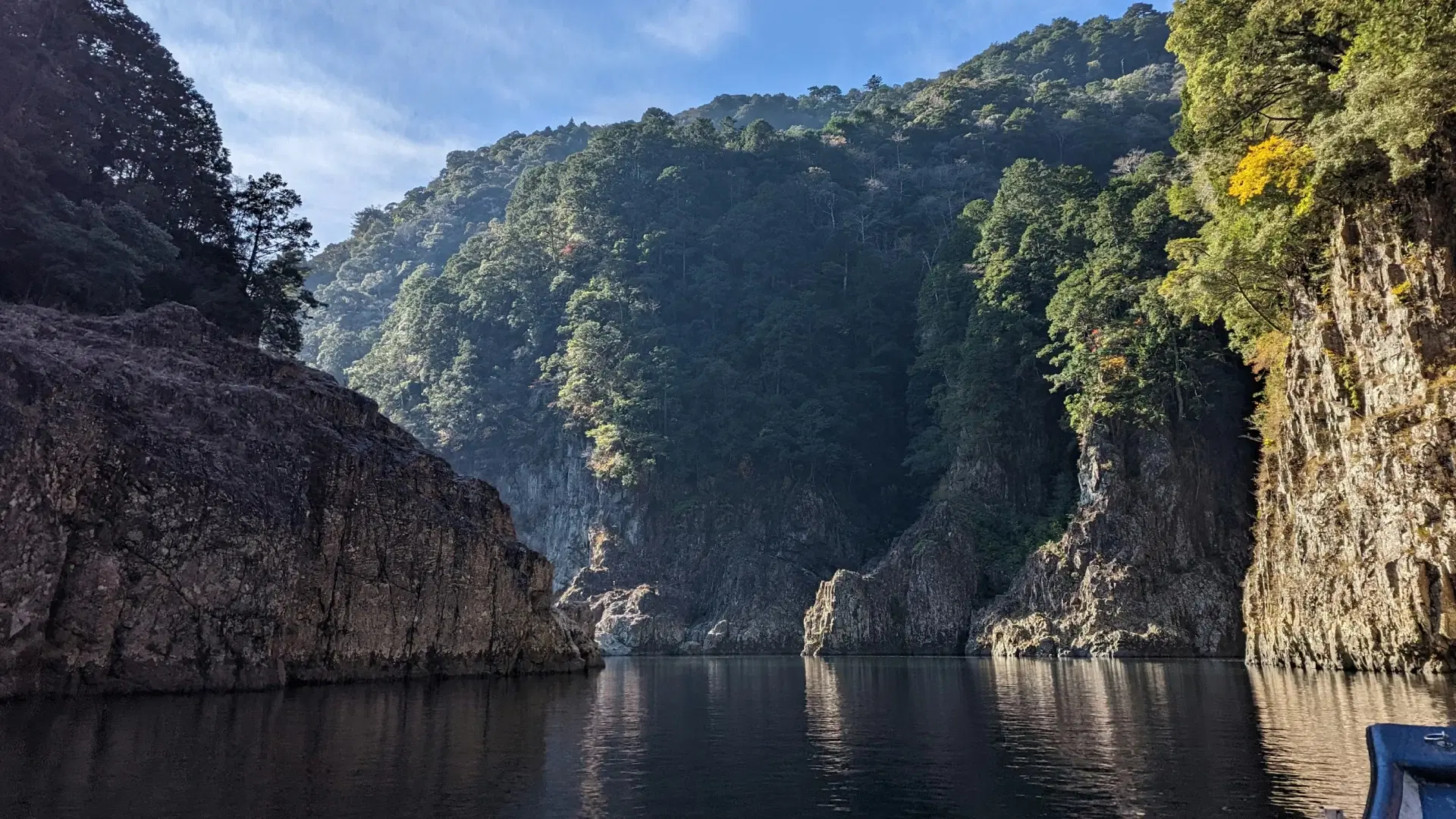
十津川Totsukawa is the largest village in Japan, a distinction that communicates less about population than about the overwhelming scale of the mountain landscape that defines it. Occupying 672 square kilometers of the Kii Peninsula's interior, an area larger than many Japanese cities, Totsukawa contains fewer than 3,500 residents scattered across settlements that cling to the steep valleys of the Kumano River and its tributaries, the terrain so precipitous that flat ground is precious and the roads that connect the village's hamlets wind through gorges and over passes in a continuous demonstration of engineering persistence against geological resistance. This is Japan at its most mountainous, a landscape where the forests are so dense and the valleys so deep that sunlight reaches the river surfaces for only a few hours each day, and where the sense of remoteness, though the village is technically within Nara Prefecture, is as complete as anywhere on the main island of Honshu.
Totsukawa's isolation has produced a culture of self-reliance whose most famous expression is the village's historical relationship with the imperial house. During the political crises of the medieval and early modern periods, Totsukawa warriors, drawn from a population too remote and too poor to be effectively governed by any feudal lord, offered their services directly to the emperor, and their loyalty was rewarded with exemption from taxation, a privilege that they maintained for centuries and that reinforced their identity as a community apart, beholden to the throne but otherwise autonomous. This history of independence persists in the village's character, a quality of self-contained dignity that visitors sense in the bearing of the residents and in the maintenance of traditions that the outside world has largely forgotten.
The village's hot springs, emerging from the deep geological faults that run through the Kii Peninsula, are among the most unspoiled in Japan. Totsukawa Onsen, the principal bathing area, and the more remote Kamiyu and Totsukawa hot springs along the Kumano River, offer thermal bathing in settings where the natural landscape has not been altered by resort development, the water flowing directly from the mountain into pools where the bather is surrounded by forest, river, and the silence of a valley too deep and too distant for the sounds of the modern world to penetrate.
Totsukawa is the largest village in Japan, a distinction that communicates less about population than about the overwhelming scale of the mountain landscape that defines it.
Highlights
The Tanize Suspension Bridge, spanning 297 meters across the Totsukawa gorge at a height of 54 meters above the river, is the longest pedestrian suspension bridge in Japan and an experience that tests the nerve of even confident walkers. The bridge sways visibly with each step, the wooden planks flexing beneath the walker's weight while the wind funneling through the gorge adds lateral movement to the vertical oscillation, and the view straight down through the gaps between the planks to the turquoise river far below is simultaneously terrifying and beautiful. Crossing the bridge is a physical encounter with the gorge's scale, the minutes spent on the swaying span providing a bodily understanding of depth and distance that no viewpoint from solid ground can replicate.
The Tamaki Shrine, one of the principal shrines of the Kumano faith, sits deep in the mountains at the head of a valley that was considered so sacred that ordinary pilgrims were not permitted to approach it during much of the medieval period. The shrine's isolation has preserved an atmosphere of primeval sanctity that the more accessible Kumano shrines, despite their greater fame, have diminished through the infrastructure of mass pilgrimage. The ancient trees that surround the shrine, some estimated to be over three thousand years old, create a canopy of such density that the forest floor exists in a permanent twilight, the air thick with the moisture and the vegetal fragrance of a forest that has been growing continuously since before the shrine was built.
The Kumano Kodo pilgrimage trail, specifically the Kohechi route that crosses the mountains between Koyasan and the Kumano shrines, passes through Totsukawa and provides the most immersive way to experience the village's landscape. The trail follows paths established by medieval pilgrims, the route marked by stone markers and maintained by local volunteers, the walking surface alternating between forest floor, stone steps, and mountain ridgelines that offer views of successive mountain ranges extending to the horizon in every direction.
Culinary Scene
Totsukawa's cuisine is mountain food in its purest form, the kitchen's materials drawn from the surrounding forests, rivers, and the small plots of cultivated land that the terrain permits. Ayu sweetfish, caught in the clear waters of the Kumano River and its tributaries, are grilled over charcoal on skewers planted upright beside the fire, the slow heat crisping the skin while the flesh remains moist and faintly bitter with the flavor of the river algae that is the fish's diet. Wild boar, hunted in the mountains during the autumn and winter, is served in nabe hot pots whose rich, gamey broth, thickened with miso, provides the caloric density that mountain life demands.
The mountain vegetables of Totsukawa, foraged from the forests that cover over 96 percent of the village's area, include fern shoots, wild wasabi, mountain yam, and the various greens and fungi whose seasonal appearance dictates the kitchen calendar. These ingredients, prepared simply by simmering, grilling, or pickling, carry the flavors of the forest itself: the mineral tang of wild plants grown in volcanic soil, the earthy depth of mushrooms harvested from decaying logs, the green brightness of spring shoots gathered before they unfurl.
The onsen ryokan and minshuku of the village serve these ingredients in meals that are generous in portion and honest in preparation, the food reflecting a culture where cooking is a practical art rather than a performance, where the quality of the ingredient matters more than the technique of the chef, and where the meal's greatest luxury is the knowledge that every component was gathered from the mountains and rivers visible through the dining room window.