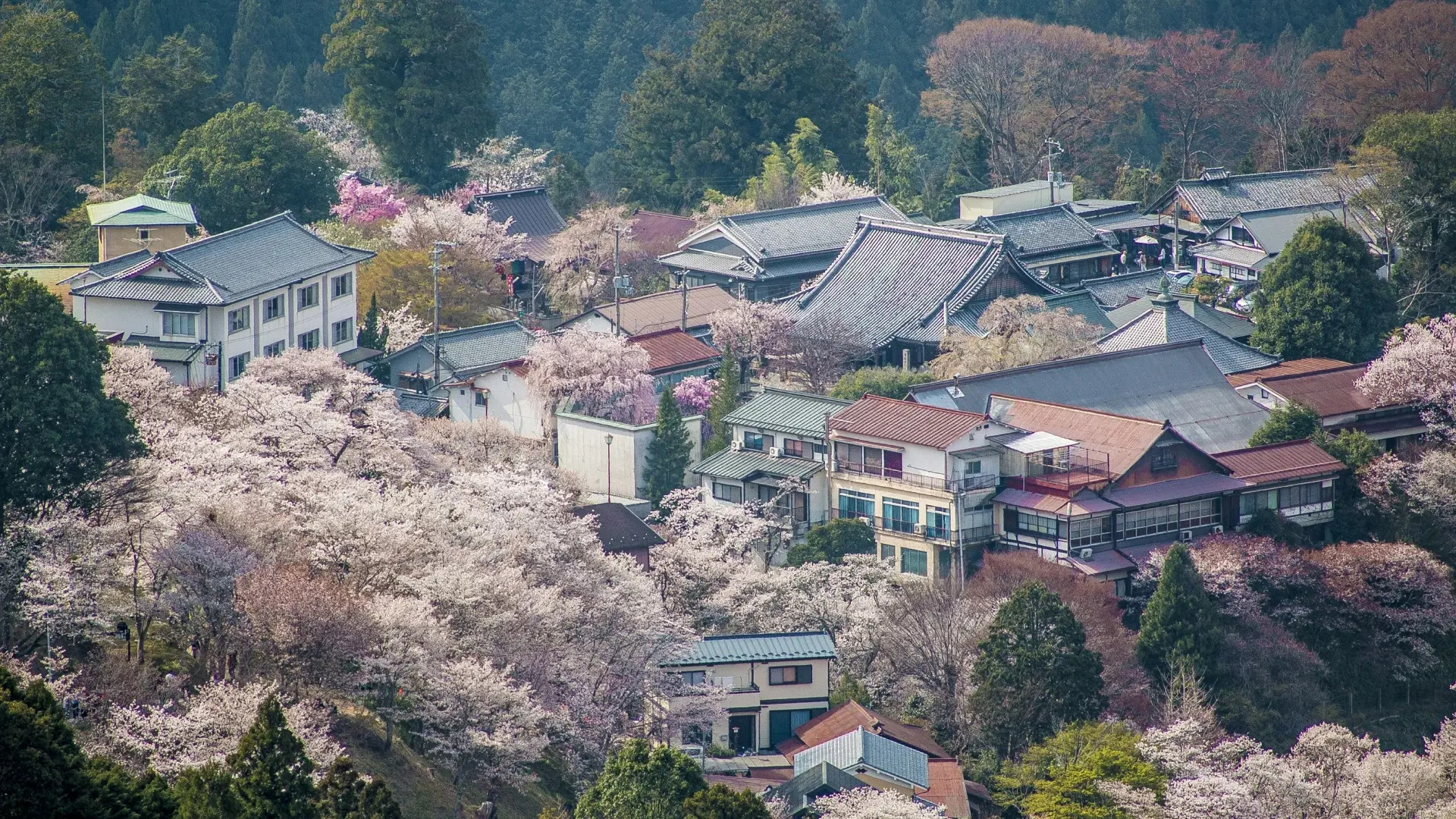
Yoshino
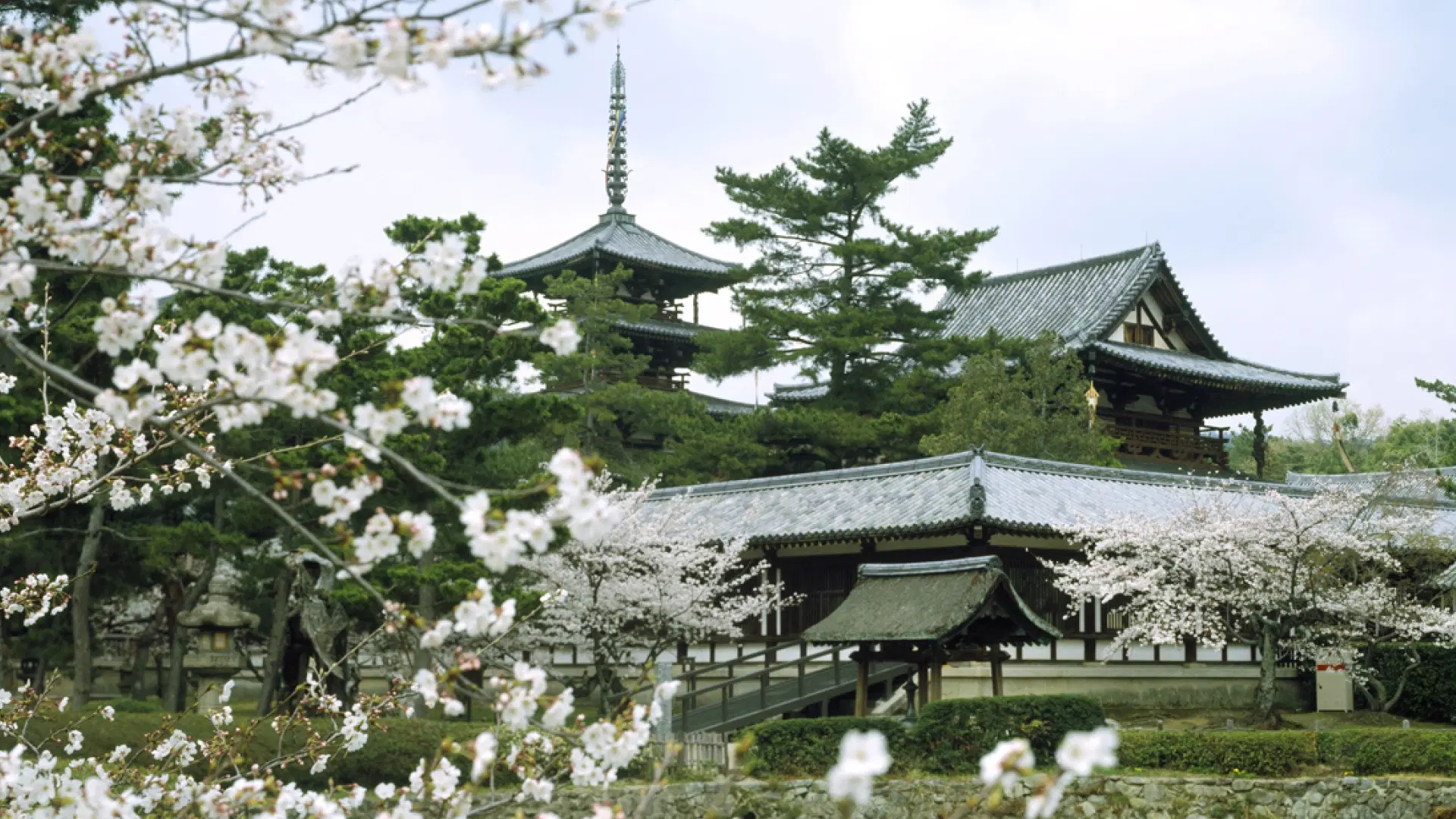
吉野Yoshino is the mountain that cherry blossoms made sacred. Rising south of the Nara basin in a series of ridges that ascend from the Yoshino River valley to the peaks of the Omine mountain range, Mount Yoshino has been Japan's most celebrated cherry blossom site for over 1,300 years, its slopes planted with approximately 30,000 trees, predominantly the mountain cherry yamazakura, whose pale pink and white blossoms open in successive waves from the lower to the upper ridges over a period of several weeks each spring. The result is not merely a display of flowers but a landscape event of almost geological scale, the entire mountain transforming from the dormant browns and greens of late winter into a luminous pink and white mass that can be seen from the Nara Plain below.
The blossoms of Yoshino are inseparable from the spiritual traditions that have made this mountain a center of ascetic practice since the seventh century. The Shugendo faith, a syncretic mountain religion combining elements of Buddhism, Shinto, Taoism, and indigenous shamanism, established its most important temple complexes on Yoshino's slopes, and the cherry trees were planted not as ornament but as sacred offerings to the mountain deity, each tree a votive act whose beauty served a devotional rather than aesthetic purpose. This religious dimension transforms the experience of cherry blossom viewing at Yoshino from hanami into something closer to pilgrimage, the ascent of the mountain through progressively later-blooming groves recapitulating the spiritual journey from the mundane world to the sacred heights.
Yoshino's historical resonance extends beyond the spiritual into the political. In 1336, the defeated Emperor Go-Daigo established his Southern Court on this mountain, creating a rival imperial lineage that persisted for nearly sixty years in opposition to the Northern Court in Kyoto. The temples and imperial residences of the Southern Court period survive among the cherry groves, their presence adding a layer of human drama to a landscape already saturated with botanical beauty and spiritual meaning. To climb Yoshino in blossom season is to move through a landscape where nature, religion, and history exist in a density of accumulated significance that no other cherry blossom site in Japan can approach.
Yoshino is the mountain that cherry blossoms made sacred.
Highlights
The cherry blossom viewing at Yoshino is organized, by tradition and by topography, into four ascending zones: Shimo-Senbon (the lower thousand trees), Naka-Senbon (the middle thousand), Kami-Senbon (the upper thousand), and Oku-Senbon (the inner thousand). The blossoms open from lower to upper, the altitude difference of several hundred meters creating a temperature gradient that spaces the bloom over approximately two to three weeks, and the ascending walk through the zones recapitulates this temporal progression, each level presenting a different stage of the blossom cycle. The lower slopes may be in full bloom while the upper ridges show only the first hints of color, and the summit may hold the last blossoms while the lower groves have already entered the green leaf stage that follows petal fall.
Kinpusenji, the principal temple of the Shugendo faith, dominates the Naka-Senbon area with its massive Zao-do hall, one of the largest wooden structures in Japan and a building whose raw, almost fortress-like construction reflects the mountain religion's emphasis on austerity and endurance. The hall houses three towering statues of Zao Gongen, the wrathful deity of the Omine mountains, whose blue-skinned, flame-wreathed forms embody the terrifying power that the Shugendo practitioners sought to encounter and absorb through their mountain asceticism. The statues are normally hidden behind closed doors but are revealed during special seasonal openings that draw devotees and art lovers in equal numbers.
The Yoshimizu Shrine, perched on a promontory overlooking the Naka-Senbon groves, served as the temporary palace of Emperor Go-Daigo and later as the headquarters of Toyotomi Hideyoshi during his famous cherry blossom viewing excursion to Yoshino in 1594, when he brought an entourage of 5,000 for a hanami party that remains one of the most legendary events in Japanese cultural history. The shrine's terrace provides the most celebrated viewpoint on the mountain, the panorama of blossoms stretching across the valley in a composition that has been painted, photographed, and described by visitors for centuries without ever being adequately captured by any medium other than direct experience.
Culinary Scene
Yoshino's culinary traditions reflect its mountain geography and its heritage as a center of religious asceticism. Yoshino kuzu, the arrowroot starch produced from the roots of the kudzu plant harvested in the surrounding mountains, is the area's most famous ingredient, its translucent, slightly sweet quality making it essential in traditional Japanese confectionery and in the refined preparations of kaiseki cuisine. Kuzu-kiri, translucent noodles cut from sheets of kuzu starch and served cold with a dark sugar syrup, is the quintessential Yoshino confection, its cool, slippery texture and gentle sweetness providing refreshment that feels as much medicine as food. Kuzu-mochi, a soft confection of kuzu starch served with kinako soybean powder and black sugar syrup, offers a richer variation on the theme.
Kaki no ha zushi, the persimmon leaf sushi shared with the broader Nara region but deeply associated with the Yoshino area, is available at shops and restaurants along the mountain's approach road, the pressed sushi wrapped in the large, fragrant leaves of the persimmon trees that grow throughout the foothills. The mountain setting also provides wild vegetables, mushrooms, and river fish that appear in the simple, honest preparations of the ryokan and minshuku that accommodate pilgrims and blossom viewers, the food reflecting the Shugendo ethos that values directness and modesty over elaboration.
The tea houses and confectioneries along the pilgrimage route serve seasonal wagashi designed to complement the blossom viewing experience, their spring offerings incorporating cherry blossom motifs in sakuramochi and cherry-flavored yokan that provide sweetness calibrated to the moment, the food functioning as an edible response to the landscape's beauty.