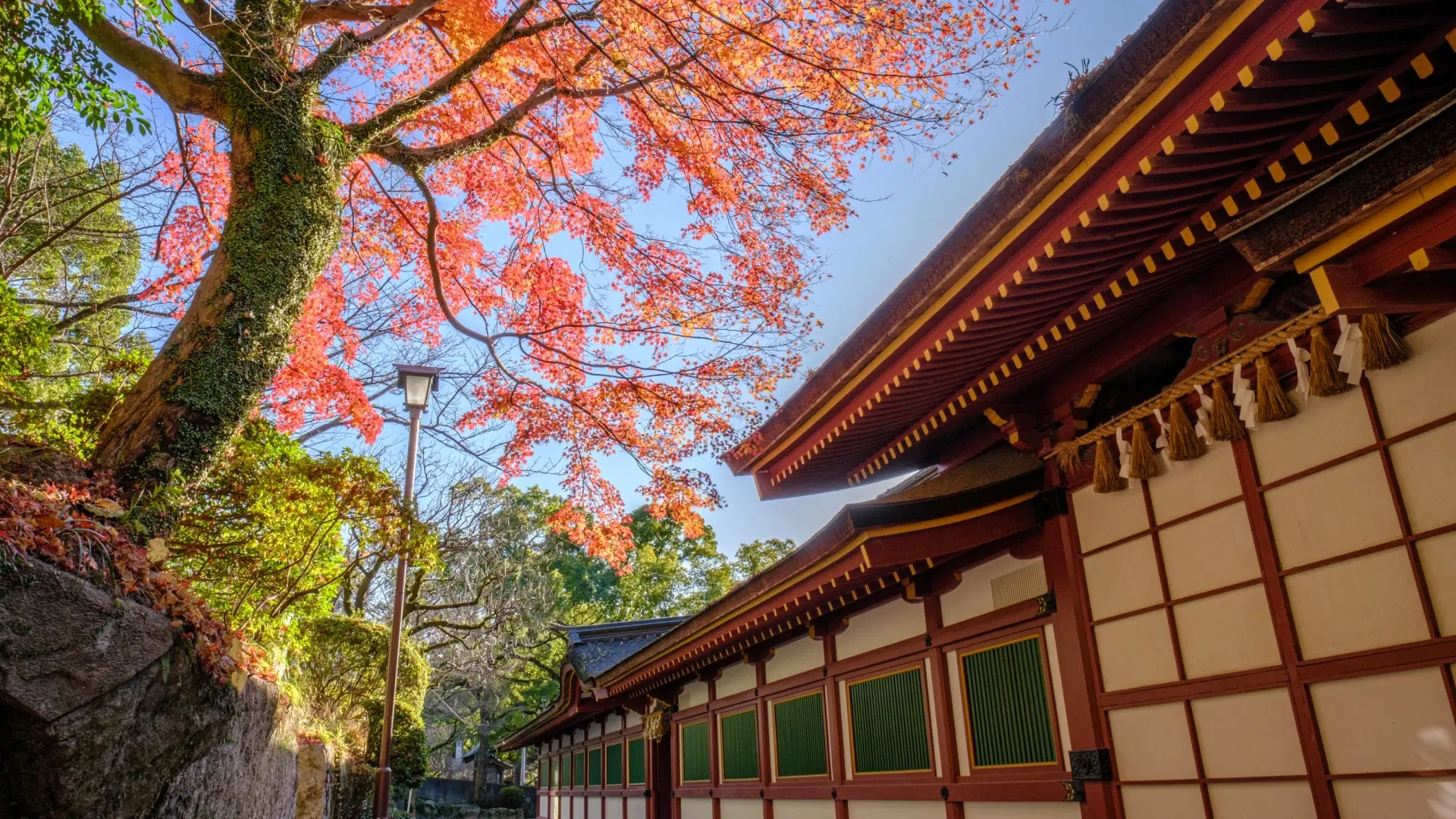
Munakata Taisha Autumn Festival
宗像大社秋季大祭The Autumn Festival at Munakata Taisha is a ceremony of oceanic grandeur, a three-day celebration at one of Japan's oldest and most spiritually significant shrines whose rituals honor the three Munakata goddesses who have protected seafarers and governed the waters between Japan and the Asian continent since before recorded history. Munakata Taisha's UNESCO World Heritage inscription, granted in 2017 for the sacred island of Okinoshima and its associated sites, recognized what the shrine's devotees have understood for millennia: that this complex of shrines, spanning the mainland, the island of Oshima, and the remote and restricted Okinoshima, constitutes one of the most remarkable sacred landscapes in East Asia, a place where the relationship between human civilization and the sea has been venerated with unbroken continuity for at least 1,500 years.
The autumn festival is the shrine's most important annual observance, the moment when the three goddesses enshrined at the separate locations are honored through rituals that connect the terrestrial and maritime dimensions of the sacred complex. The Miare-sai, the festival's opening ceremony on October 1, is conducted on the waters of Genkai-nada, the strait that separates the mainland from the offshore islands, a maritime procession of fishing boats that carries sacred objects across the open sea in a reenactment of the goddesses' mythological journey. The sight of the fleet moving across the grey-green waters of the strait, the shrine's banners flying from the masts and the priests' white robes visible against the dark hulls, connects the present ceremony to the centuries of seafaring worship that gave Munakata Taisha its foundational purpose.
The festival's significance extends beyond the purely religious. Munakata's location on the ancient maritime route between Japan, Korea, and China made the shrine a nexus of international exchange, and the treasures recovered from Okinoshima, where ritual offerings were deposited from the fourth through ninth centuries, include objects from across East Asia whose variety and richness testify to the breadth of the cultural connections that flowed through these waters. The autumn festival, in honoring the goddesses who governed this passage, honors by extension the entire history of exchange and encounter that shaped Japanese civilization.
History & Significance
Munakata Taisha's origins predate the historical record, the shrine's founding attributed to the mythological age when the sun goddess Amaterasu and the storm god Susanoo produced the three Munakata goddesses through a ritual of divine oath. The archaeological evidence from Okinoshima, where undisturbed ritual deposits spanning five centuries have been excavated, confirms that organized worship at the Munakata sites was established by the late fourth century and continued with extraordinary consistency through the Nara period. The offerings recovered from the island, including bronze mirrors, gold rings, glass beads, miniature looms, and iron weaponry, represent the finest sacred objects of their respective eras and demonstrate that the Munakata goddesses commanded the devotion of the highest levels of Japanese and continental society.
The autumn festival's current form preserves ritual structures that were codified during the medieval period, when the shrine's relationship with the central government and the maritime communities of northern Kyushu was formalized through regular ceremonial observance. The Miare-sai maritime procession, in particular, maintains a connection to the era when the shrine's primary function was the spiritual protection of the sea routes that carried diplomats, monks, merchants, and scholars between Japan and the continent. The festival's continuation through the modern era, sustained by the fishing communities of the Munakata coast whose livelihoods still depend on the waters the goddesses protect, ensures that the ritual remains rooted in lived experience rather than preserved as historical recreation.
What to Expect
The Miare-sai on October 1 is the festival's most dramatic event, a maritime procession in which a fleet of fishing boats carries sacred objects from the offshore shrine on Oshima to the mainland shrine of Hetsu-miya. The boats depart from Oshima in the early morning, their passage across the open water of Genkai-nada visible from the mainland coastline, and arrive at the fishing port of Kone, where the sacred objects are transferred to a land procession that continues to the main shrine. The combination of the maritime and terrestrial processions creates a festival whose spatial scale encompasses both sea and land, the sacred journey crossing the boundary between the two elements that the Munakata goddesses unite.
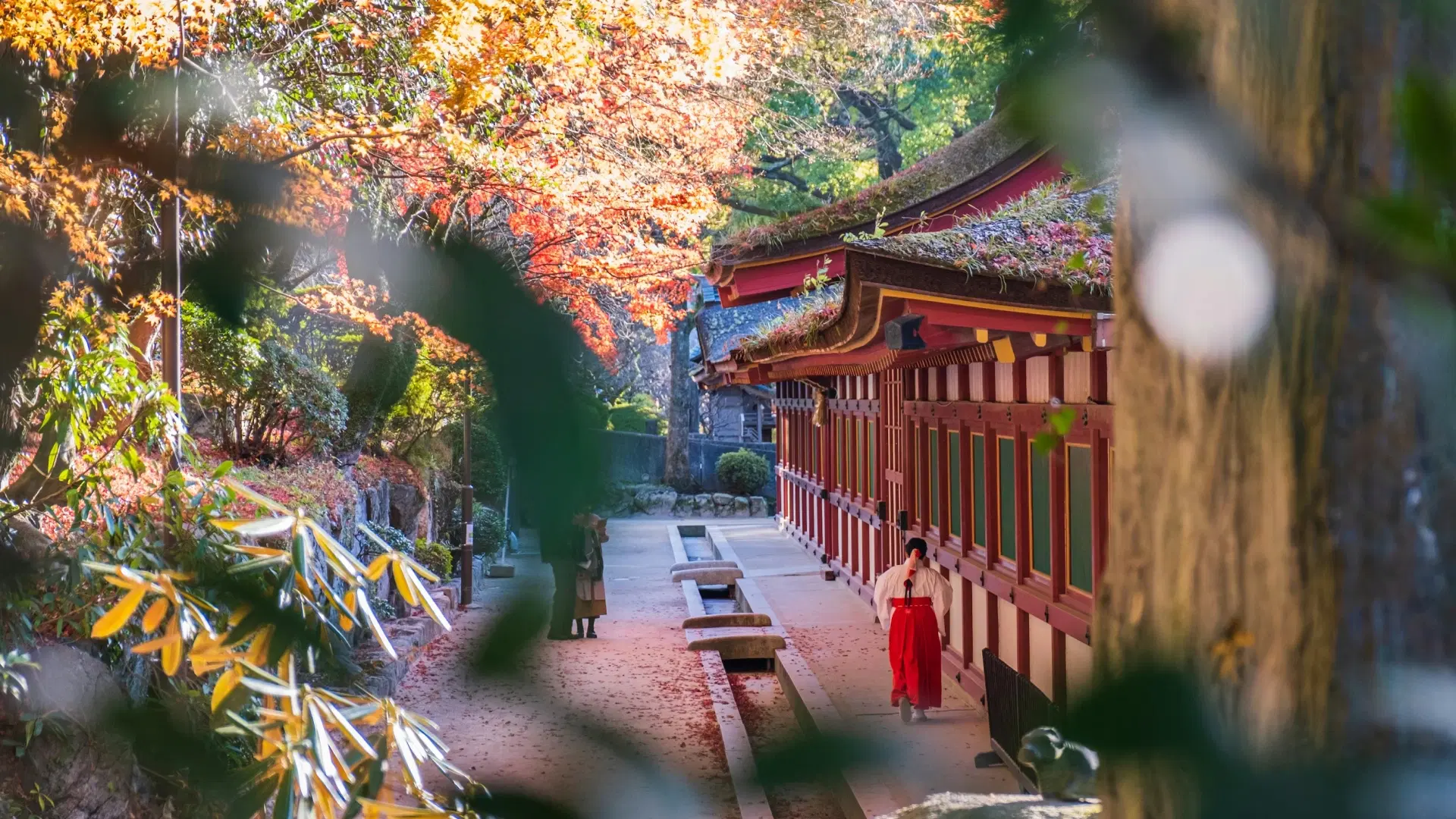
The main shrine compound at Hetsu-miya hosts the principal ceremonies on October 2 and 3, including kagura dances, ritual offerings, and prayers conducted by the shrine priests in the formal style of Shinto liturgy. The compound's ancient camphor trees and the surrounding forest of the shrine's sacred grove create a setting of natural solemnity that amplifies the ceremonial atmosphere. The Takamiya Saijo, a sacred hilltop clearing behind the main shrine where worship was conducted in the open air before the construction of shrine buildings, is accessible during the festival period and offers a direct encounter with the oldest layer of Japanese religious practice, the worship of the divine in nature rather than in architecture.
The festival draws participants from across the Munakata region, and the processions and ceremonies are attended by fishing families, shrine parishioners, and visitors who understand the event as both a religious observance and a celebration of the maritime culture that defines this stretch of the Fukuoka coast. The atmosphere is reverent but not austere, the solemnity of the rituals balanced by the communal warmth of a festival whose participants share a genuine connection to the shrine and its traditions.