Itoshima
糸島Itoshima occupies a peninsula that juts into the Genkai Sea just west of Fukuoka City, and the proximity of this rural, coastal landscape to one of Japan's most vibrant urban centers has produced a place of unusual character. Thirty minutes by train from the towers and neon of Tenjin, the traveler enters a world of rice paddies, fishing harbors, forested mountains, and beaches whose white sand and clear water rival any in southern Japan. This accessibility has attracted a community of artists, craftspeople, surfers, and culinary entrepreneurs whose creative presence has given Itoshima a cultural vitality that its modest population might not otherwise support, without erasing the agricultural and maritime traditions that preceded them.
The peninsula's geography is remarkably varied for its size. The northern coast, facing the open sea, is defined by dramatic rock formations, hidden coves, and beaches where the Genkai Sea's waves produce conditions that have made Itoshima one of Kyushu's premier surfing destinations. The southern shore, sheltered and calm, faces Hakata Bay and the distant skyline of Fukuoka City. Between them, the interior rises to forested peaks whose slopes support rice terraces, citrus groves, and the cedar forests that have supplied timber to the region for centuries.
Itoshima's historical significance predates its contemporary appeal. The peninsula is home to some of the most important archaeological sites in Japan, including the remains of the ancient kingdom of Ito, one of the polities described in Chinese historical records as part of the Wa confederation. The artifacts recovered from burial mounds and settlement sites throughout the peninsula provide evidence of sophisticated trade networks connecting Itoshima to the Korean Peninsula and mainland China from as early as the Yayoi period, establishing a continental orientation that long predates the similar connections of neighboring Hakata.
Itoshima occupies a peninsula that juts into the Genkai Sea just west of Fukuoka City, and the proximity of this rural, coastal landscape to one of Japan's most vibrant urban centers has produced a place of unusual character.
Highlights
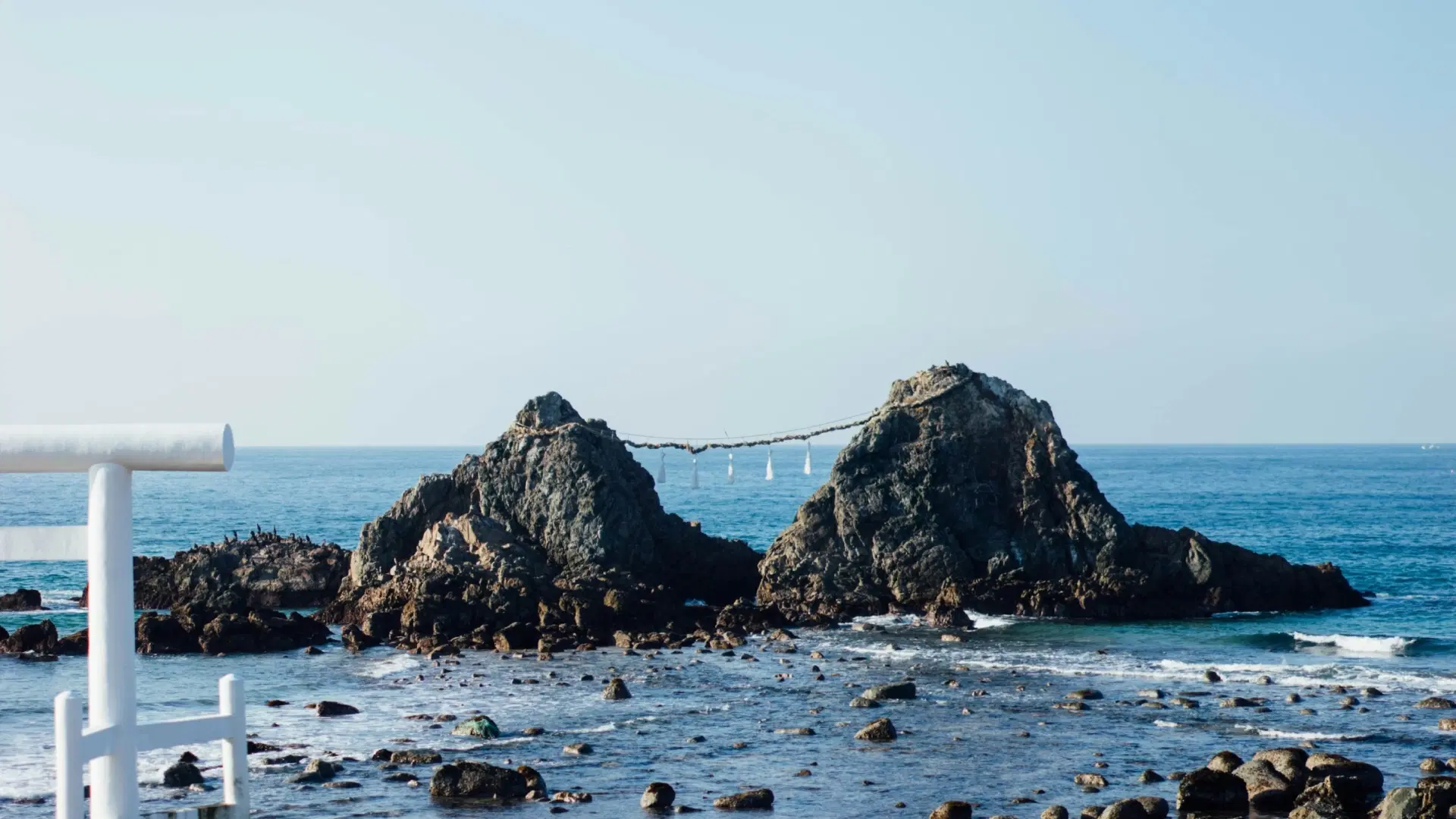
The Futamigaura beach, where a sacred shimenawa rope stretches between two rocks in the surf, provides Itoshima's most photographed vista and one of its most spiritually resonant sites. The rocks, standing in the shallows like sentinels against the open sea, frame sunset views of such beauty that the site has acquired a popularity disproportionate to the modesty of its physical scale. The shrine above the beach, Sakurai Futamigaura, maintains the sacred character of the site, and visiting at dawn, when the fishing boats are heading out and the morning light catches the rope against the darkened water, offers an experience stripped of the crowds that gather later in the day.
The coastal road that circles the peninsula's northern shore passes through a landscape of alternating drama and gentleness: rocky headlands giving way to sandy coves, fishing harbors yielding to forested stretches where the road climbs above the water and reveals panoramic views of the Genkai Sea. The small galleries, cafes, and craft workshops scattered along this route represent the creative community that has chosen Itoshima for its combination of natural beauty and proximity to the city, and stopping at these establishments, each reflecting the individual vision of its creator, provides a dimension of cultural engagement that a purely natural landscape would lack.
The interior of the peninsula, less visited than the coast, rewards exploration with rice terraces, quiet shrines, and the kind of unhurried rural beauty that has become increasingly rare in metropolitan Japan. The summit of Mount Kaya, accessible by hiking trail, offers views that encompass the peninsula, the city, and the sea in a single panorama, and the forested approach, cool and fragrant even in summer, provides the physical counterpoint to the coastal experiences below.
Culinary Scene
Itoshima has developed a food culture that draws equally on the peninsula's agricultural heritage and the creative energy of its newer residents. The oysters cultivated in the calm waters of Fukuoka Bay, harvested from November through March, are Itoshima's most celebrated seasonal product, and the oyster huts that operate along the western shore during these months have become destinations in their own right. The huts, open-air structures with communal grills and the informal atmosphere of a beach barbecue, offer oysters by the bucket alongside local vegetables, sausages, and the accompaniments that a group of friends might assemble for an afternoon of leisurely eating. The oysters themselves, sweet and briny with the clean mineral character of the Genkai Sea, are best eaten simply, grilled in the shell until they just open, with nothing more than a squeeze of local citrus.
The peninsula's agricultural products include salt harvested from the Genkai Sea by traditional evaporation methods, honey from apiaries in the forested interior, and craft bread from bakeries that have made Itoshima a destination for serious bread enthusiasts. The Saturday morning farmers market at JA Itoshima draws visitors from Fukuoka City and beyond for seasonal produce, handmade tofu, and the direct engagement with the producers that no urban supermarket can replicate.
The fishing harbors along the northern coast supply seafood whose freshness is measured in hours rather than days. The sashimi served at the small restaurants near the harbors reflects the morning's catch with an immediacy that connects the act of eating to the sea visible through the window.
Ryokans in Fukuoka
There are no ryokans in our guide listed in Itoshima. See our selection across Fukuoka.
View ryokans in Fukuoka