Hakata Ramen Stadium Season
博多ラーメンシーズンHakata ramen is not simply a regional noodle dish but a cultural institution, the milky, pork-bone tonkotsu broth and thin, firm noodles that define the style having achieved a status in Fukuoka that transcends gastronomy and enters the territory of civic identity. The concentrated expression of this obsession finds its most accessible form in Ramen Stadium, the dedicated ramen floor within Canal City Hakata, where a rotating selection of top-tier shops from across Kyushu and beyond serves bowls that represent the full spectrum of the tonkotsu tradition alongside its regional variations. While the stadium operates throughout the year, the cooler months bring a deepening of appetite and atmosphere that makes autumn and early winter the natural season for serious ramen pilgrimage, the rich broth offering warmth that feels necessary rather than merely pleasurable.
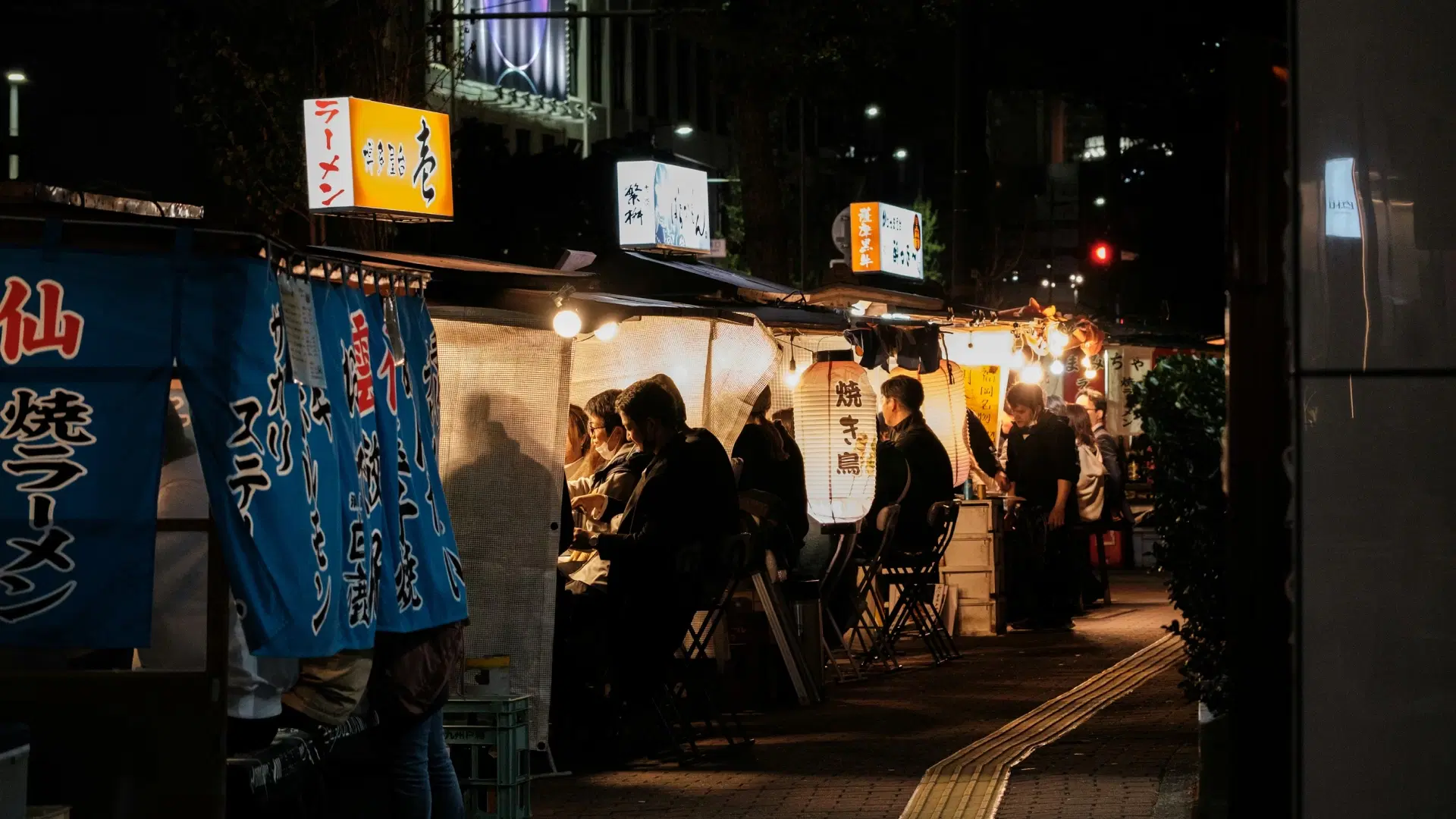
The culture surrounding Hakata ramen extends well beyond any single venue. The yatai, the mobile food stalls that line the banks of the Naka River and the sidewalks of the Tenjin district each evening, are the tradition's most romantic expression, their canvas flaps and counter seating creating intimate theaters of noodle preparation where the cook works within arm's reach of the diner. The yatai have been serving Hakata ramen since the postwar years, their persistence through decades of urban modernization a testament to the depth of the city's attachment to this particular form of street-level dining. The experience of eating ramen at a yatai on a cold November evening, the steam rising from the bowl into the night air, the conversation of neighboring diners creating a warmth that supplements the broth's, is one of the defining sensory experiences of Fukuoka.
The depth of the ramen culture here rewards extended exploration. Each shop maintains its own recipe, its own balance of richness and clarity in the broth, its own preference for noodle firmness, and its own array of toppings and condiments. The system of kaedama, ordering a refill of noodles to finish the remaining broth, and the vocabulary of noodle firmness from yawa (soft) through futsuu (normal) to barikata (very firm) and beyond, reflect a culture of customization that treats each bowl as a collaboration between cook and diner.
Hakata ramen is not simply a regional noodle dish but a cultural institution, the milky, pork-bone tonkotsu broth and thin, firm noodles that define the style having achieved a status in Fukuoka that transcends gastronomy and enters the territory of civic identity.
History & Significance
The origins of Hakata ramen are intertwined with the port city's history of exchange with the Asian continent. The tonkotsu style, built on a broth produced by boiling pork bones at high heat for hours until the collagen dissolves into a creamy, opaque liquid, emerged in the immediate postwar period from the yatai culture of Fukuoka's reconstruction-era streets. The exact genealogy is contested, with several shops claiming origination, but the style's development was unmistakably collective, refined through decades of competition among hundreds of small operators whose livelihoods depended on producing a bowl that would bring customers back the next evening.
The formalization of ramen culture in dedicated venues like Ramen Stadium, which opened in 1999 within Canal City Hakata, represented a new phase in the tradition's evolution. By gathering multiple acclaimed shops under one roof and rotating them periodically, the stadium created a curated experience that introduced visitors to the breadth of the regional tradition while encouraging the competitive excellence that has always driven ramen culture forward. The concept proved influential, inspiring similar ramen-focused food halls in other Japanese cities, but the Hakata original retains a primacy rooted in the authenticity of its setting at the geographic heart of tonkotsu culture.
What to Expect
Ramen Stadium occupies the fifth floor of Canal City Hakata, its corridor of shops arranged to allow easy comparison and repeated visits. Each shop operates independently, preparing its signature bowl to order, and the variety on offer typically spans classic Hakata tonkotsu, miso-blended variations, lighter styles that reduce the broth's richness without sacrificing depth, and occasional departures into shoyu or other regional traditions. The lineup changes periodically as shops rotate in and out, ensuring that repeat visitors encounter new options alongside established favorites.
Beyond the stadium, Fukuoka's ramen landscape rewards ambulatory exploration. The yatai district along the Naka River in Tenjin typically opens at dusk, the stalls assembling with practiced efficiency as darkness falls and the first customers take their seats. The etiquette is simple: sit, order, eat, and move on, the brevity of the encounter balanced by its intensity. The best yatai develop loyal followings who return night after night, the relationship between regular customer and cook acquiring a warmth that no restaurant dining room can replicate.
The broader ramen scene encompasses standalone shops scattered throughout the city, many operating from modest premises whose exteriors give little indication of the craft practiced within. Neighborhoods like Nagahama, adjacent to the fish market, developed their own substyle of ramen characterized by an even thinner noodle and a broth of particular intensity. Exploring these variations, walking from shop to shop across different districts, transforms ramen from a single meal into an itinerary, a way of reading the city through its most beloved dish.