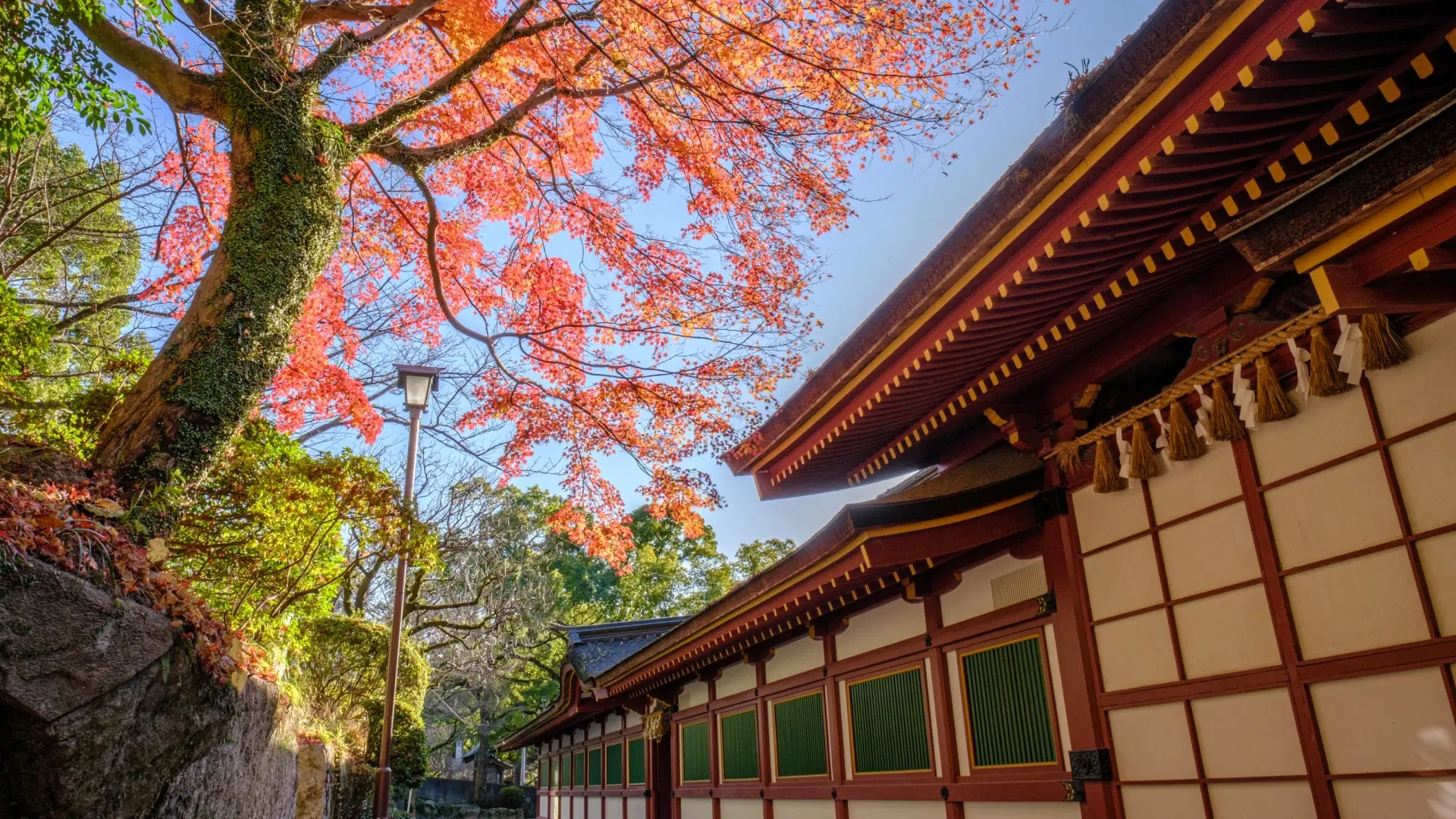
Dazaifu Plum Blossom Festival
太宰府天満宮梅まつりThe Dazaifu Plum Blossom Festival is a celebration inseparable from the spirit of the man whose memory it honors. Sugawara no Michizane, the Heian-period scholar and statesman enshrined at Dazaifu Tenmangu as the deity Tenjin, loved plum blossoms with a devotion that transcended the aesthetic and approached the devotional. His most famous poem, composed on the night of his departure from Kyoto into exile, addressed his garden's plum tree with a tenderness usually reserved for human companions: "When the east wind blows, send your fragrance to me, plum blossom. Even though your master is gone, do not forget the spring." The six thousand plum trees that now surround his shrine answer that poem each February and March with a display that transforms the sacred precincts into a landscape of living tribute.
The festival marks the opening of the plum season at one of Japan's most important shrines, and the convergence of natural beauty and spiritual significance gives the event a depth that pure flower viewing alone cannot achieve. The plums do not merely bloom; they bloom for Michizane, and this narrative dimension, the flowers as faithful servants returning each year to honor their exiled master, infuses the viewing with an emotional resonance that is unique among Japanese flower festivals.
The varieties represented across the shrine grounds encompass the full spectrum of the ume's color and form, from the pure white of the single-petaled varieties to the deep crimson of the double-flowered cultivars, with every gradation of pink between them. The trees bloom in sequence rather than simultaneously, extending the viewing season across several weeks and ensuring that each visit during the festival period encounters a slightly different composition of color and fragrance.
The Dazaifu Plum Blossom Festival is a celebration inseparable from the spirit of the man whose memory it honors.
History & Significance
The association between Dazaifu Tenmangu and plum blossoms is as old as the shrine itself, rooted in the historical Michizane's documented love for the flower and amplified by centuries of literary and artistic elaboration. The legend of the Tobiume, the "flying plum," holds that Michizane's favorite plum tree uprooted itself from his Kyoto garden and flew to Dazaifu to be near its master in exile. The tree identified as the Tobiume stands to the right of the main hall today, its gnarled form and early blooming interpreted as evidence of its supernatural devotion. Whether the legend is believed literally or appreciated as poetic metaphor, its presence at the heart of the shrine's identity has ensured that plum cultivation at Dazaifu has been a matter of spiritual obligation as well as horticultural practice.
The formal festival, organized as a public event with cultural performances and illuminations, developed during the Meiji and Taisho periods as the shrine's visitor base expanded beyond the purely devotional to include cultural tourists and flower enthusiasts. The postwar period saw further elaboration, with the addition of tea ceremonies, calligraphy exhibitions, and musical performances that connect the plum viewing to the broader tradition of scholarly refinement that Michizane represents. The festival's current form balances the sacred and the cultural, the religious pilgrimage and the aesthetic excursion, in a manner that honors both dimensions of Tenmangu's significance.
What to Expect
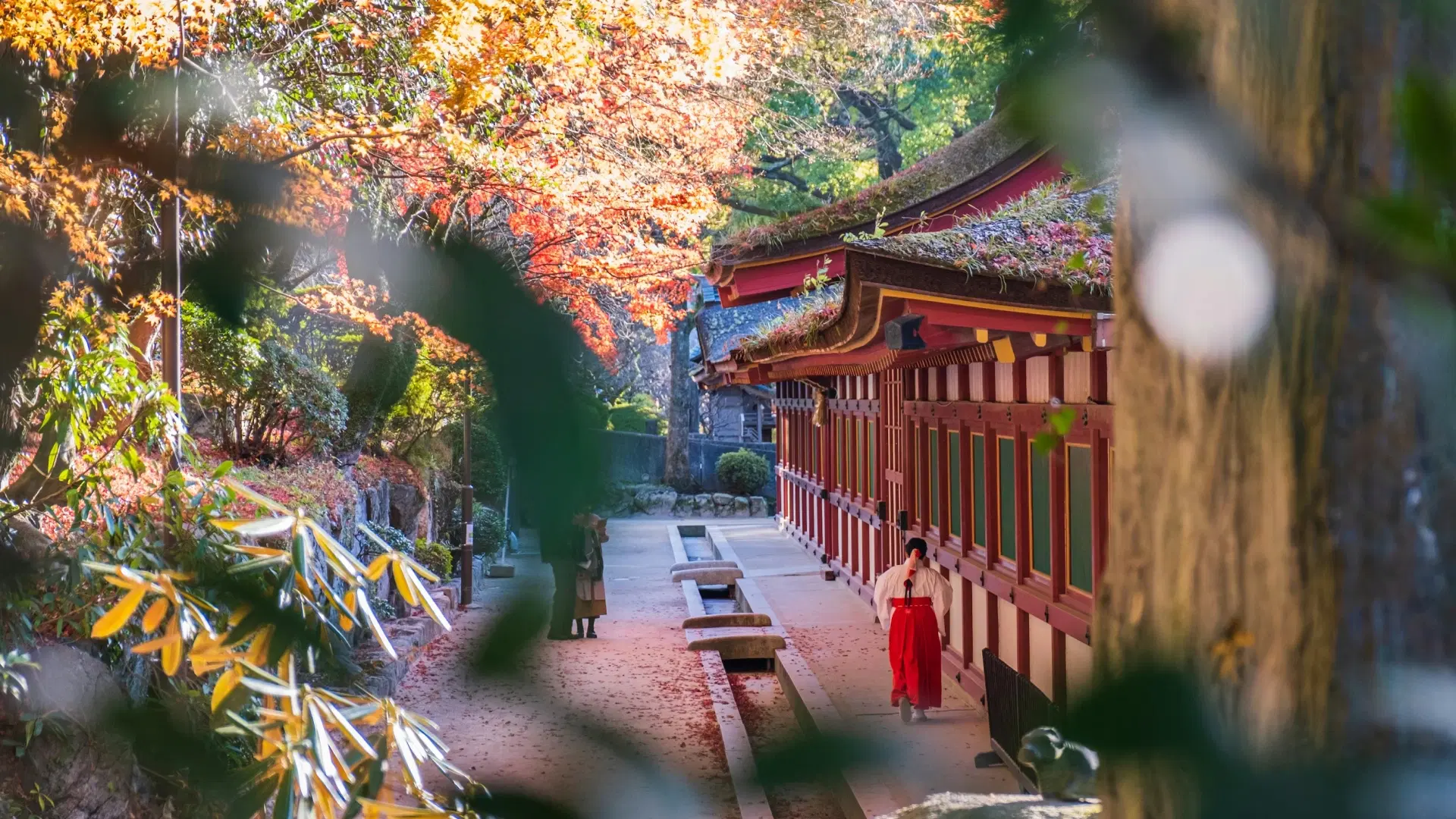
The plum groves surrounding the main hall offer paths that wind through trees of varying age, size, and variety, and the experience of walking among them, the fragrance preceding the visual encounter as one approaches each new cluster of blossoms, engages the senses in a sequence that moves from smell to sight to the tactile awareness of petals drifting onto shoulders and sleeves. The Tobiume tree, identifiable by its position beside the main hall and by the attention it receives from visitors who know its legend, provides the emotional focal point of the grove, its blossoms carrying the weight of a story that is simultaneously historical, mythological, and botanical.
Evening illuminations during selected periods of the festival transform the grove into a landscape of shadows and light, the blossoms glowing against the darkened sky with an intensity that daylight viewing does not achieve. The lanterns along the paths create pools of warmth that alternate with stretches of darkness, and the experience of moving between them, emerging from shadow into the lit presence of a flowering tree, gives the night viewing a theatrical quality that complements the daytime's naturalism.
Tea ceremonies conducted in the shrine's tea houses during the festival period offer the opportunity to experience the matcha tradition in a setting that connects directly to the history of its practice. Michizane was a scholar of Chinese literature and culture, and the tea ceremony's roots in Chinese literary gatherings give the practice a particular resonance within the precincts of his shrine. The seasonal confections served with the tea incorporate plum motifs in both form and flavor.