The Art of Koyo: Reading Autumn's Palette
A connoisseur's guide to understanding Japan's autumn colors at the deepest level
The casual observer of autumn foliage sees a forest turning red and gold. The practiced eye sees something more: a chromatic progression that unfolds over weeks according to botanical and meteorological laws as precise as any musical composition. Learning to read this progression is the beginning of a deeper engagement with koyo. The Japanese have been reading autumn's palette for over a thousand years, developing a vocabulary that distinguishes dozens of shades and stages.
Koyo season
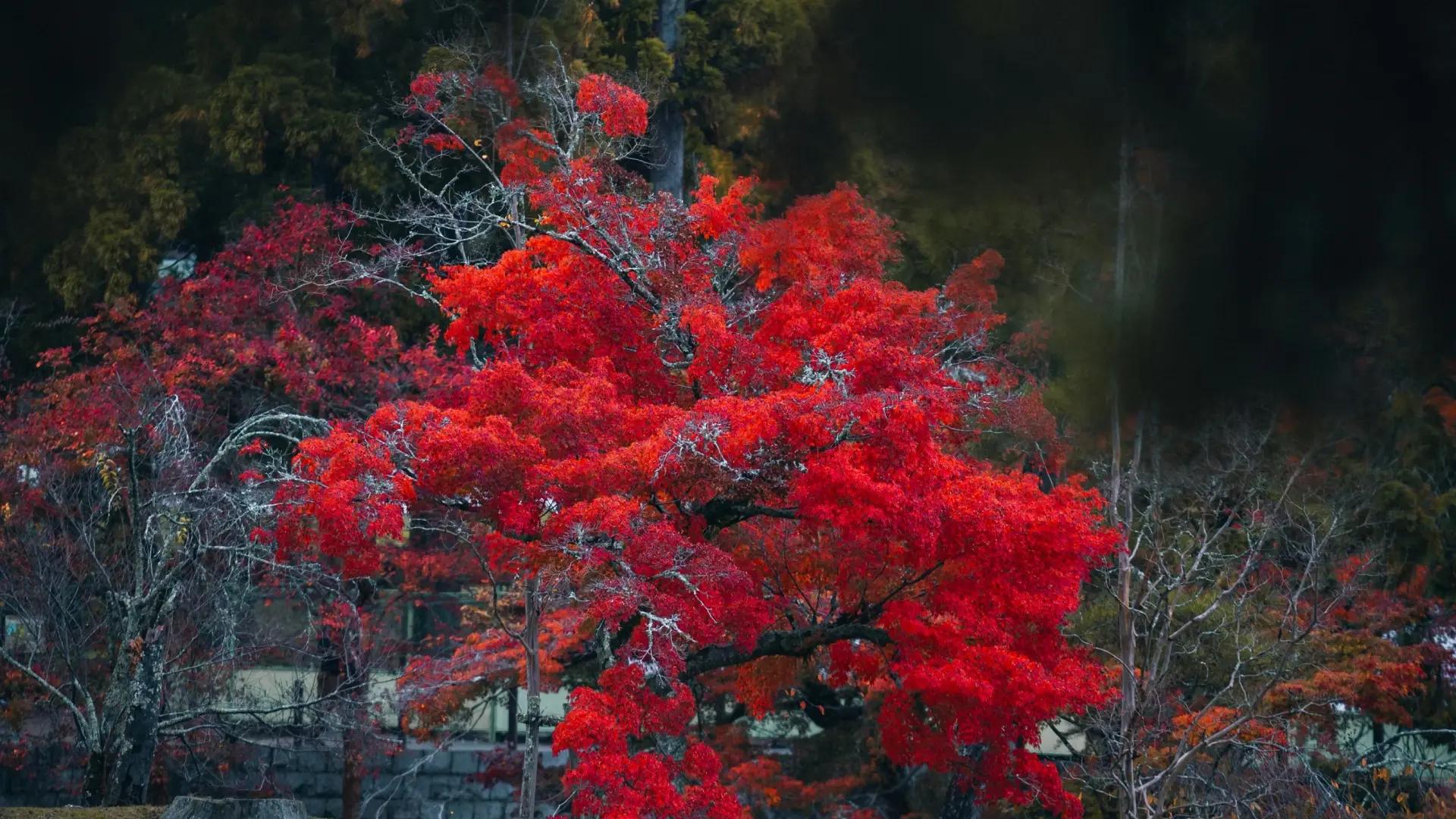
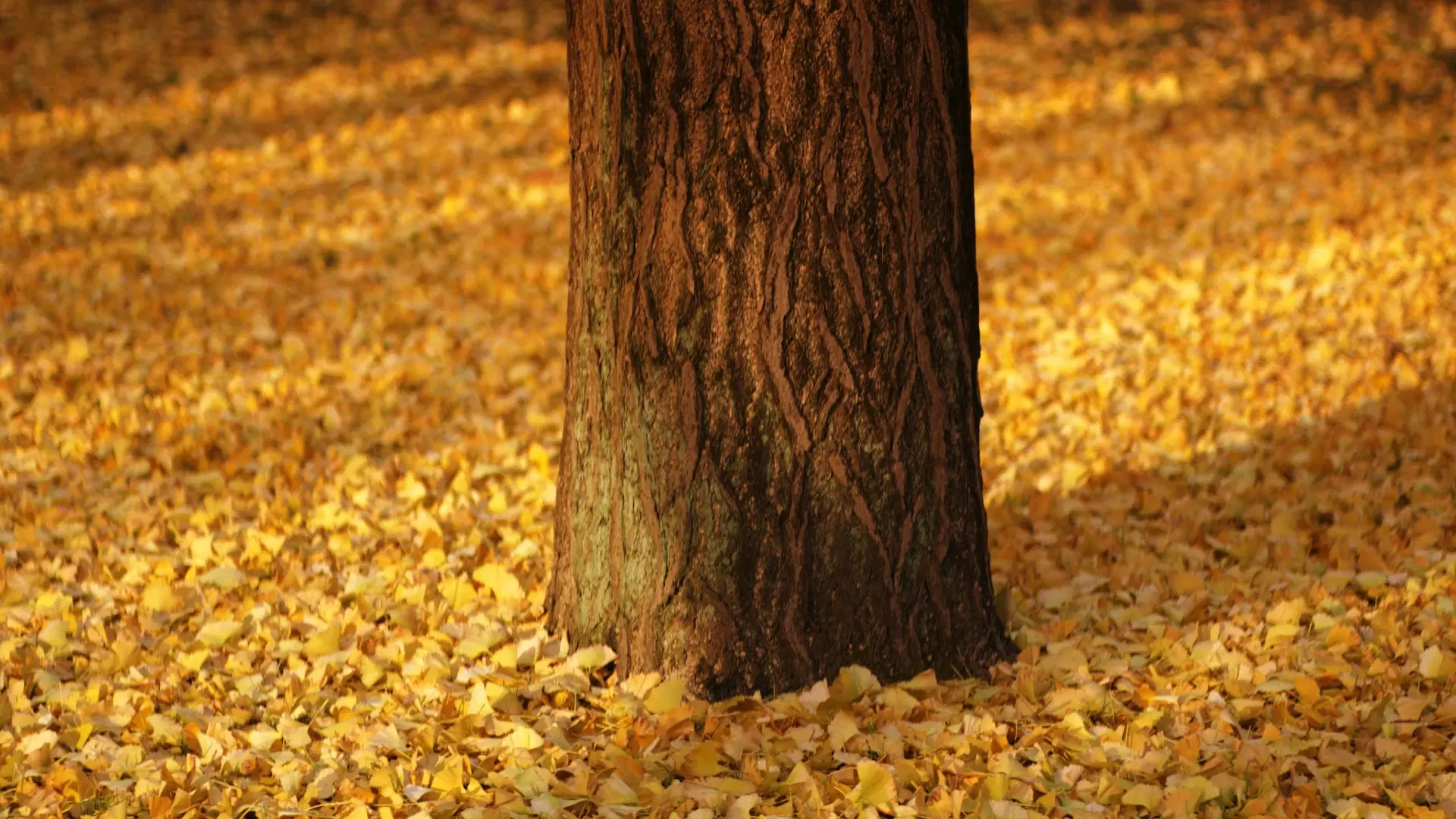
Autumn color is not random. It follows from the chemistry of specific pigments in specific species, modulated by temperature, light, and moisture. The yellow and orange pigments, called carotenoids, are present in the leaf throughout its life. The red pigments, called anthocyanins, are newly produced in autumn. The intensity of the resulting red depends on the sharpness of the temperature contrast between warm days and cold nights, a pattern that the Japanese Alps and the mountains of Tohoku produce with remarkable consistency.
Where English offers "red," Japanese provides kurenai, akane, beni, and shuiro, each describing a specific hue with a specific emotional resonance.
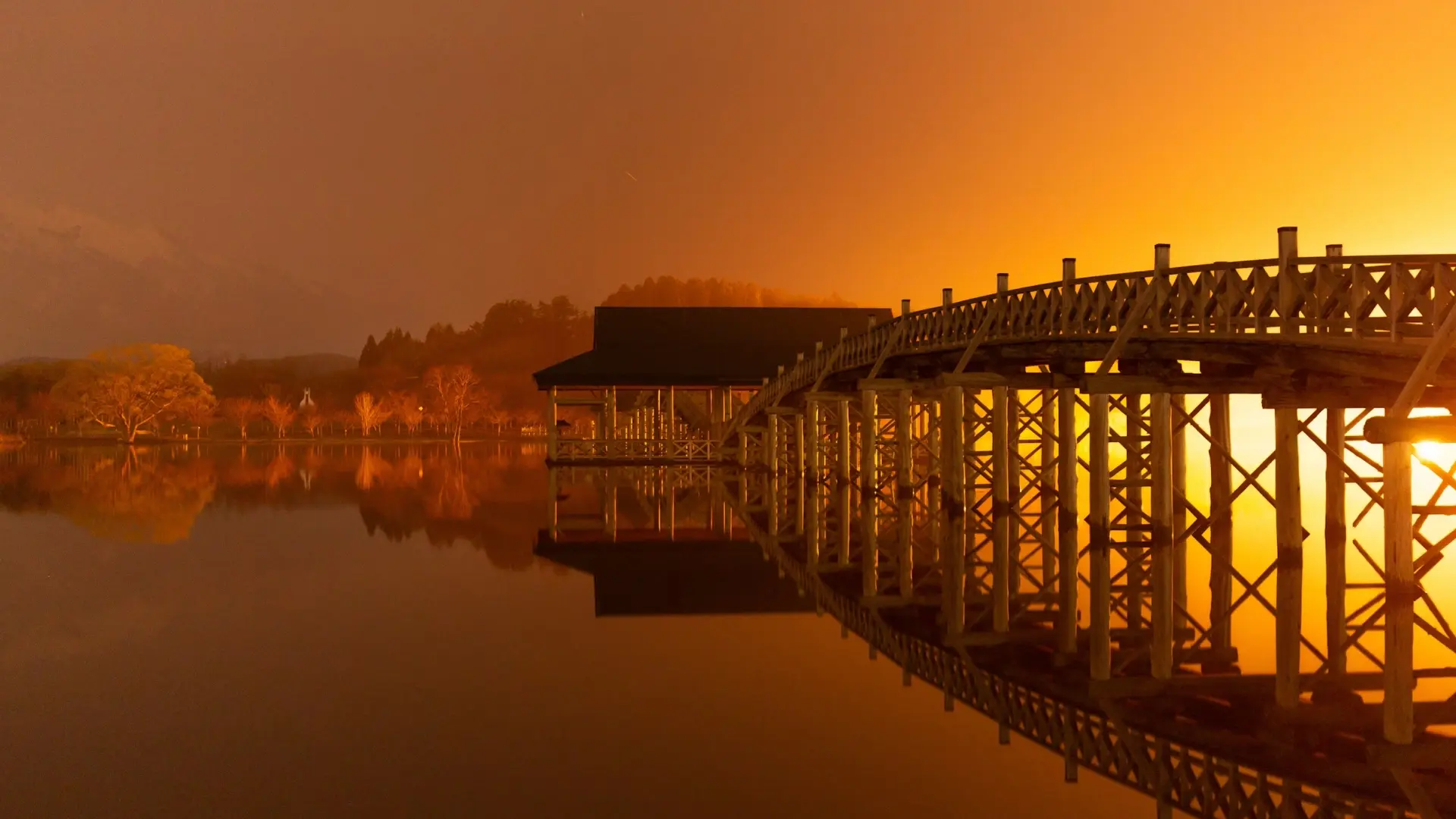
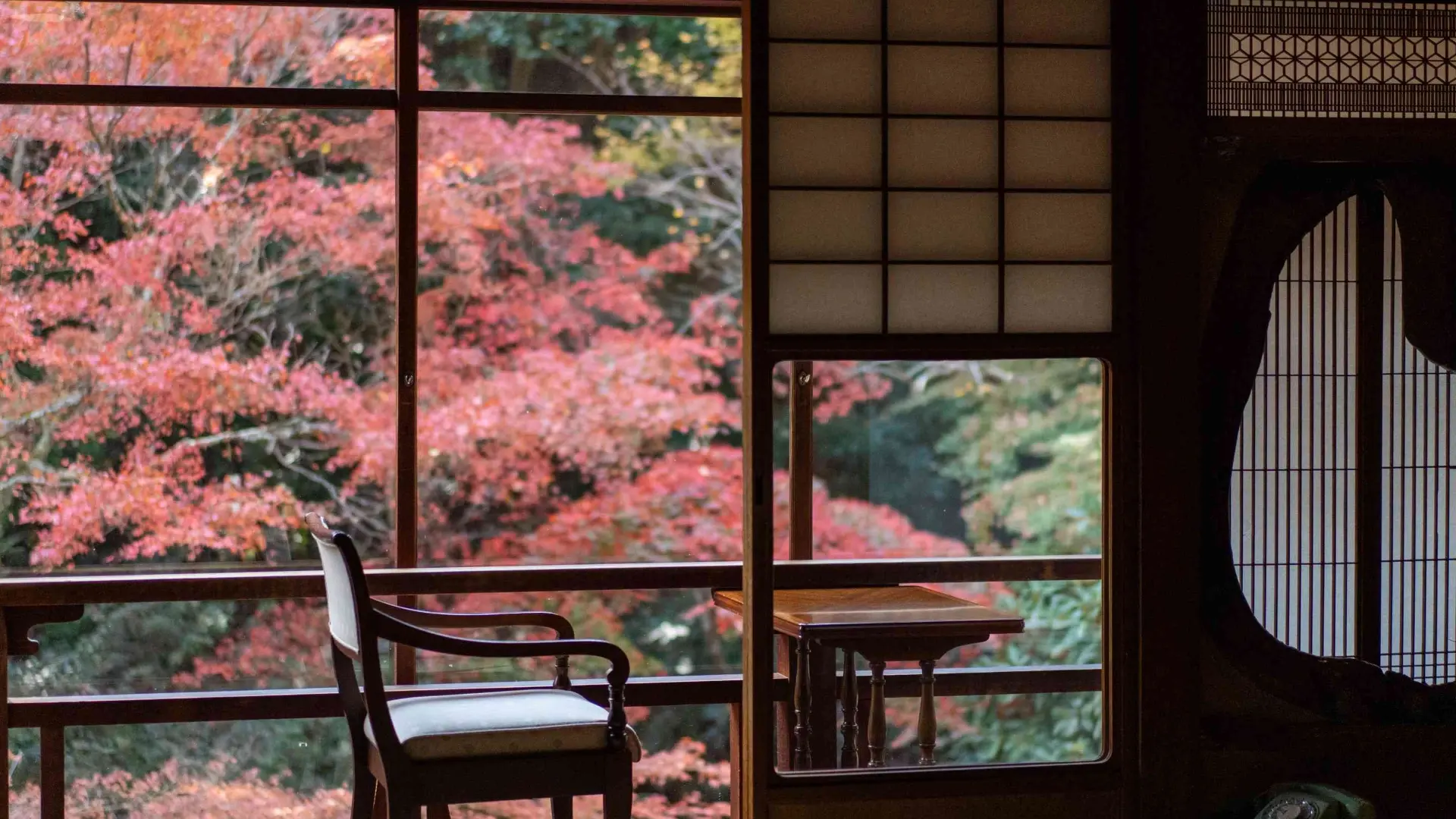
A great ryokan garden in autumn is not a natural landscape. It is a composed one, as deliberately arranged as a painting or a musical score. The classical technique involves layering species that turn at different times and in different colors, creating a dynamic composition that changes daily. Water features amplify the autumn palette through reflection. A still pond beneath a maple tree doubles the canopy of color, creating a symmetry that dissolves the boundary between sky and earth.
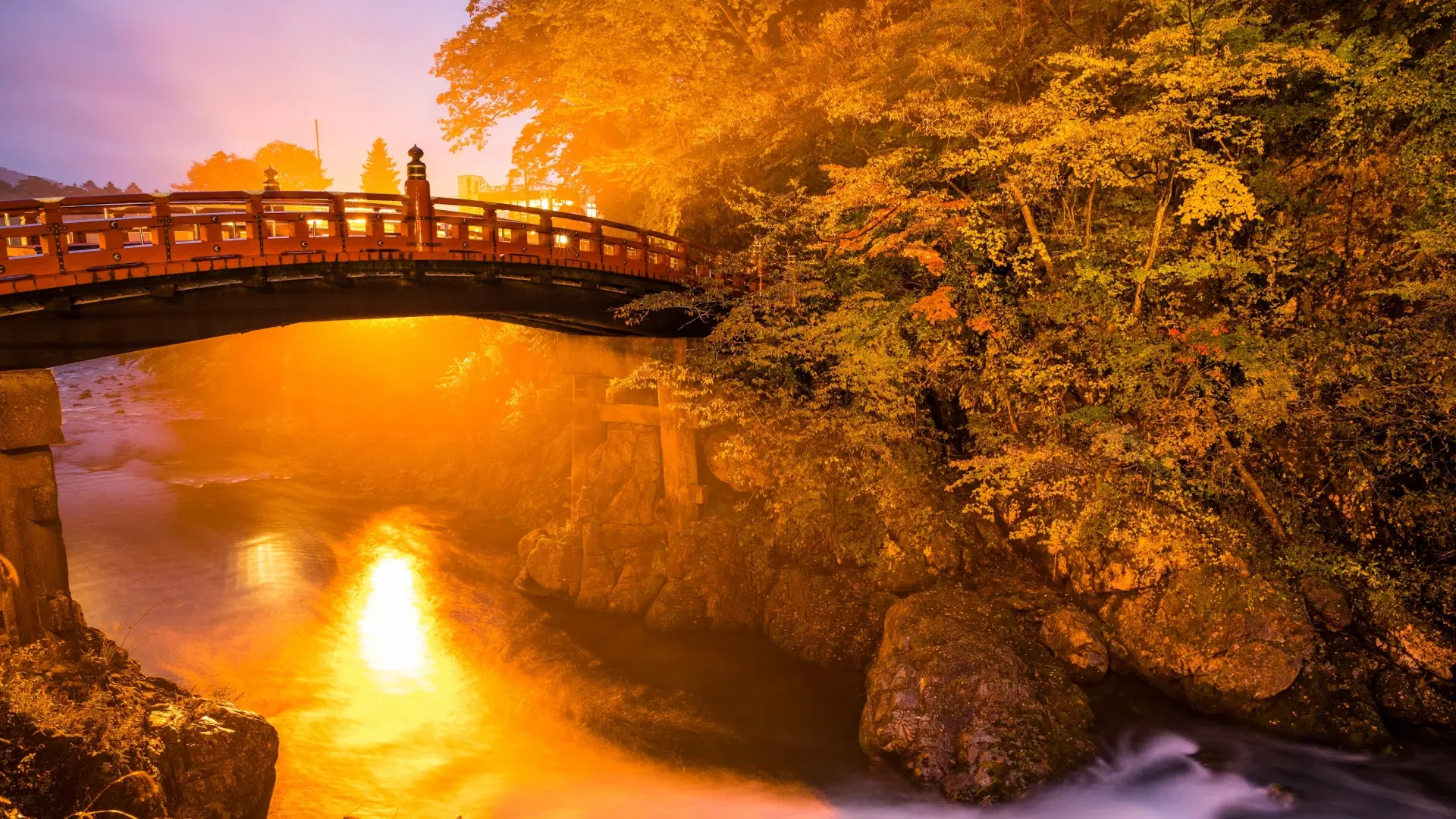
Autumn color is produced by the degradation of chlorophyll, which reveals underlying yellow carotenoids, while red anthocyanins are newly synthesized in response to cool nights and bright days. The Japanese maple, Acer palmatum, produces an extraordinary range of red from pale rose to nearly black crimson.
The beauty of koyo lies not in any single moment of peak color but in the process of change itself.