Yonezawa
米沢Yonezawa is a city that has earned its reputation through adversity, governance, and an extraordinary breed of cattle. Located in the southernmost basin of Yamagata Prefecture, enclosed by mountains on three sides and accessible historically only through narrow passes, this former castle town of the Uesugi clan carries a weight of historical significance that far exceeds its modest present-day size of roughly 80,000 inhabitants. The Uesugi name resonates across Japanese history, from the legendary warlord Uesugi Kenshin, whose spirit the domain claimed as its guiding force, to the reformer Uesugi Yozan, whose fiscal and agricultural innovations in the eighteenth century rescued the domain from bankruptcy and established a model of enlightened governance that is studied to this day.
The city's layout preserves the structure of the castle town that the Uesugi established when they were transferred to this remote domain in 1601, a relocation that was effectively a political exile imposed by the Tokugawa shogunate after the Battle of Sekigahara. The reduced circumstances forced a culture of resourcefulness and self-reliance that came to define the domain's character. Uesugi Yozan's reforms, which included the planting of mulberry trees for silkworm cultivation, the development of new agricultural techniques, and the establishment of schools and charitable institutions, transformed potential ruin into sustainable prosperity and earned him a reputation as one of the greatest administrators in Japanese feudal history.
Modern Yonezawa inherits this culture of careful stewardship. The city's famous wagyu beef, ranked among the three finest in Japan alongside Matsuzaka and Kobe, is the product of a breeding and rearing tradition that dates to the Meiji era and reflects the same patient, long-term thinking that characterized the Uesugi approach to governance. The onsen of Shirabu and Atsumi in the surrounding mountains, the silk-weaving tradition of Yonezawa ori, and the preserved samurai and temple districts of the city center offer a cultural richness that rewards the traveler who makes the journey to this corner of the Tohoku hinterland.
Yonezawa is a city that has earned its reputation through adversity, governance, and an extraordinary breed of cattle.
Highlights
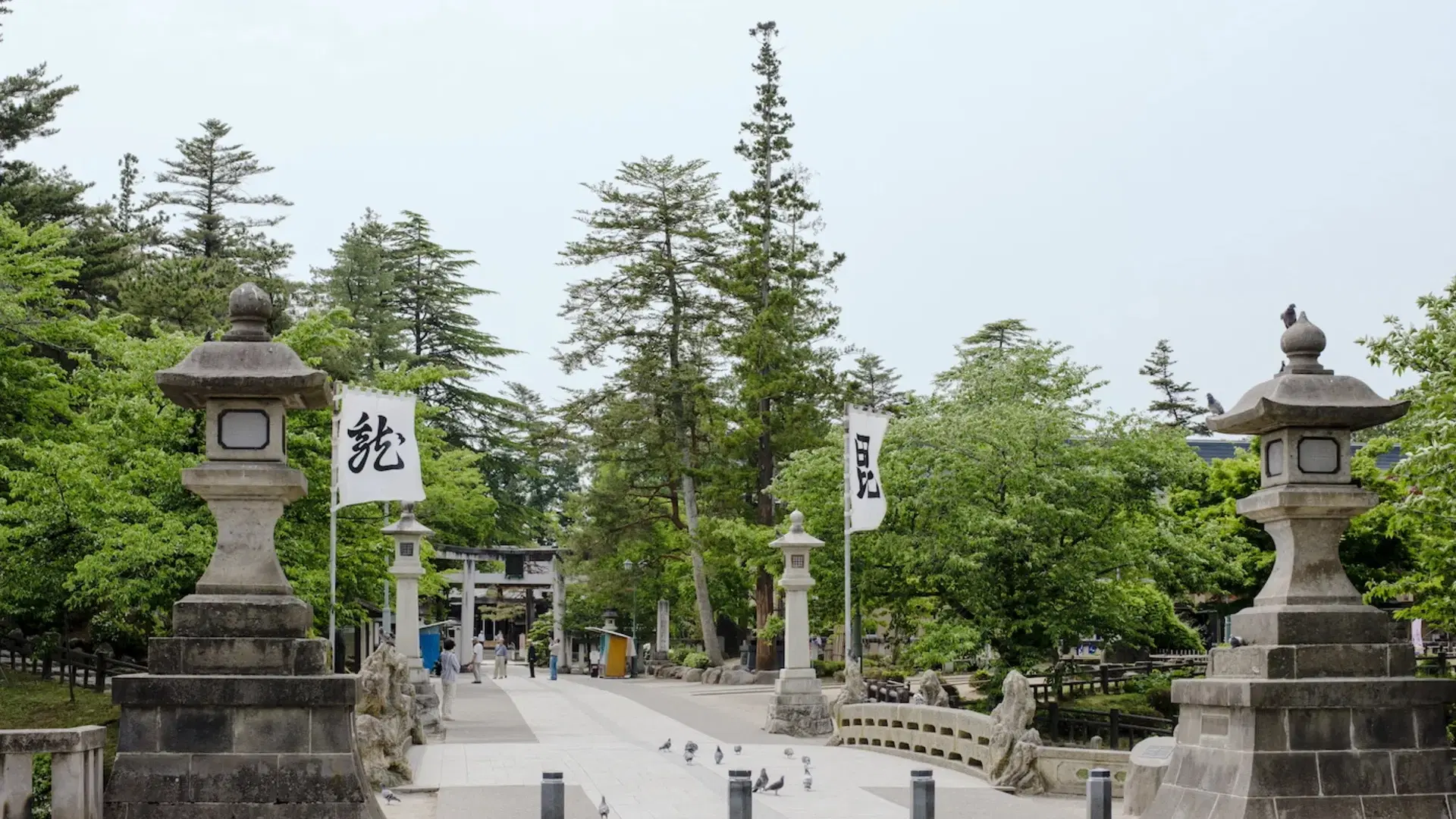
The Uesugi Shrine, dedicated to Uesugi Kenshin and set within a precinct of towering cedars at the heart of the former castle grounds, is Yonezawa's spiritual center. The shrine's austere beauty reflects the martial values of the clan it commemorates, and the adjacent Keisho-den treasure hall displays the arms, armor, and personal effects of the Uesugi lords, including Kenshin's celebrated war helmet and several screens and scrolls designated as Important Cultural Properties. The shrine grounds are at their most atmospheric in winter, when snow buries the stone lanterns and muffles the sounds of the city, and in spring, when more than two hundred cherry trees transform the precinct into one of Yamagata's finest hanami sites.
The Uesugi Museum provides the historical context necessary to appreciate the shrine and the city it anchors. The collection documents the clan's history from its origins in Echigo through its transfer to Yonezawa and the reforms of Uesugi Yozan, with particular attention to the material culture of the domain: its textiles, ceramics, lacquerwork, and the administrative records that reveal how a feudal government actually functioned. The museum's presentation is intelligent and accessible, and it provides the intellectual framework for understanding Yonezawa as more than a picturesque castle town.
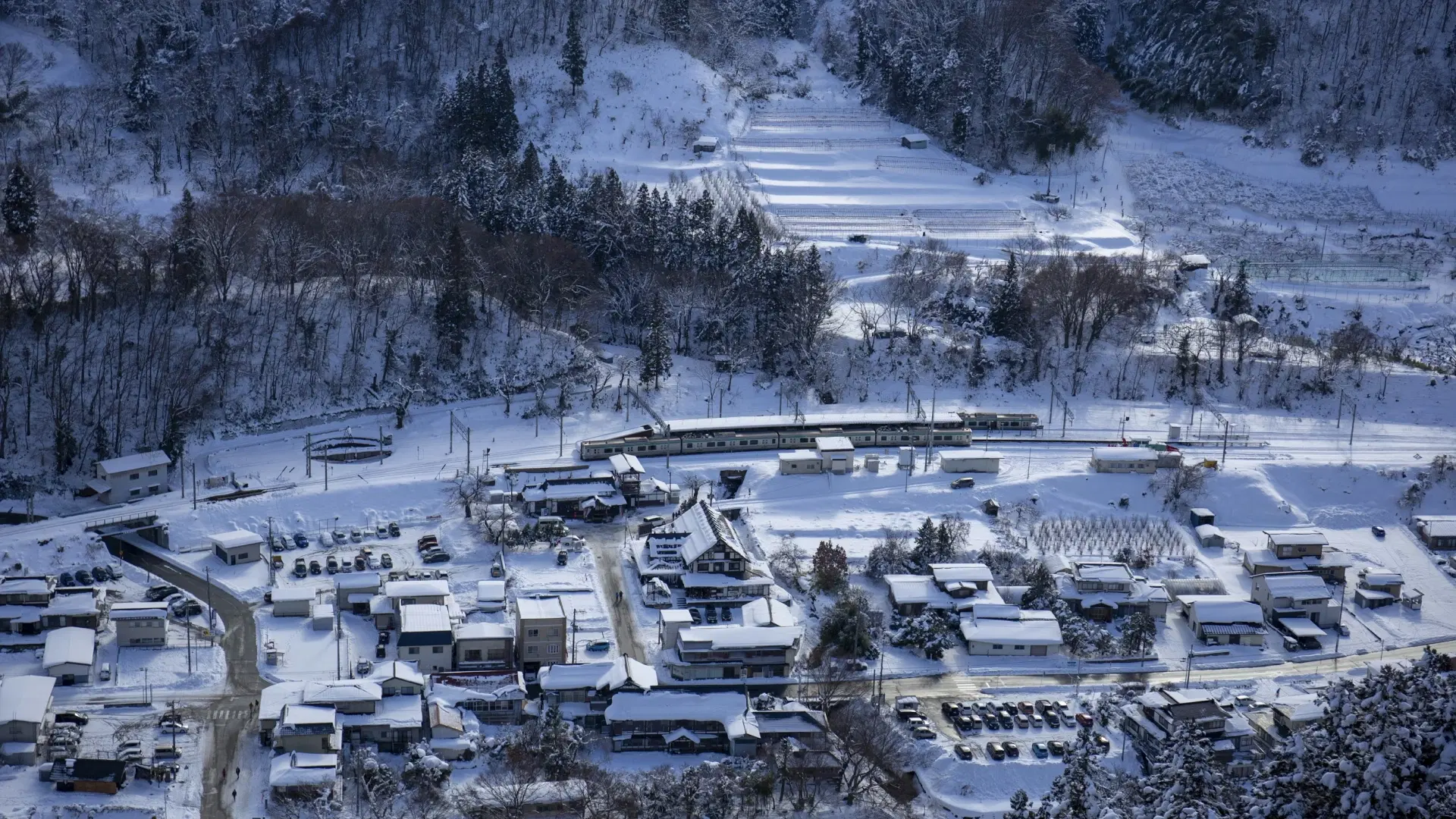
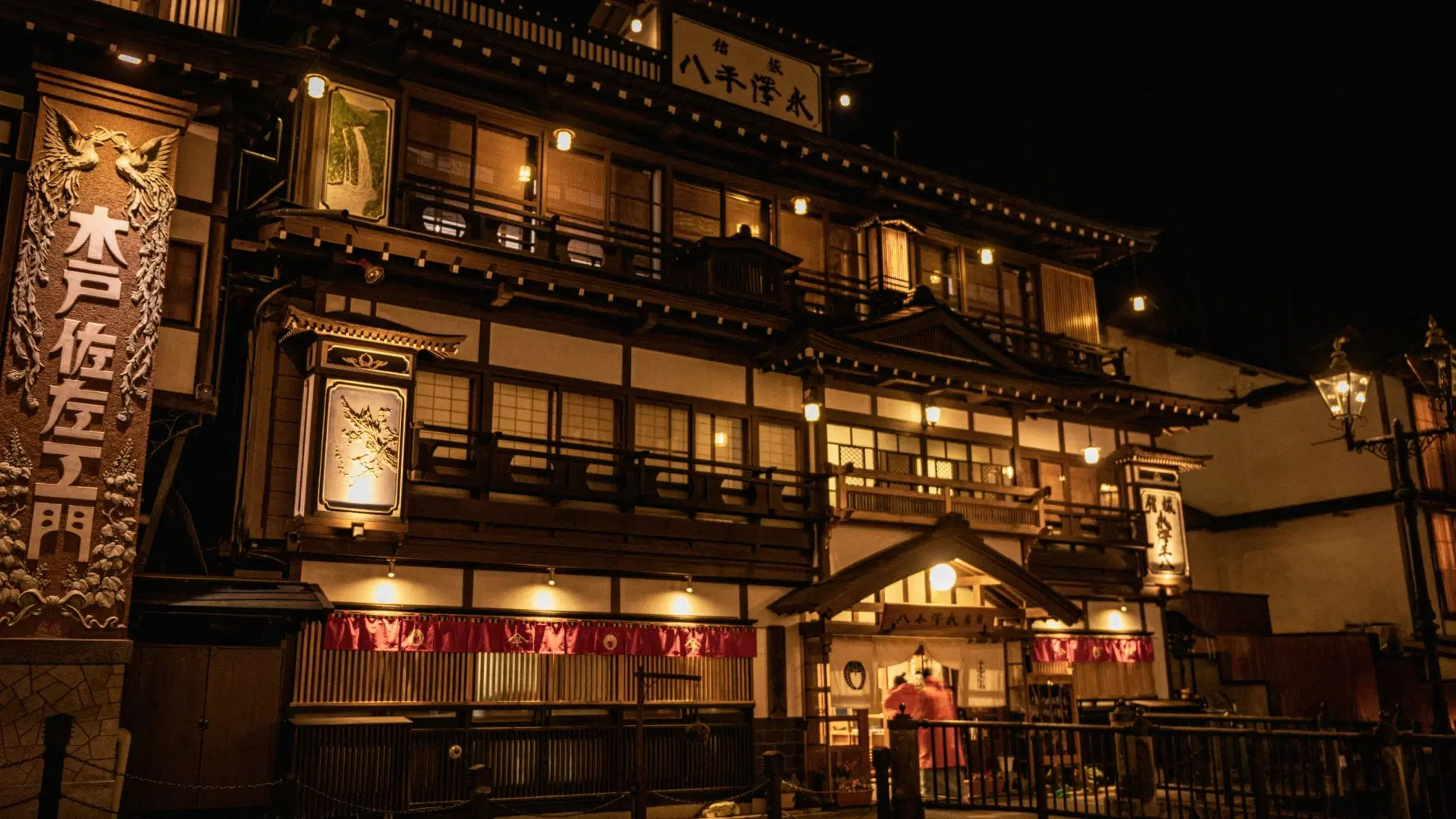
Shirabu Onsen, a thirty-minute drive into the mountains south of the city, is one of the finest hot spring villages in the Tohoku region. Its handful of ryokan, several of which have operated for more than seven centuries, cluster along a mountain stream in a setting of deep forest and volcanic rock. The waters, naturally hot and milky-white, emerge from sources that the yamabushi ascetics of Dewa Sanzan discovered during their mountain wanderings, and the experience of bathing here, in rotenburo surrounded by ancient beech forest, connects the modern traveler to a tradition of healing and renewal that predates the written record.
Culinary Scene
Yonezawa beef is the city's culinary crown, and eating it here, at the source, is an experience that recalibrates one's understanding of what beef can be. The cattle, raised on small farms in the surrounding mountains on a diet that includes locally grown rice straw, are characterized by an extraordinary degree of marbling, a sweet, almost floral fat, and a tenderness that dissolves on the tongue. The best restaurants in Yonezawa serve it in preparations that range from shabu-shabu and sukiyaki, where the thin-sliced meat cooks in seconds, to steak and yakiniku grilled over charcoal. The quality is comparable to Matsuzaka and Kobe at a fraction of the celebrity, and the modest settings in which it is served, family-run restaurants where the owner knows the farmer who raised the animal, reflect a culture that values substance over spectacle.
Beyond beef, Yonezawa's food culture reflects the resourcefulness that Uesugi Yozan instilled in the domain. Carp cuisine, a legacy of the fish ponds that Yozan ordered constructed as a protein source during the domain's period of austerity, remains a local specialty, with preparations that include sashimi, nimono simmered dishes, and the celebratory koi-no-arai, thinly sliced raw carp rinsed in cold water. The city's ramen tradition, centered on thin, curly noodles in a light soy-based broth, has developed a devoted following among domestic food travelers, and the best shops draw lines that testify to the seriousness with which the city takes even its most casual foods.
Yonezawa ori, the silk textile tradition that Uesugi Yozan promoted as an economic development strategy, has given rise to a dyeing and weaving culture that extends into the aesthetic presentation of food. The attention to visual composition in Yonezawa's kaiseki restaurants, where dishes are served on locally made ceramics and arranged with a precision that recalls the textile patterns, demonstrates how deeply the artisanal traditions of the city have permeated its daily life.