Yamagata
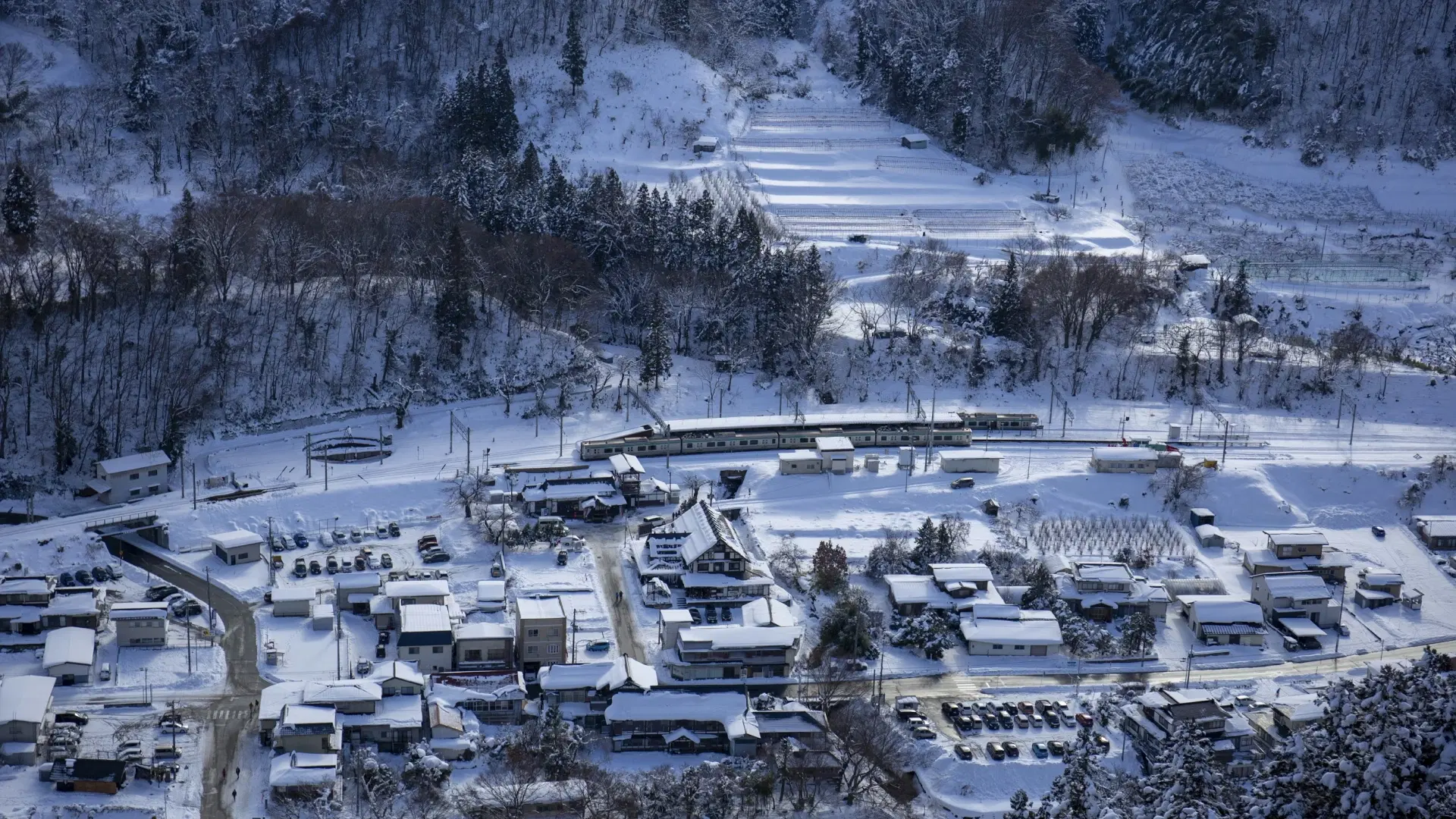
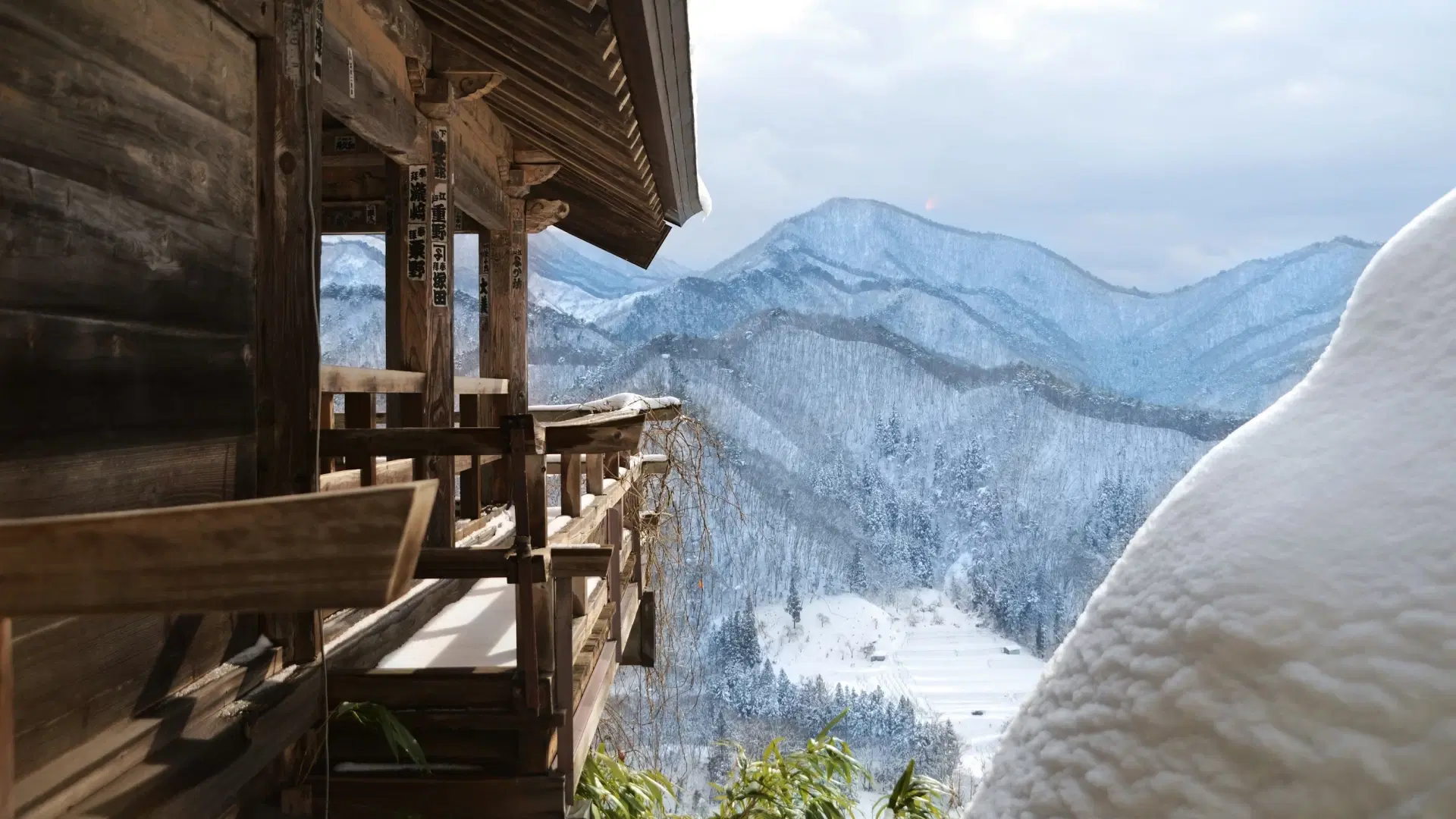
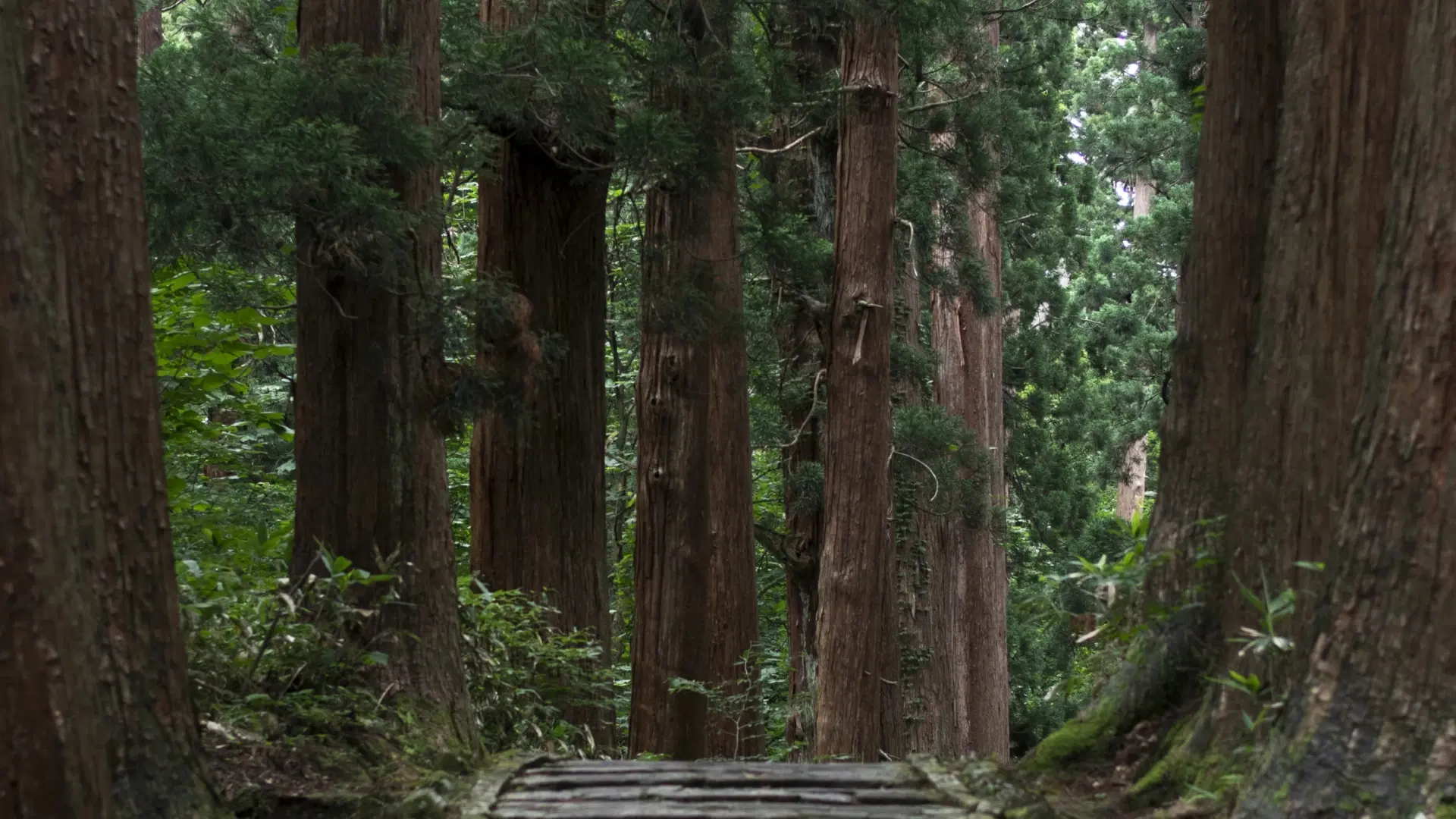
山形県Yamagata is a prefecture of sacred mountains and hidden valleys, a place where ascetic mountain priests still climb through mist to volcanic peaks and winter buries entire villages beneath walls of snow that sculptors could not improve upon. The Dewa Sanzan, three holy mountains consecrated to birth, death, and rebirth, have drawn yamabushi pilgrims for over fourteen hundred years. To climb Hagurosan's stone stairway through ancient cedar forest, past the five-story pagoda that stands in the twilight of the canopy like a prayer made physical, is to understand why this landscape has never been merely scenery but always something closer to scripture.
In winter, Yamagata performs its most famous transformation. On the upper slopes of Mount Zao, moisture-laden winds from the Sea of Japan freeze onto Maries' fir trees in successive layers, building the surreal formations known as juhyo, or snow monsters, enormous white figures that stand in silent ranks across the mountainside like an army of frost. Illuminated at night, they become one of the most unearthly spectacles in Japan. Below them, Zao Onsen, one of Tohoku's oldest hot spring towns, offers strongly acidic sulfur waters in which the milky blue-green color of the baths seems borrowed from the volcanic crater lake above.
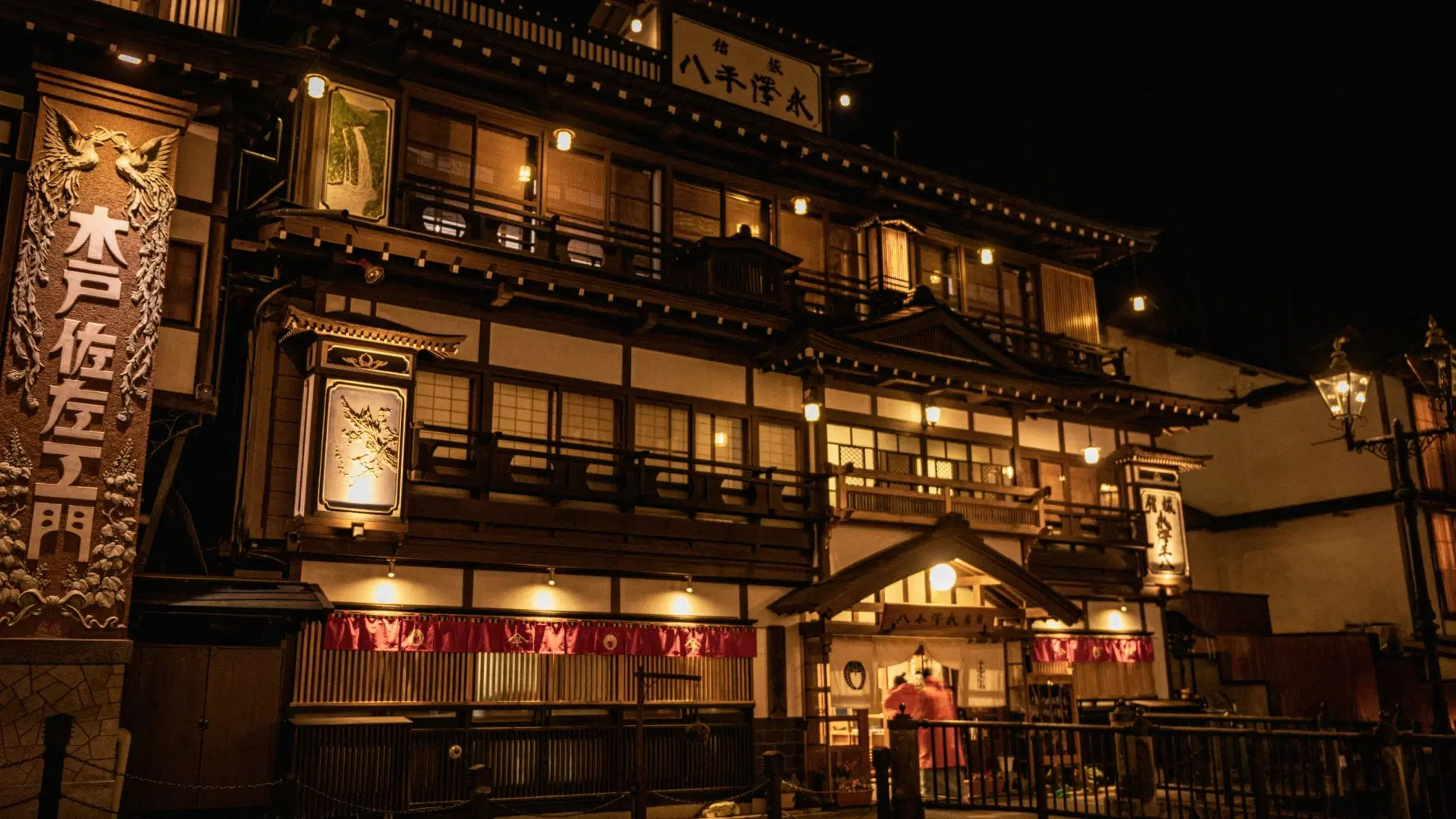
Yamagata's gentler face appears in its valleys. Ginzan Onsen, a tiny hot spring hamlet built along a narrow river gorge, is lined with wooden ryokan whose gaslit facades and rising steam have become one of the most recognized images of traditional Japan. In summer, the Mogami River flows slowly through cherry orchards, and the town of Tendo, center of Japan's shogi chess-piece industry, holds outdoor tournaments on boards the size of rooms. Yamagata produces more cherries than any other prefecture in Japan, and in June, the sakuranbo harvest turns the orchards of Higashine and Sagae into jeweled canopies of red and gold.
Yamagata is a prefecture of sacred mountains and hidden valleys, a place where ascetic mountain priests still climb through mist to volcanic peaks and winter buries entire villages beneath walls of snow that sculptors could not improve upon.
Cultural Identity
The yamabushi mountain ascetic tradition of Dewa Sanzan is Yamagata's most profound cultural inheritance. For centuries, these pilgrim-priests have practiced shugendo, a syncretic discipline combining Shinto nature worship with esoteric Buddhism, enduring ordeals of fasting, cold-water purification, and sleepless prayer to cultivate spiritual power. The autumn rituals on Mount Haguro, culminating in the Shoreisai fire-walking ceremony, remain among the most intense religious observances in modern Japan. In the secular realm, Yamagata's folk crafts tell a story of long winters turned productive: Tendo's shogi pieces, carved from boxwood and lacquered with urushi, are used in professional tournaments nationwide, while Yonezawa's silk-weaving tradition, refined over four centuries under the Uesugi clan, produces textiles of exceptional delicacy.
Culinary Traditions
Yamagata's claim as Japan's cherry capital is unassailable. The prefecture produces over seventy percent of the nation's sakuranbo, and the prized Sato Nishiki variety, with its deep red skin and concentrated sweetness, is treated with the reverence other regions reserve for their finest fruit. But Yamagata's table extends well beyond cherries. Yonezawa beef, raised in the southern Okitama basin, is one of Japan's three great wagyu brands, its richly marbled meat prized for a depth of umami that lingers on the palate. Imoni, a taro and beef stew seasoned with soy sauce and sake, is the defining autumn comfort dish, celebrated each September in a massive riverside cookout along the Mamigasaki River in Yamagata City. Cold soba, buckwheat noodles served on broad wooden boards, is eaten year-round, and the mountain villages produce an abundance of wild sansai greens in spring.
Waters & Onsen
Ginzan Onsen is Yamagata's most iconic hot spring destination, a narrow gorge lined with three-story wooden ryokan whose gaslit facades reflect in the stream below. The town's beauty is most intense in winter, when snow piles on the rooftops and steam rises into the frigid night air, creating scenes that inspired the setting of the anime Spirited Away. The waters are sodium chloride springs, warming to the core. Zao Onsen, higher in the mountains, offers a dramatically different experience: its strongly acidic sulfur springs, tinged milky blue-green, are among the most potent in Tohoku, and the open-air baths look out toward the snow monster forests above. Kaminoyama Onsen, near Yamagata City, provides a gentler alternative, with alkaline waters in a castle town setting where the pace of bathing is unhurried and the ryokan maintain a quiet, old-fashioned elegance.