Ginzan Onsen
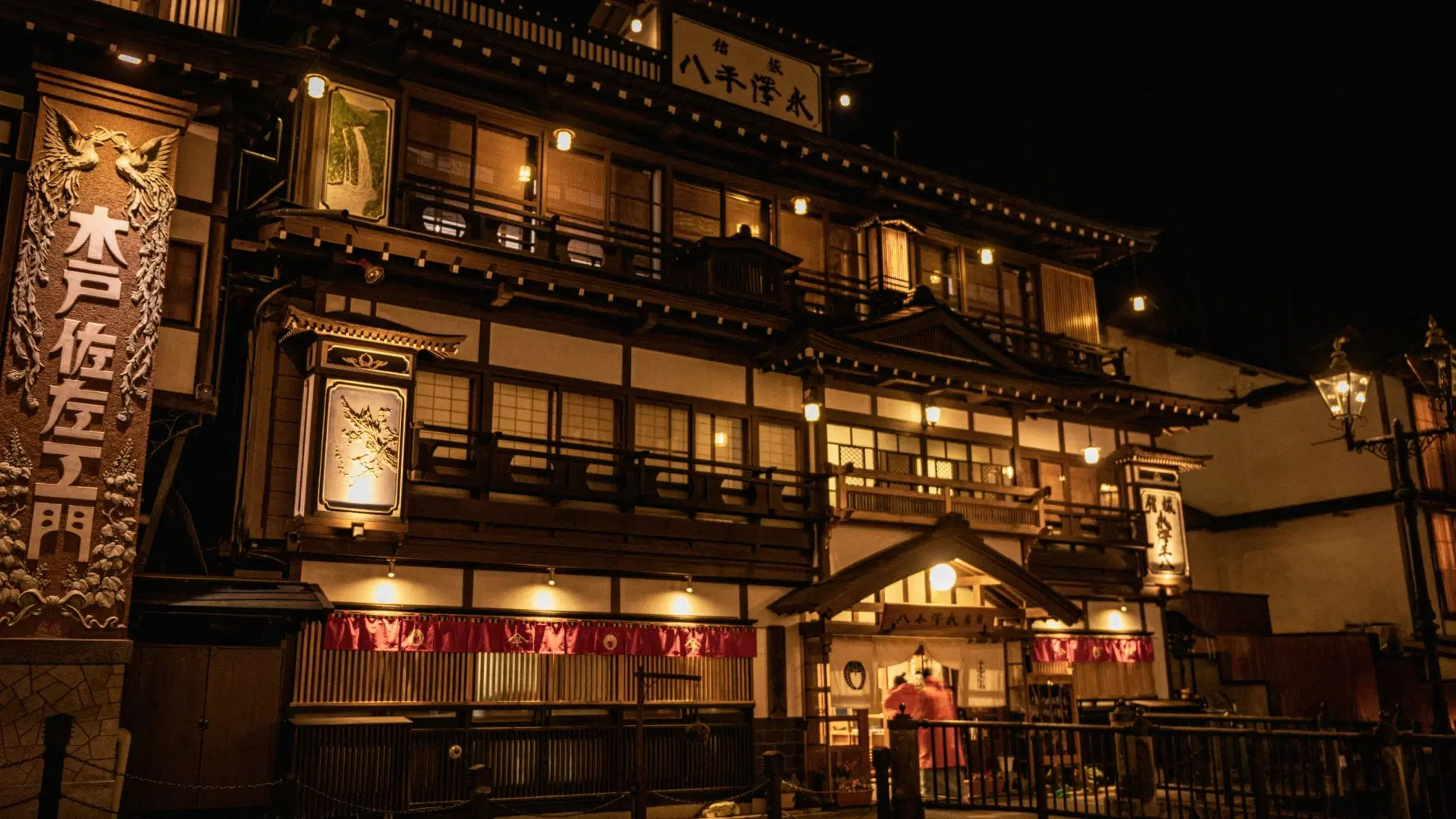
銀山温泉Ginzan Onsen exists in a register of beauty so complete that first-time visitors routinely question whether what they are seeing is real. This tiny hot spring town, wedged into a narrow gorge along the Ginzan River in the mountains of northeastern Yamagata, consists of a single street lined with three- and four-story wooden ryokan whose Taisho-era facades, gas lamp-style streetlights, and stone-paved footbridges create a scene that appears to have been extracted from the early twentieth century and preserved under glass. In winter, when heavy snowfall buries the surrounding mountains and the rooftops and lamp posts of the town itself, the effect intensifies to the point of the transcendent: warm light pours from the ryokan windows onto snow that muffles every sound, the steam from the hot springs rises into the cold air, and the world beyond the gorge ceases to exist.
The town's name references the silver mine that was its original reason for being. Discovered in 1456 and operated through the early Edo period, the Nobesawa silver mine drew workers and commerce to this remote valley until the seams were exhausted in the seventeenth century. What remained was the hot spring water that the miners had discovered during their excavations, and by the Meiji period, a cluster of ryokan had established themselves along the river, their wooden structures growing taller and more ornate as the reputation of the waters spread. The Taisho-era rebuilding that followed a devastating flood in 1913 gave the town its current architectural character, a concentrated expression of the romantic modernism that defined that brief, aesthetically adventurous period in Japanese history.
Ginzan Onsen's scale is a crucial element of its charm. The entire town can be walked end to end in ten minutes, and there are no attractions beyond the ryokan, the river, and the handful of shops and cafes that serve the guests. This compression creates an intensity of atmosphere that larger destinations cannot achieve. Every window, every lantern, every curl of steam contributes to a composition that is at once accidental and perfect, the product of geography, history, and the accumulated aesthetic decisions of generations of innkeepers.
Ginzan Onsen exists in a register of beauty so complete that first-time visitors routinely question whether what they are seeing is real.
Highlights
The streetscape itself is the primary attraction, and the experience of walking along the river, crossing the small bridges that connect the two rows of ryokan, and absorbing the architectural detail of the facades, with their balconies, wooden lattice, and hand-painted signs, constitutes a form of ambient immersion that no single landmark could provide. The view from the small waterfall at the upper end of the town, looking back down the length of the street as it curves gently with the river, is one of the most photographed vistas in all of Japan, and its beauty in every season justifies the superlatives that have been attached to it.
The Shirogane Falls, a modest but picturesque cascade at the head of the gorge, provides a destination for the short walk beyond the last ryokan. The path continues to the ruins of the old silver mine, where the entrance tunnels can still be explored, offering a tangible connection to the industrial history that preceded the town's reinvention as a place of leisure. The mine tunnels, cool and dripping, carry the atmospheric weight of centuries, and the contrast between their darkness and the warm glow of the town below creates a narrative arc that enriches the visit.
The communal foot baths along the river, free and open to all visitors, provide resting points from which to observe the town's life at the pace it demands. In the evening, when the gas lamps are lit and the ryokan windows begin to glow, sitting at one of these baths with feet in the hot water and snow falling on shoulders is an experience that collapses the distance between the mundane and the sublime.
Culinary Scene
Dining at Ginzan Onsen is an intimate affair, as most visitors take their meals at the ryokan where they are staying, and the kaiseki-style dinners served in these establishments draw heavily from the mountain traditions of interior Yamagata. Expect preparations featuring wild mountain vegetables in season, river fish including iwana and yamame, locally raised beef, and handmade soba and tofu whose quality reflects the purity of the mountain water. The meals are typically served in the guest's room or in small dining rooms that seat only a few parties, and the care with which each course is plated and presented reflects the broader aesthetic consciousness that pervades the town.
The handful of cafes and shops along the main street offer a more casual culinary experience during the daytime. The Ginzan Onsen signature treat is the curry bread from the Haikarasan bakery, a warm, crispy sphere that has achieved minor celebrity status among Japanese domestic travelers. Several establishments serve matcha and wagashi with views of the river, and the local sake, poured at small counters where the innkeeper knows every guest by name, provides a fitting accompaniment to an afternoon of slow exploration.

Ryokans in Yamagata
There are no ryokans in our guide listed in Ginzan Onsen. See our selection across Yamagata.
View ryokans in Yamagata