Yamagata City
山形市Yamagata City sits in the broad, fertile basin of the Mogami River, encircled by mountains whose presence shapes everything from the climate to the cuisine to the particular quality of light that falls across the city's temple rooftops on winter afternoons. As the prefectural capital and the largest settlement in a region long defined by its remoteness from the centers of political power, Yamagata has served for centuries as a gathering point for the agricultural wealth, spiritual traditions, and artisanal skills of the surrounding valleys. The city's atmosphere is one of quiet substance rather than overt display, a place that reveals its depth gradually to those who walk its streets with patience and attention.
The history of the city is inseparable from the Mogami clan, who established their castle here in the fourteenth century and governed the region through the turbulent Sengoku period. Under Mogami Yoshiaki, the domain reached its greatest extent and the castle town its most refined expression, with merchant quarters, temple precincts, and artisan workshops arranged according to a social geography that remains legible in the modern street plan. The Meiji era brought institutional transformation, and Yamagata became one of the first cities in the Tohoku region to embrace Western-influenced architecture, a legacy visible in the Bunshokan, the former prefectural office whose Renaissance Revival facade stands as one of the most striking Meiji-era buildings in northern Japan.
Today, Yamagata is a city of approximately 250,000 inhabitants whose cultural life belies its modest scale. The surrounding mountains provide the framework for one of Japan's great seasonal spectacles: the Zao ice monsters of winter, the cherry blossoms of Kajo Park in spring, the highland wildflowers of summer, and an autumn foliage display that lights the Zao and Gassan ranges with colors so vivid they appear artificial. The city functions as a gateway to these natural wonders while maintaining its own identity as a place of good food, fine craft, and the understated hospitality that defines the best of Tohoku.
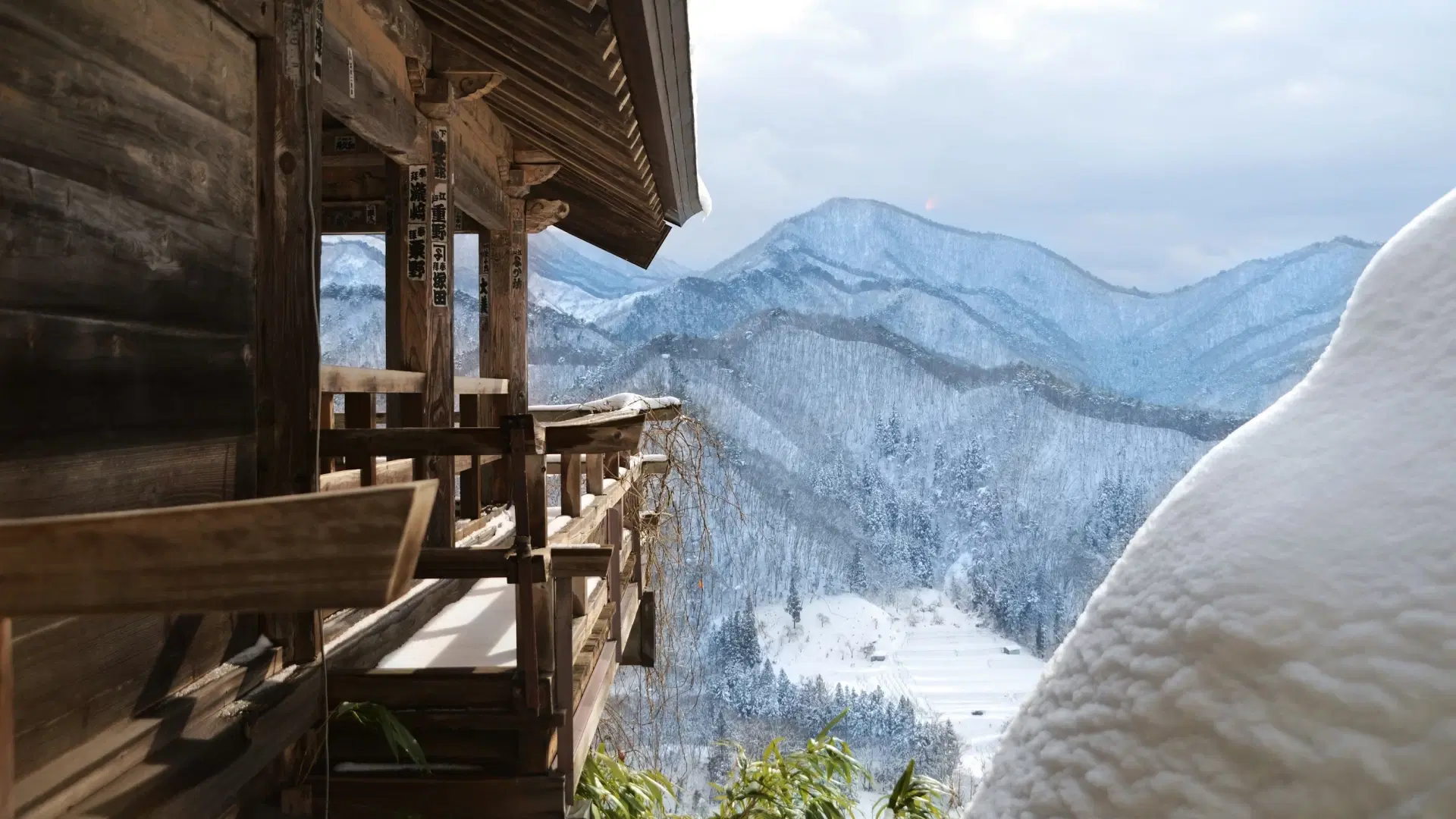
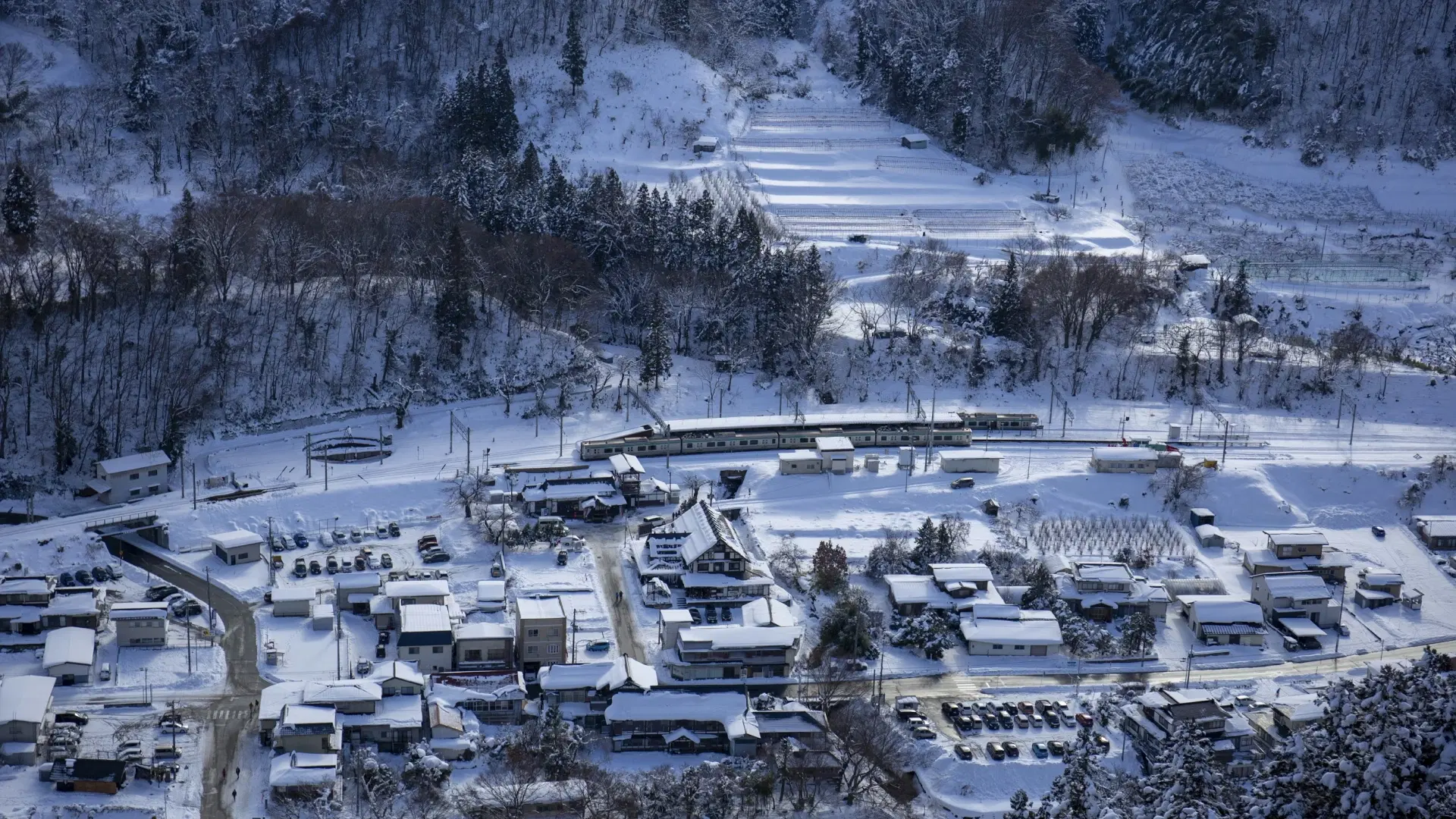
Yamagata City sits in the broad, fertile basin of the Mogami River, encircled by mountains whose presence shapes everything from the climate to the cuisine to the particular quality of light that falls across the city's temple rooftops on winter afternoons.
Highlights
The Yamagata Bunshokan, completed in 1916 and designated an Important Cultural Property, is the city's architectural landmark. This former prefectural office, with its red brick walls, stone quoins, and domed clock tower, represents the ambition of Meiji-era Yamagata to position itself as a modern prefectural capital, and its meticulously restored interiors, with their high ceilings, parquet floors, and stained glass, transport the visitor to a moment when Japan was actively reimagining its relationship with the wider world. The building now serves as a gallery and public space, and its ground-floor cafe offers the unusual experience of drinking coffee beneath plaster rosettes that would not be out of place in Vienna.
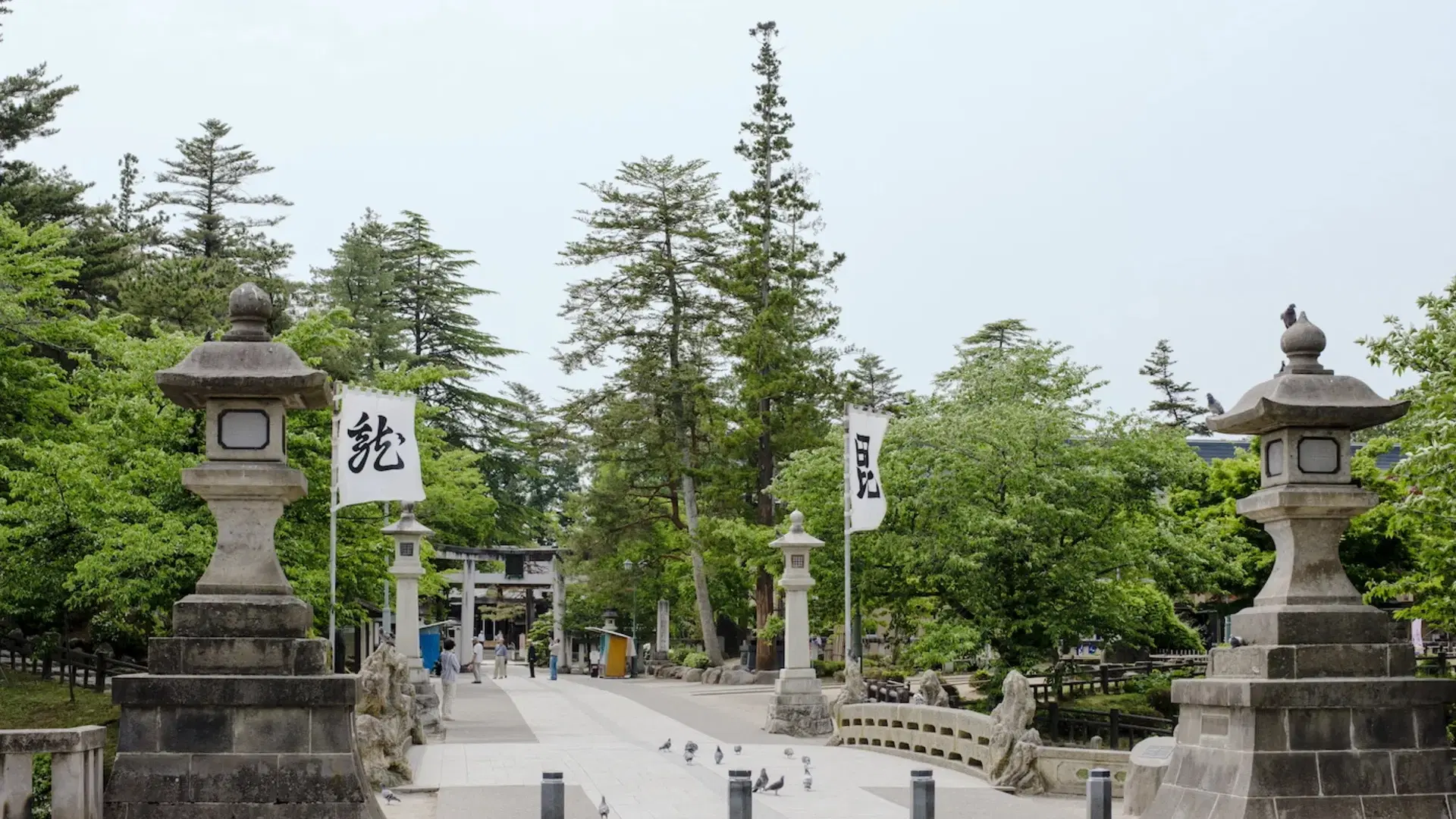
Kajo Park, built on the grounds of the former Yamagata Castle, provides the city's other essential destination. The castle's stone walls and moats have been carefully restored, and the park's cherry trees, numbering approximately 1,500, make it one of the premier hanami sites in the Tohoku region. The Yamagata Museum of Art, located within the park grounds, houses a collection that includes works by Impressionist and modern European masters alongside Japanese painting, an unexpected cultural resource in a city of this size. The park's east gate reconstruction, completed in recent years, gives visitors a tangible sense of the castle's original scale and defensive logic.
The temple district of Chitose-yama, rising on the hillside above the city center, contains more than a dozen Buddhist temples whose cumulative presence creates a landscape of devotion that spans centuries. The walk through this district, past moss-covered stone walls, through temple gates that frame views of the basin below, and beneath the canopy of ancient cedars that shade the paths between precincts, is one of Yamagata's most meditative experiences.
Culinary Scene
Yamagata City is the epicenter of a food culture that draws its character from the extraordinary fertility of the surrounding basin and the culinary ingenuity of a population shaped by long winters. The city's most iconic dish is imoni, a hearty stew of satoimo taro, beef, konnyaku, and seasonal vegetables simmered in a soy-based broth that becomes, each autumn, the occasion for the massive riverside gatherings known as imoni-kai. The preparation varies by household and neighborhood, and debates about the correct recipe, whether the broth should be soy or miso, whether pork can substitute for beef, carry a passion that speaks to the dish's centrality in the regional identity. In Yamagata, imoni is not merely food; it is a social institution.
The city's soba tradition is among the finest in Japan. Yamagata's buckwheat, grown in the cool mountain climate that produces flour of exceptional fragrance and flavor, is served in a style called ita-soba, in which long, thick noodles are presented on a flat wooden board rather than in the small portions typical of other regions. The best soba restaurants in the city, often modest establishments tucked into residential neighborhoods, grind their own flour daily and serve the noodles with a restraint that allows the buckwheat's nutty, slightly sweet character to dominate. Yamagata is also Japan's leading producer of cherries, and the Sato Nishiki variety, with its firm flesh and balanced sweetness, is considered the standard by which all Japanese cherries are measured.
The local sake benefits from the same pure mountain water and cold-climate rice that define the broader Tohoku brewing tradition. Several notable breweries operate in and around the city, producing junmai and junmai ginjo expressions whose clean profiles and subtle complexity reflect both the quality of the ingredients and the skill of brewmasters who have inherited centuries of accumulated knowledge.