Inuyama
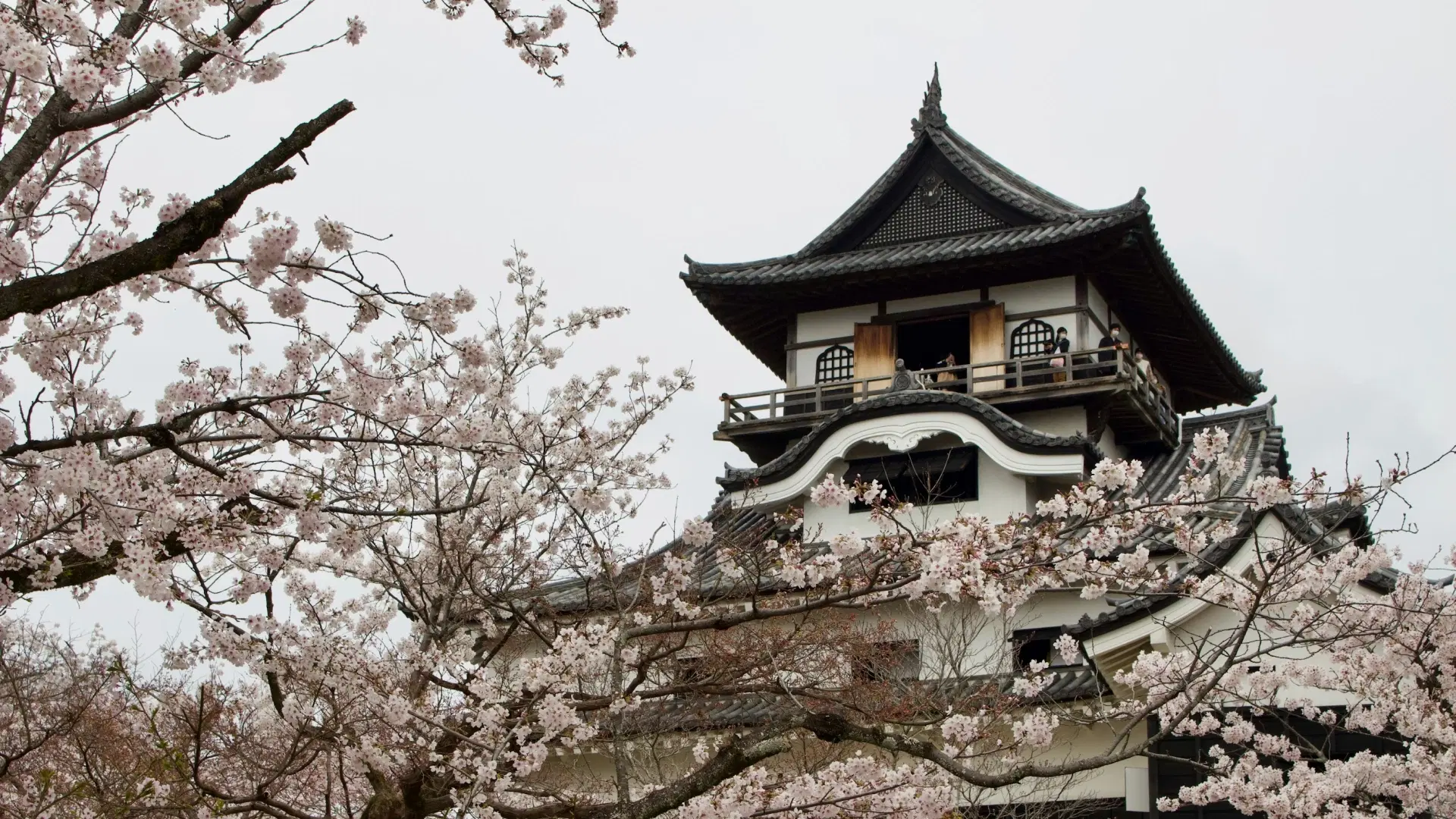
犬山Inuyama is a castle town that has preserved its essential character with a completeness that larger and more famous cities cannot match. Set on a bluff above the Kiso River in the northern reaches of Aichi Prefecture, this small city of roughly 74,000 inhabitants is defined by its castle, one of only twelve original tenshu remaining in Japan and the oldest of them all, its timber frame and stone foundation dating to 1537. The castle's survival through nearly five centuries of warfare, political upheaval, and natural disaster is remarkable in itself, but what makes Inuyama exceptional is the survival of the town that grew beneath it: a grid of narrow streets lined with merchant houses, sake breweries, and craft shops whose spatial relationships have changed little since the Edo period.
The Kiso River, which curves around the base of the castle bluff, provides the town's natural boundary and its historical lifeline. The river was a major commercial artery during the Edo period, carrying timber from the mountain forests of the interior to the markets of Nagoya and the coast, and the wealth generated by this trade sustained the merchant class that built the town's surviving architecture. The river also provides the setting for Inuyama's most celebrated tradition, the cormorant fishing that has been practiced on these waters for over a thousand years, the summer evenings lit by pine-fire boats creating scenes that seem to float between the historical and the mythological.
Inuyama's cultural depth extends beyond its castle and river. The Meiji Mura open-air museum, located on the outskirts of the city, preserves over sixty Meiji-era buildings relocated from throughout Japan, including the entrance hall of Frank Lloyd Wright's Imperial Hotel. The Uraku-en garden, adjacent to the castle, contains the Jo-an tea room, a National Treasure designed by Oda Uraku, the younger brother of Oda Nobunaga and one of the great tea masters of the sixteenth century. And the Inuyama Festival, with its towering karakuri floats and mechanical puppets, rivals Takayama's festival in artistry if not in scale.
Inuyama is a castle town that has preserved its essential character with a completeness that larger and more famous cities cannot match.
Highlights
Inuyama Castle is the town's defining presence, its compact, three-story tenshu perched on a riverside bluff with a commanding view that encompasses the Kiso River, the Nobi Plain stretching south toward Nagoya, and the mountains of Gifu rising to the north. The castle's interior, reached by climbing steep wooden stairs that creak with the weight of centuries, preserves the austere functionality of a sixteenth-century military structure: low ceilings, thick timber columns, narrow windows positioned for defense rather than comfort. The top-floor balcony, which wraps the entire exterior of the tenshu, provides a three-hundred-sixty-degree panorama that explains, more eloquently than any map, why this hilltop was chosen as a defensive position. The castle was privately owned by the Naruse family until 2004, making it the last privately held castle in Japan, and this unusual custodial history contributed to its exceptional state of preservation.
The Jo-an tea room at Uraku-en garden, set within a walled compound of refined simplicity, is one of only three tea rooms in Japan designated as National Treasures. Designed by Oda Uraku in the early seventeenth century, the two-tatami-mat room embodies the wabi aesthetic of the tea ceremony at its most concentrated, its materials, proportions, and relationship to the surrounding garden calibrated to produce an atmosphere of contemplative intimacy that has been studied and admired for four hundred years. The garden itself, a small but exquisitely maintained strolling garden, provides the spatial transition between the world outside and the rarified stillness of the tea room.
The castle town streets, restored and maintained by the city and its residents, offer a walking experience that connects the military and political history of the castle to the commercial and domestic life of the community it protected. The Honmachi district, running from the castle approach through the old merchant quarter, is lined with converted machiya that now house cafes, craft shops, and small museums, their renovated interiors revealing the timber construction and spatial logic of Edo-period commercial architecture.
Culinary Scene
Inuyama's culinary scene reflects its position as a small castle town with deep historical roots and a growing appreciation for artisanal production. The castle town streets have become a destination for tabearuki, eating while walking, with local specialties including dengaku, skewered tofu and vegetables coated in sweet miso and grilled over charcoal, and gohei mochi, pounded rice cakes shaped into flat paddles, brushed with walnut and miso sauce, and toasted until the surface caramelizes. These street foods, rooted in the regional cooking of the Chubu highlands, provide a casual but genuinely delicious accompaniment to castle town exploration.
The Kiso River's ayu, sweetfish caught both by conventional methods and by the traditional cormorant fishing practiced on summer evenings, is the town's most prized seasonal ingredient. Grilled whole over charcoal with salt, the ayu's delicate, faintly bitter flavor reflects the clean water and rocky substrate of the Kiso, and the fish is available at restaurants throughout the town during the summer season. Inuyama's proximity to Nagoya means that the full range of Nagoya meshi is also available, and several restaurants in the castle town district offer refined interpretations of the regional cuisine in settings that combine historical architecture with contemporary culinary ambition.
The town's sake and craft beer producers have benefited from the clean water that flows from the mountains to the north, and tasting locally produced beverages alongside the river and castle views provides one of Inuyama's most pleasant afternoon diversions.