Nachi Fire Festival
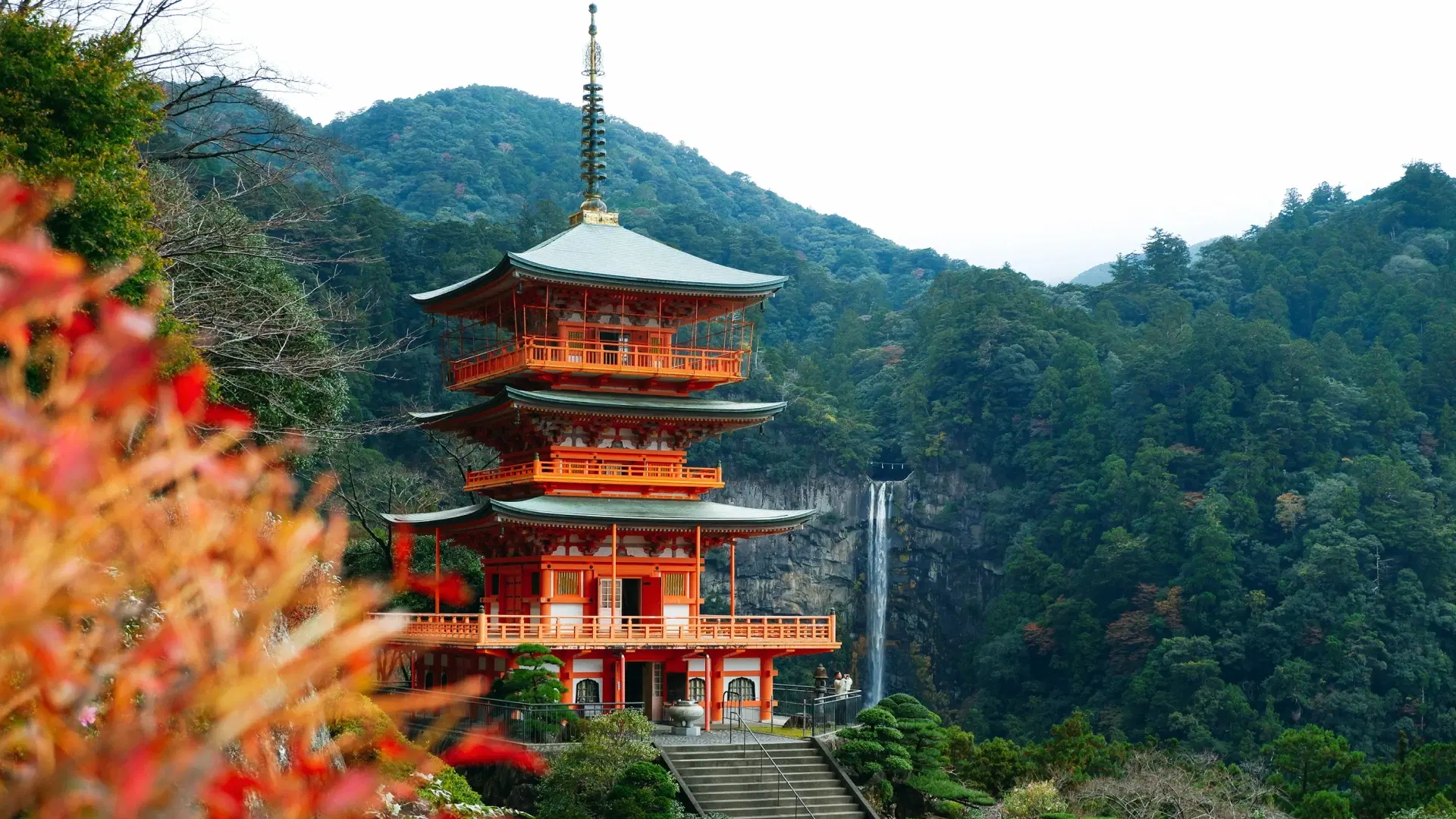
那智の扇祭りThe Nachi Fire Festival is among the most visually overwhelming matsuri in Japan, a ceremony in which twelve giant torches, each standing six meters tall and weighing over fifty kilograms, are carried up the stone stairway to Kumano Nachi Taisha while twelve portable fan shrines descend from the temple precincts to meet them. The encounter of ascending fire and descending deity enacts the annual return of the twelve Kumano gods to their original seat at Nachi Falls, the 133-meter cascade that has been worshipped as a divine manifestation since before recorded history. The torches, blazing with a heat that spectators can feel from ten meters away, are wielded and spun by white-robed bearers whose shouts of encouragement to the flame compose a percussive chant that echoes off the surrounding forest. The sparks and embers that rain from the torches onto the stone steps create a constellation of small fires that transforms the stairway into a river of light.
The festival's formal name, Ogi Matsuri, or Fan Festival, refers to the twelve fan-shaped mikoshi that represent the Kumano deities, their gilded surfaces and trailing silk streamers creating a visual counterpoint to the raw, destructive energy of the torches. The descent of the fans and the ascent of the flames converge at a point on the stairway where fire and gold meet in a climax of sensory intensity that compresses the entire theology of the Kumano faith into a single visual image: the purifying power of fire, the grace of the descending gods, and the mediating role of human devotion that makes their meeting possible.
The setting amplifies the ceremony beyond what any urban festival ground could achieve. Nachi Falls provides a vertical white backdrop whose roar underlies the entire proceedings like a bass note, while the ancient cryptomeria forest that encircles the shrine absorbs and reflects the firelight in patterns that shift with every gust of mountain wind. The combination of natural grandeur and ritual intensity places the Nachi Fire Festival in a category shared by very few ceremonies anywhere in the world, a religious event whose aesthetic power is inseparable from its spiritual purpose.
History & Significance
The Nachi Fire Festival's origins are intertwined with the founding mythology of the Kumano faith itself. The twelve deities of Kumano are believed to have first manifested at Nachi Falls before being enshrined at the three great Kumano shrines, and the annual fire festival enacts their ritual return to the waterfall from their shrine homes. This cyclical theology, in which the gods must periodically revisit their place of origin to renew their power, reflects the Kumano faith's deep connection to natural phenomena. The waterfall is not merely a beautiful landscape feature but the theophanic site where divinity first entered the visible world, and the fire festival's purpose is to honor that original manifestation by guiding the deities back to their source.
The festival has been performed continuously for over 1,700 years according to shrine tradition, though the historical record confirms the ceremony's existence at least since the Heian period, when the Kumano pilgrimage became one of the most popular devotional journeys in Japanese aristocratic culture. Successive emperors, retired emperors, and members of the court made the arduous journey from Kyoto to the Kumano shrines, and the fire festival was among the rituals that drew them. The ceremony's form has evolved over the centuries, with the size of the torches and the elaboration of the fan mikoshi increasing as the shrine's resources and prestige grew, but the essential structure of the encounter between ascending fire and descending gods has remained constant.
The UNESCO designation of the Kumano Kodo pilgrimage routes as a World Heritage Site in 2004 brought increased international attention to the Nachi Fire Festival, though the ceremony continues to function primarily as a religious observance rather than a tourist spectacle. The priests and bearers who perform the ritual do so as an act of devotion, and the festival's power derives from the sincerity of their performance rather than from any accommodation to the spectators who gather to witness it.
What to Expect
The festival begins in the morning with rituals within the shrine that are closed to the general public, the priests performing purification ceremonies and preparing the fan mikoshi for their descent. The public ceremony commences in the early afternoon, when the twelve torches are lit at the base of the long stone stairway that rises through the forest to the shrine. The torches, constructed from hinoki cypress wood and bound with rope, are carried by teams of bearers in white robes who ascend the stairs with a rhythmic, swaying gait, pausing periodically to lift the torches high and spin them, sending cascades of sparks into the canopy above. The heat generated by twelve simultaneous bonfires on a narrow stone stairway is formidable, and the flames, reflected in the sweat on the bearers' faces and the moisture on the surrounding stones, create an atmosphere of elemental intensity.
The fan mikoshi descend from the shrine to meet the ascending torches, their gilded surfaces catching the firelight as they pass through the smoke. The meeting point, where the bearers of fire and the carriers of the sacred fans converge, constitutes the festival's climax, a compressed space of flame, gold, chanting, and the perpetual thunder of Nachi Falls in the background. The ceremony concludes with the torches being brought to rest at the base of the falls, their flames extinguished in a moment of sudden quiet that underscores the cathartic power of what has preceded it.
Spectator positions along the stairway are limited, and those who arrive early secure the closest vantage points, where the heat of the passing torches is physically tangible and the faces of the bearers are visible in the light of their own flames. The surrounding forest, the roar of the waterfall, and the July humidity combine to create conditions of immersive intensity that challenge comfortable observation but reward those who surrender to the experience.