Shirahama
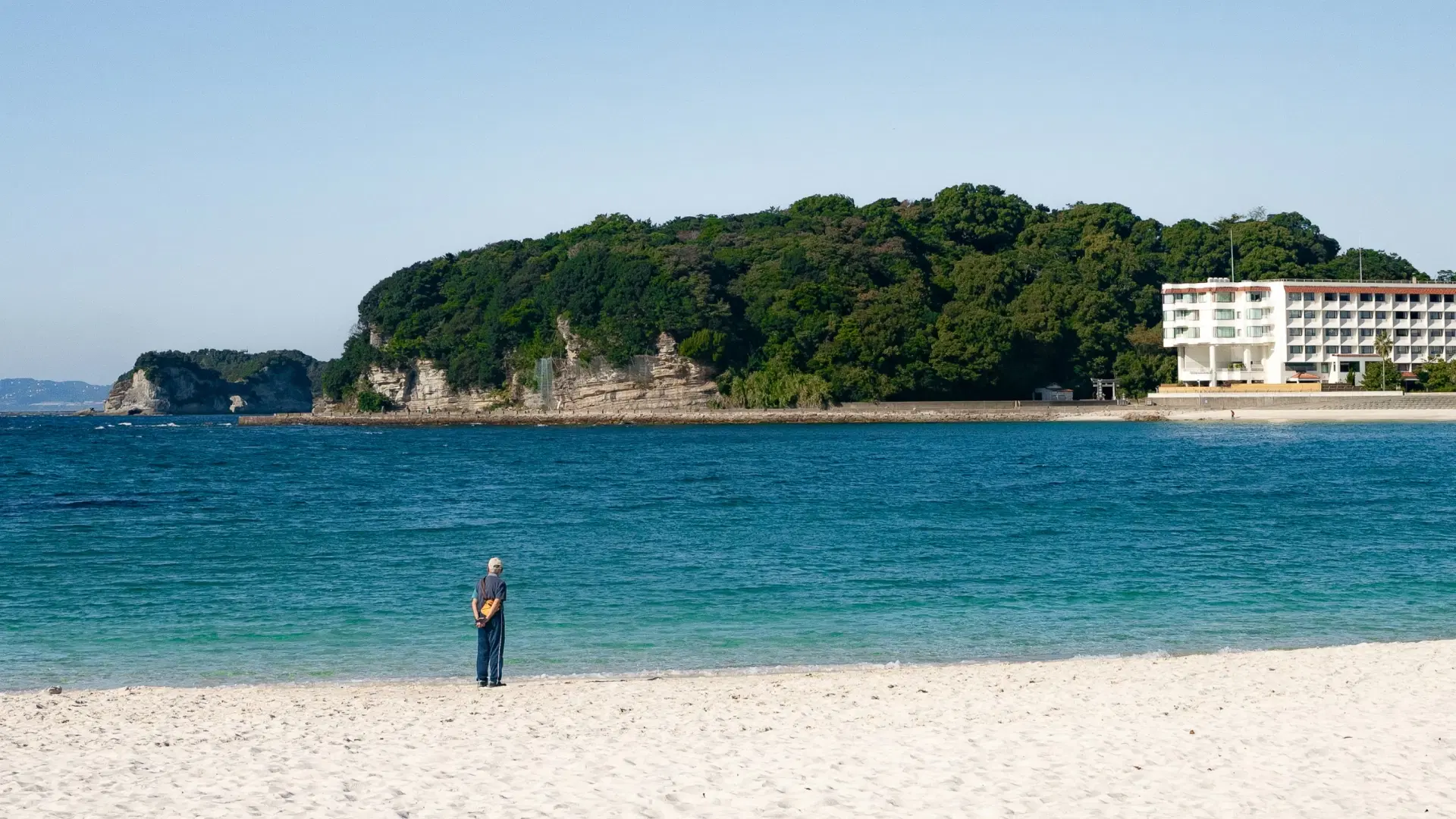
白浜Shirahama occupies the southern coast of the Kii Peninsula where the mountains of Wakayama descend to meet the Pacific Ocean, and its identity is built upon a duality that few Japanese resort towns can claim: a crescent of white quartz sand that ranks among the finest beaches in Japan, and a constellation of thermal springs whose recorded history extends back over 1,300 years, making them among the three oldest onsen in the country. The Nihon Shoki, Japan's earliest chronicle, records imperial visits to the hot springs of Shirahama in the seventh century, and the Manyoshu, the foundational anthology of Japanese poetry, contains verses composed by courtiers soaking in these same waters while gazing at the Pacific horizon. The springs were not a discovery of the modern leisure era but a destination of the ancient aristocracy, their therapeutic reputation established before the founding of most European nations.
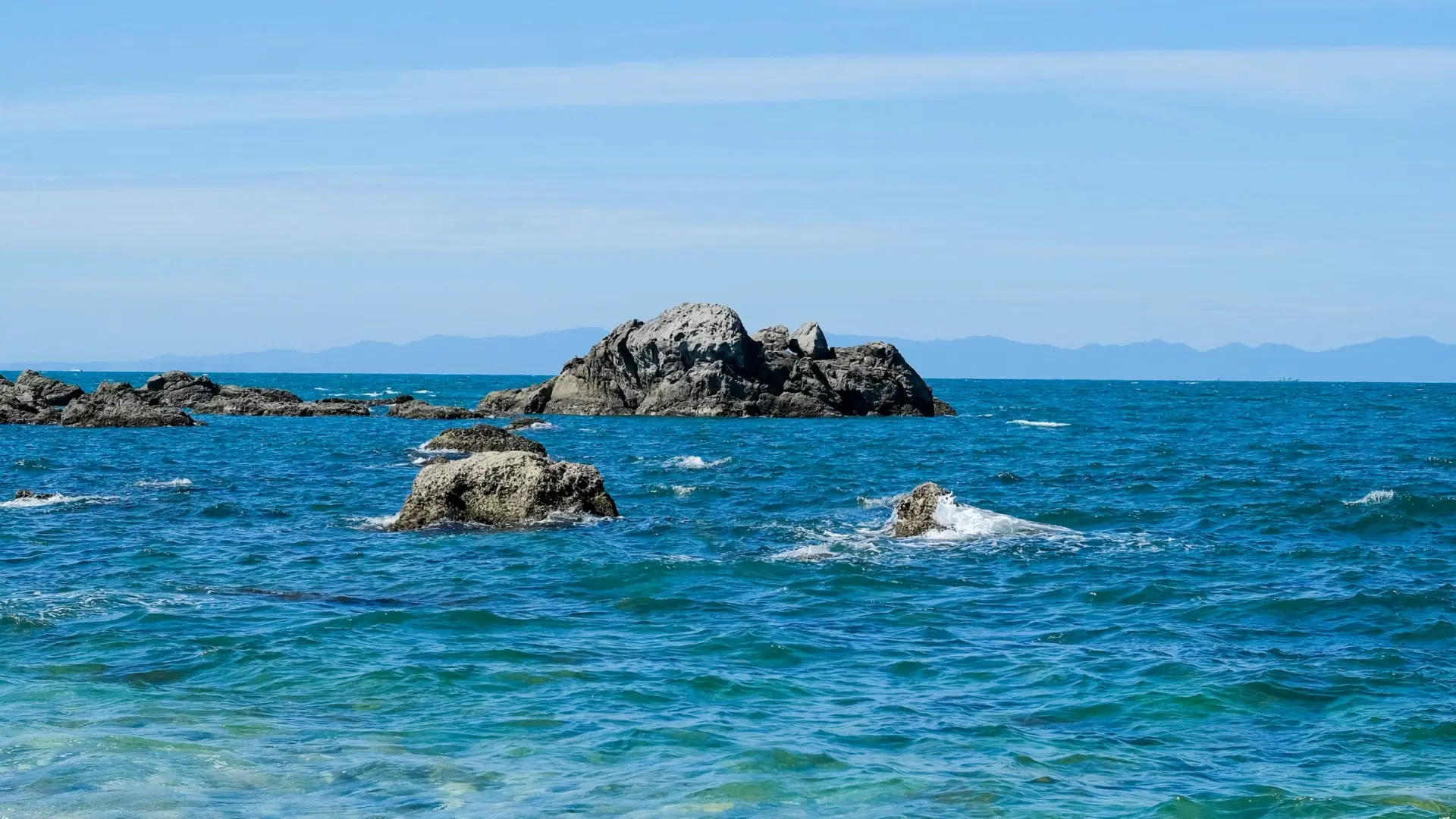
The town's coastline is its other inheritance. Shirarahama beach, whose 620-meter arc of white sand derives its striking color from the quartz content of the local geology, faces south into the Kuroshio Current, the warm Pacific stream whose passage along this coast moderates the climate and brings a subtropical luminosity to the light that distinguishes this stretch of Wakayama from the grey skies of the Japan Sea side. The geological formations that frame the beach, particularly the Sandanbeki cliffs and the Senjojiki rock platform, demonstrate the sculptural power of the Pacific upon the soft sedimentary coast, their forms carved by millennia of wave action into shapes that oscillate between the monumental and the delicate.
The convergence of ancient thermal waters and dramatic coastline creates a resort experience of unusual depth. This is not a place where the beach and the onsen exist as separate amenities but one where the geological forces that heated the springs also shaped the cliffs, where the same ocean that carved the rock formations provides the horizon visible from the outdoor baths, and where the antiquity of human presence connects the modern bather to a lineage of pleasure and restoration that reaches back to the dawn of Japanese civilization.
Highlights
Senjojiki, whose name means "a thousand tatami mats," is a vast platform of sandstone that extends from the shore like a frozen wave, its surface carved by the Pacific into channels, pools, and rippled formations that resemble the texture of flowing water rendered in stone. The platform, tilted gently toward the sea, was formed by the gradual uplift of the seabed and the subsequent erosion of its softer layers, a geological process whose timescale defies comprehension yet whose result is intimately accessible to anyone willing to walk across its surface at low tide. At sunset, when the declining light catches the pools of seawater trapped in the stone's depressions, the entire formation glows amber and gold, and the distinction between solid rock and liquid ocean momentarily dissolves.
Sandanbeki, the three-tiered cliff face that rises thirty-six meters above the churning Pacific, offers a confrontation with geological violence that the gentler forms of Senjojiki only imply. An elevator descends through the cliff to a sea cave at its base, where the waves enter with a percussive force that vibrates through the rock, and where the remains of a Kumano Suigun naval base reveal that this dramatic landscape served as a strategic military position during the feudal era. The juxtaposition of natural power and human history within the same formation concentrates Shirahama's layered identity into a single, unforgettable space.
Sakino-yu, a public onsen built into the rocky shoreline where the Pacific waves break within meters of the bathing area, provides the quintessential Shirahama experience. The outdoor bath sits on a natural rock shelf above the tide line, its thermal water drawn from the same ancient springs that attracted the Manyoshu poets, and the sensation of soaking in mineral-rich hot water while the ocean surges and retreats just below the retaining wall is one of the most elemental bathing experiences in Japan. The bath has operated in some form for centuries, and its endurance testifies to the irreplaceable pleasure of this particular combination of heat, salt air, and oceanic proximity.
Culinary Scene
Shirahama's kitchen draws from both the Pacific and the mountain interior of the Kii Peninsula, a dual pantry that produces a cuisine of breadth uncommon in coastal towns. The Kuroshio Current delivers warm-water species to the local fishing fleet: katsuo bonito, whose tataki preparation, seared on the outside and raw within, is a specialty of the region; maguro tuna, caught in the waters off Cape Shiono and served with a freshness that the long supply chains to urban markets cannot replicate; and ise-ebi spiny lobster, whose season from October through April coincides with the cooler months when the onsen experience reaches its most satisfying intensity.
The mountains behind the coast supply a complementary pantry of citrus, plums, and game. Wakayama is Japan's largest producer of umeboshi pickled plums, and the local varieties, particularly those from the Minabe region just north of Shirahama, are considered the finest in the country, their size, flesh-to-pit ratio, and balance of sourness and sweetness setting the national standard. Yuzu, mikan, and other citrus from the peninsula's groves appear in preparations from ponzu sauces to confections, their acidity brightening the rich seafood that dominates the dinner table.
The ryokan of Shirahama serve kaiseki that marries these ingredients with the onsen town's culture of indulgence, multi-course dinners where the sequential revelation of each dish, from the opening sashimi arrangement through the grilled course, the simmered dish, and the final rice and pickles, is calibrated to accompany the relaxation that hours of thermal bathing have induced. The best establishments source their morning fish from the Tonda fishing port, their vegetables from the Kii mountain farms, and their water from the same springs that fill the baths, creating a closed circle of local provision that grounds every bite in the specific geology and ecology of this coast.