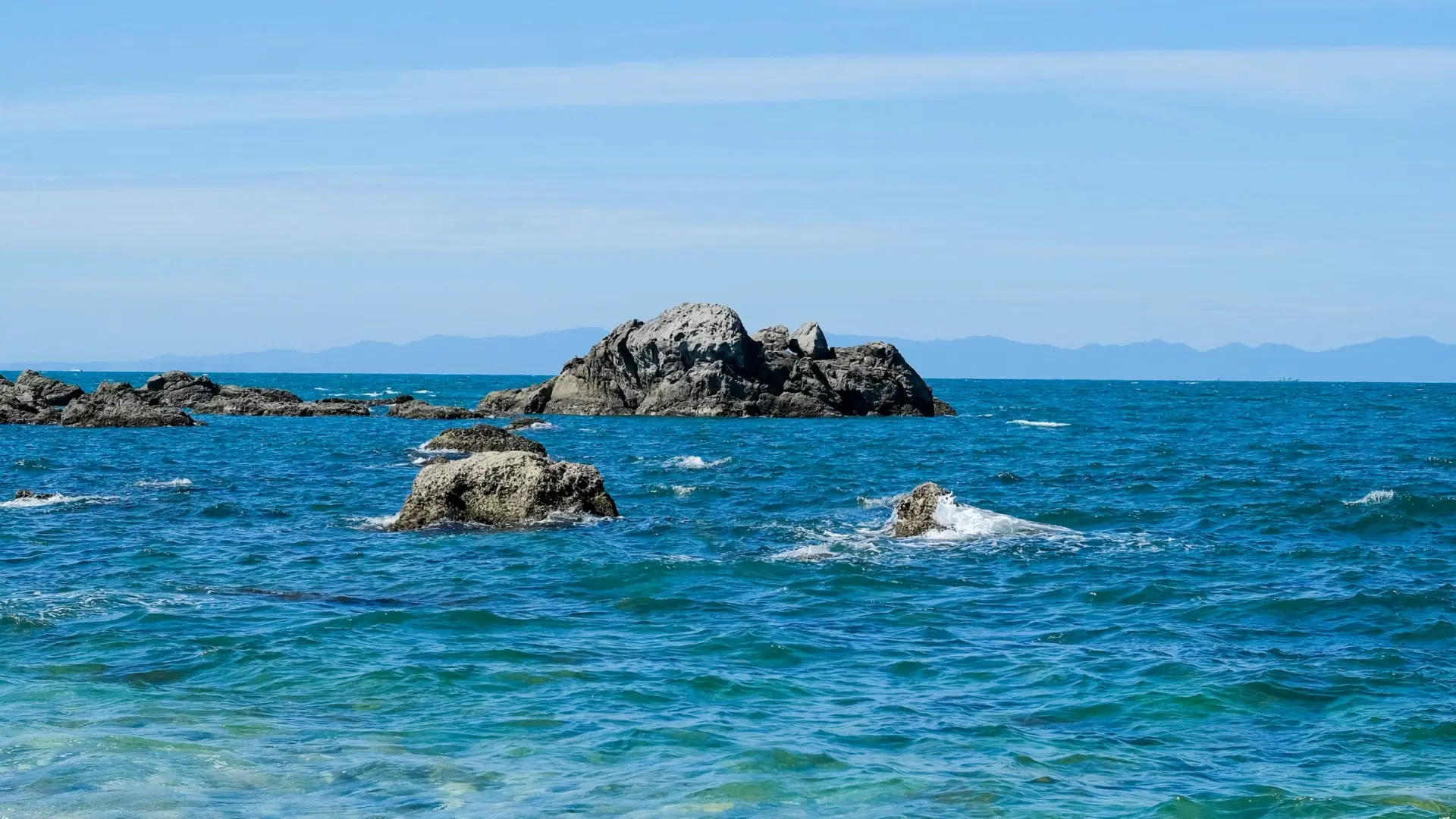
Wakayama City
和歌山市Wakayama City commands the northwestern corner of the Kii Peninsula, where the Kinokawa River meets the sea at the head of a bay that has served as a gateway between the Kansai heartland and the mountainous south for as long as ships have sailed these waters. The city's castle, originally built by Toyotomi Hideyoshi's brother in 1585 and later entrusted to a branch of the Tokugawa family, rises from a forested hill at the center of the urban grid, its reconstructed keep surveying a landscape that stretches from the Kii Channel to the mountains that wall the peninsula's interior. As the seat of the Kishu Tokugawa, one of the three branch families of the shogunate, Wakayama exercised an influence on Japanese political and cultural life disproportionate to its distance from Edo, producing two shoguns and cultivating a tradition of scholarship, garden design, and refined living that persists in the city's character.
The city's position at the peninsula's threshold gives it a transitional identity. To the north lies Osaka, forty minutes away by express train, and the industrial and commercial energy of the Kansai plain. To the south stretches the Kii Peninsula, its mountains, shrines, and coastal villages accessible through Wakayama City's role as the region's transportation hub. The city itself balances these orientations, its urban core equipped with the amenities and cultural institutions of a prefectural capital while its edges dissolve into the citrus groves, fishing villages, and forested hillsides that characterize the larger Wakayama landscape.
Wakayama's culinary reputation rests upon ramen, a claim that might seem incongruous for a city associated with high feudal culture but that reflects the democratic, street-level food traditions that coexist with the aristocratic inheritance. Wakayama ramen, served in a pork-and-soy broth of deep, murky richness, is one of Japan's most distinctive regional noodle styles, and the city's ramen shops, many operating from the same locations for generations, constitute a culinary heritage as legitimate and as carefully guarded as any kaiseki tradition.
Wakayama City commands the northwestern corner of the Kii Peninsula, where the Kinokawa River meets the sea at the head of a bay that has served as a gateway between the Kansai heartland and the mountainous south for as long as ships have sailed these waters.
Highlights
Wakayama Castle's hilltop position provides the city's orienting landmark, its white walls and blue-grey roofline visible from the train station, the river bridges, and the streets of the surrounding commercial district. The castle's grounds, extensive and forested, function as the city's principal park, their cherry trees producing one of the finest hanami displays in the Kansai region each April. The Nishinomaru Garden, designed in the Momoyama period with a pond, teahouse, and carefully composed stone arrangements, offers a pocket of Edo-period tranquility within the larger castle park, its enclosed space and intimate scale contrasting with the expansive views available from the keep's upper floors.
Kimiidera, one of the most important temples on the Saigoku Kannon pilgrimage circuit, perches on a hillside south of the city center, its ancient buildings reached by a stairway lined with cherry trees that produce one of Wakayama's earliest and most celebrated spring displays. The temple's principal image, an eleven-faced Kannon carved, according to tradition, from a single camphor log, draws pilgrims whose devotion has sustained the site for over 1,200 years. The hilltop offers panoramic views across the city to the sea, a perspective that contextualizes Wakayama's geography with a clarity that street-level exploration cannot provide.
Wakanoura, the scenic bay south of the city center, was celebrated in Manyoshu poetry for its tidal landscape of sandspits, pine-covered islands, and reflected mountains. The bay's beauty has diminished from its eighth-century glory, but the Toshogu Shrine, a smaller relative of the famous Nikko shrine built by the Kishu Tokugawa to honor the deified Ieyasu, preserves a concentrated example of the ornate, polychrome shrine architecture that the Tokugawa favored. The Shinto bridge and ornamental gate leading to the shrine are among the finest examples of Edo-period decorative architecture in western Japan.
Culinary Scene
Wakayama ramen is the city's signature contribution to the national table, a bowl whose murky, pork-bone-and-soy-sauce broth, thin straight noodles, and sparse toppings of sliced pork, scallion, and kamaboko fish cake belie a depth of flavor that has converted skeptics and generated a devoted following far beyond the prefecture's borders. The city's ramen culture is distinguished by an unusual custom: diners serve themselves hayazushi, small pressed mackerel sushi, and boiled eggs from communal platters at the counter while waiting for their noodles, the sushi functioning as an appetizer that sharpens the appetite for the rich broth to come. This practice, found nowhere else in Japan's ramen landscape, reflects a local tradition whose origins are debated but whose continuation is non-negotiable.
Beyond ramen, the city's position at the mouth of the Kinokawa River and the head of the Kii Channel provides access to both freshwater and marine ingredients. Shirasu whitebait, caught in the waters off Kada and Shimotsu, arrives at the city's markets with a freshness measured in hours rather than days, its preparation as raw shirasu-don over rice a delicacy whose window of optimal quality is narrow enough to make it a genuinely local pleasure. The surrounding countryside supplies the city with mikan mandarin oranges, persimmons, and the celebrated Kishu umeboshi plums that form the aromatic backbone of Wakayama's identity as Japan's premier fruit-producing prefecture.
The kaiseki tradition of the Kishu Tokugawa era persists in a handful of restaurants that maintain the formal multi-course dining style developed under feudal patronage. These establishments draw upon the full range of Wakayama's ingredients, from the seafood of the Kii Channel to the mountain vegetables of the interior, composing meals that balance the refinement of their aristocratic origin with the robust, direct flavors that characterize the region's produce.