Nasu Heisei no Mori Autumn Walks
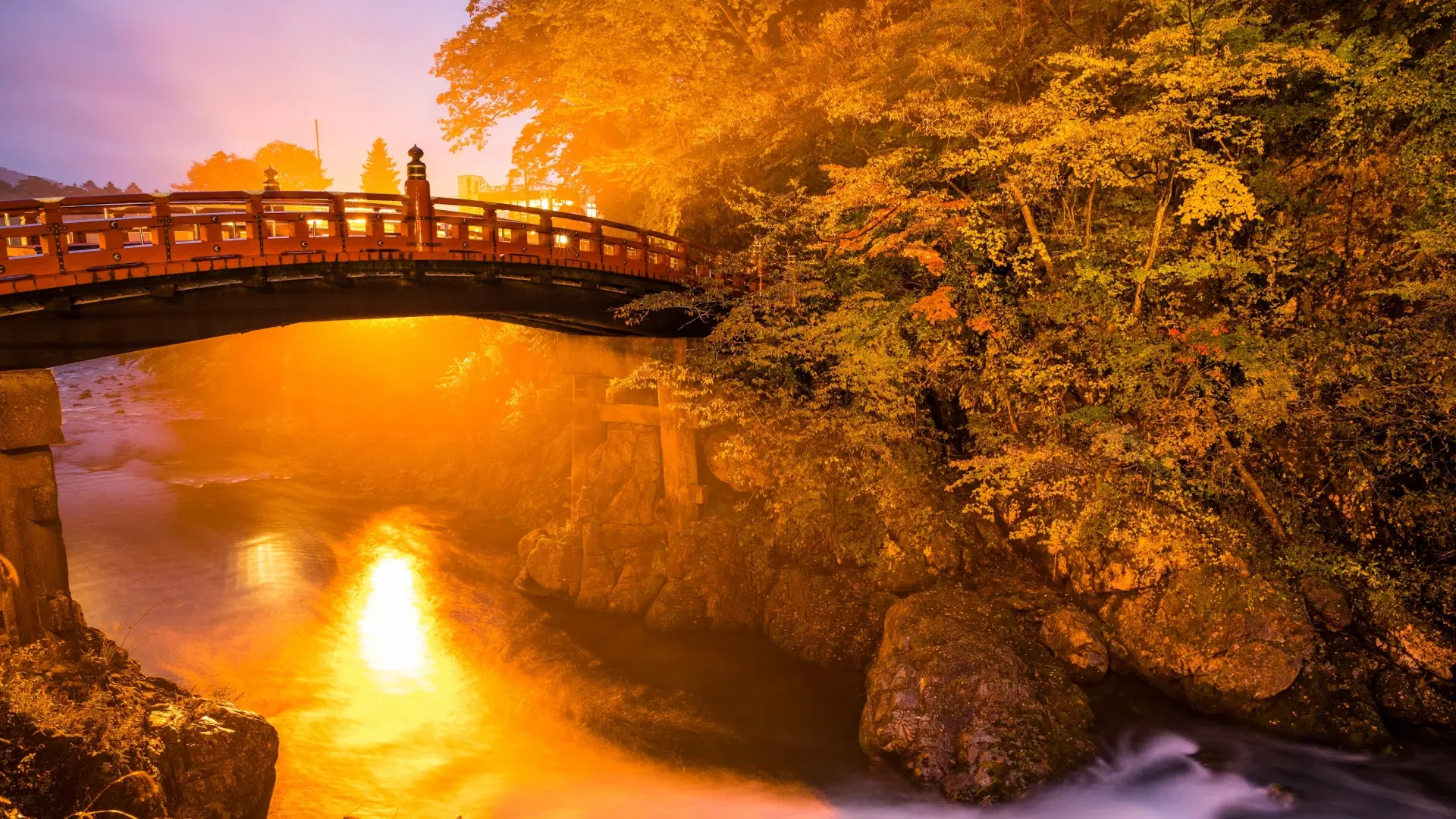
那須平成の森紅葉ウォークThe autumn walks at Nasu Heisei no Mori offer an encounter with Japanese fall foliage that is intimate rather than spectacular, a guided immersion in a forest ecosystem whose autumn transformation unfolds not as a distant landscape viewed from a roadside but as a close, multisensory experience of color, texture, light, and the organic processes of seasonal change. The forest, part of the former Nasu Imperial Villa grounds opened to the public in 2011, preserves a woodland whose diversity of deciduous species produces an autumn palette of unusual complexity, the canopy shifting through shades of gold, amber, scarlet, and burgundy that change composition daily as different species reach and pass their peak color.
The forest's former status as imperial land protected it from the development and logging that reduced many of Tochigi's lowland and mid-elevation forests during the twentieth century. The result is a mature woodland of exceptional ecological richness, where towering mizunara oaks, Japanese beeches, maples, and birches create a layered canopy whose autumn colors operate at multiple heights, the understory's warm golds providing a ground note beneath the canopy's brighter reds and oranges.
Guided nature walks during the autumn season add an interpretive dimension that transforms a beautiful walk into an educational experience. Naturalists from the Nasu Heisei no Mori Field Center lead small groups through the forest, explaining the chemistry of leaf color change, the ecological relationships between tree species, and the role of autumn in the forest's annual cycle of growth, reproduction, dormancy, and renewal. This knowledge, shared in the forest itself with the evidence visible on every branch, elevates the autumn viewing from passive aesthetic appreciation to active engagement with the living systems that produce the beauty.
History & Significance
The Nasu Heisei no Mori occupies approximately 560 hectares of forest that were part of the Nasu Imperial Villa estate, used by the imperial family as a summer retreat since the Taisho era. In 2008, Emperor Akihito expressed the wish that a portion of the estate be opened to the public so that the forest's ecological value could be shared more broadly, a gesture consistent with his long-standing interest in natural science and environmental conservation. The resulting nature center opened in 2011, transforming private imperial forest into a public resource for nature education and quiet recreation.
The transition from imperial reserve to public forest preserved the woodland's ecological integrity while making it accessible through a carefully designed trail system and interpretive program. The guiding philosophy respects the forest's character as a place of natural process rather than designed landscape, the trails following existing terrain rather than imposing geometric patterns, the infrastructure minimized to maintain the sense of entering a wild environment. The autumn walks program, which has become the facility's most popular offering, reflects this philosophy: the experience is shaped by the forest itself, the guides serving as interpreters rather than entertainers, their role to deepen the visitor's observation rather than to replace it with commentary.
What to Expect
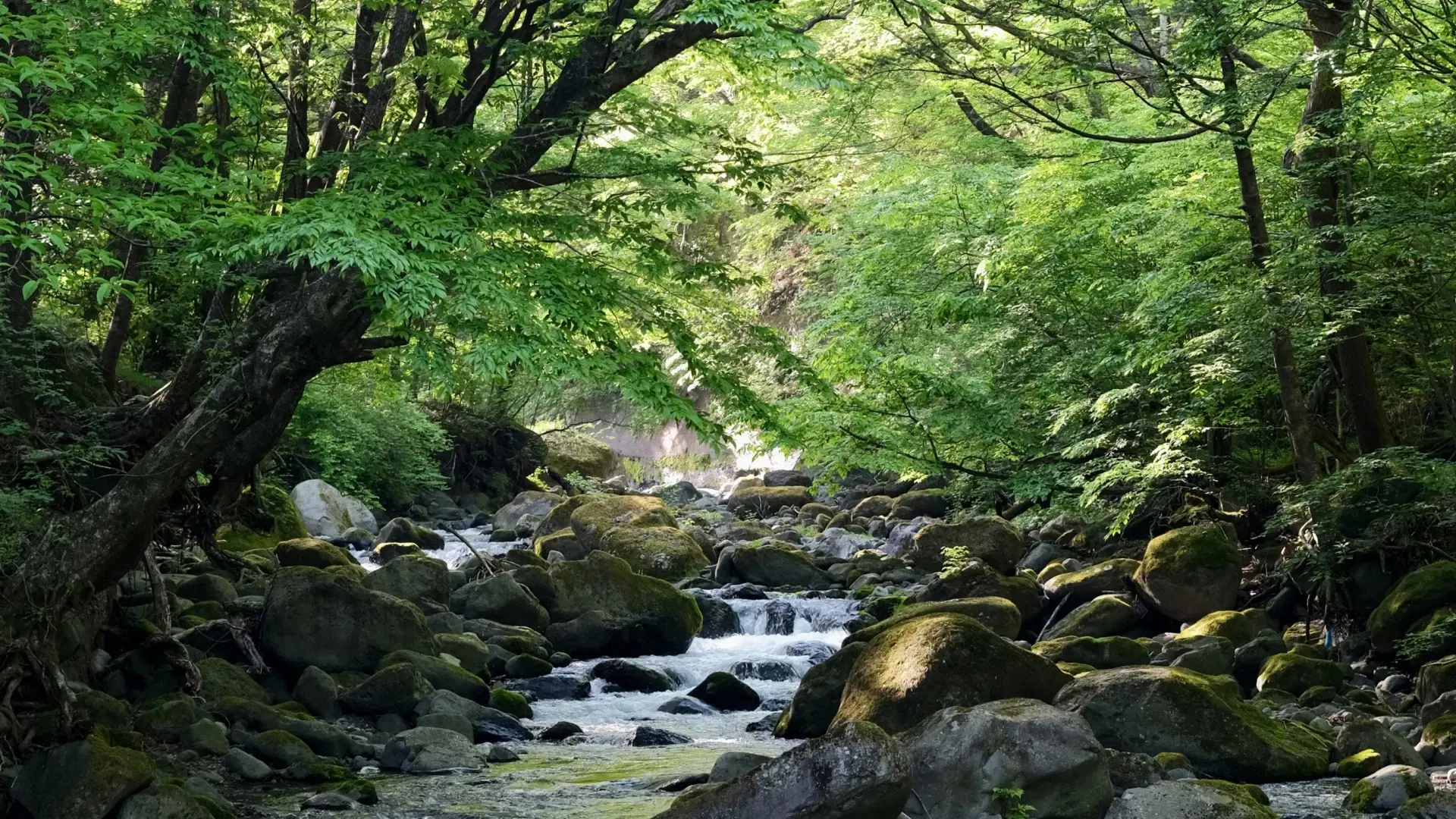
The guided walks follow trails that wind through the forest's varied terrain, from valley floors where streams run beneath bridges of fallen logs to ridgelines where the canopy opens to reveal views of the surrounding Nasu Highlands. The pace is deliberately slow, with frequent stops to examine individual trees, fallen leaves, fungi, and the small details that constitute the forest's visual and ecological texture. The guides encourage visitors to touch bark, smell fallen leaves, and listen to the sounds of the forest, creating an experience that engages all senses rather than privileging sight alone.
The forest's autumn colors peak at different elevations at different times, with the highest trails showing color earliest and the lower areas following one to two weeks later. This vertical gradient means that a single visit can encompass the full arc of autumn transformation, from the still-green canopy of lower elevations through the golden middle zone to the bare branches and fallen leaves of the highest trails. The visual effect is of walking through time, ascending through the season's progression in a single afternoon.
The Field Center provides exhibitions on the forest's ecology and history, including displays on the wildlife that inhabits the woods, from the Japanese serow to the varied woodpeckers whose drumming punctuates the forest's quiet. A small cafe offers local refreshments, and the center's terrace provides a contemplative viewpoint from which to absorb the forest landscape after the walk's physical engagement.