Mashiko Pottery Fair
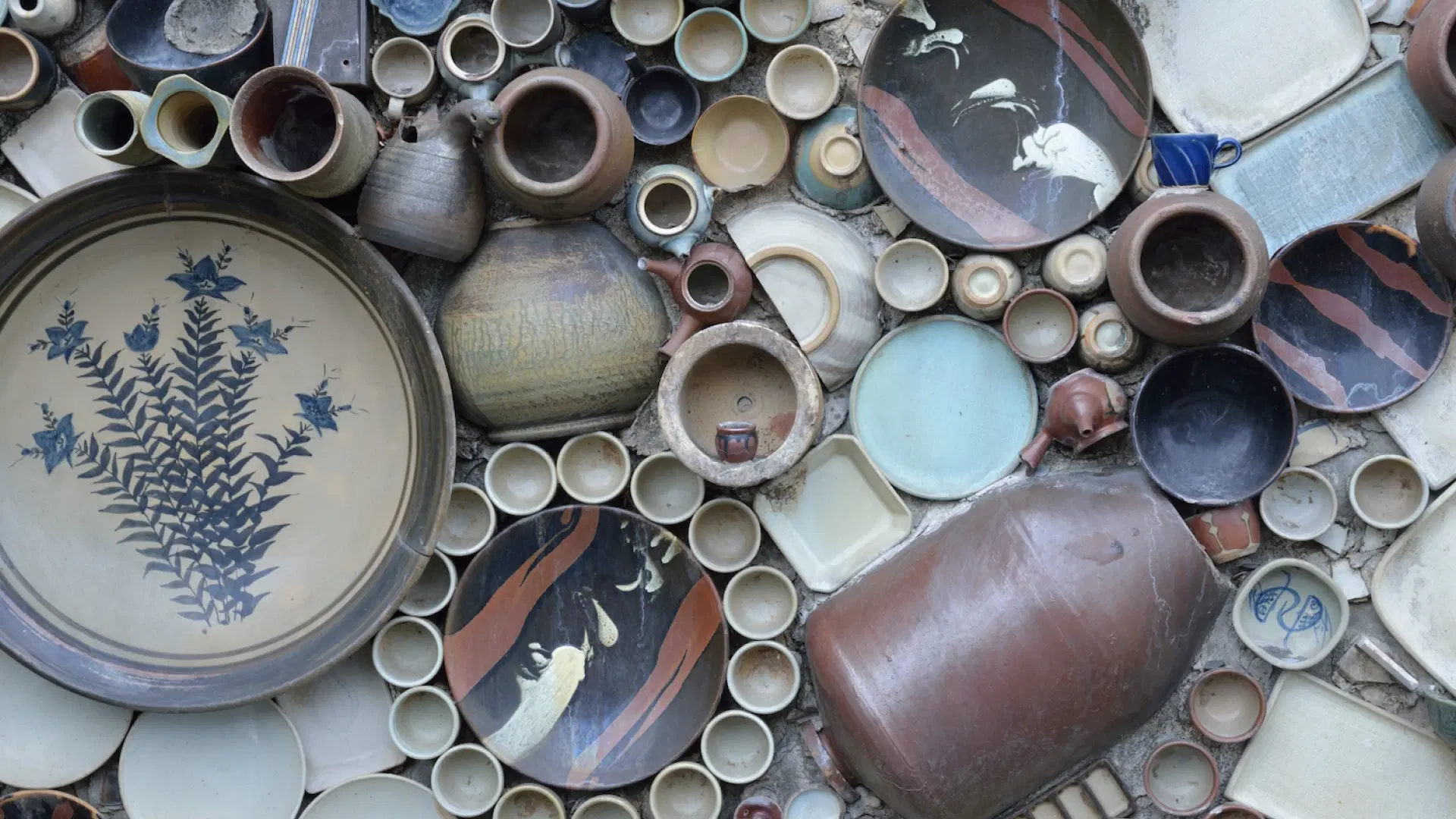
益子陶器市The Mashiko Pottery Fair is one of Japan's largest and most significant ceramic markets, a biannual event that transforms the small Tochigi pottery town into a mile-long gallery of contemporary Japanese ceramics where over five hundred vendors, from established masters to recent art school graduates, display and sell their work along the main street and in the fields, gardens, and converted buildings that line it. The fair draws buyers, collectors, and enthusiasts from across Japan and increasingly from overseas, its appeal rooted in the rare opportunity to acquire handmade ceramics directly from their creators at prices that reflect the maker's valuation rather than a gallery's markup.
Mashiko's identity as a pottery center is inseparable from the legacy of Hamada Shoji, the Living National Treasure whose adoption of Mashiko as his home and workshop in 1930 elevated the town's folk pottery tradition from regional craft to internationally recognized art form. The fair exists within this legacy, its vendors working in traditions that range from faithful continuation of Hamada's mingei folk craft philosophy to radical contemporary departures that push ceramic form into sculptural and conceptual territory. This breadth makes the fair a survey of Japanese ceramics in its full contemporary range, a market where a rustic rice bowl that Hamada himself would have recognized sits alongside experimental porcelain that belongs more to the gallery than the kitchen.
The atmosphere of the fair is one of accessible connoisseurship. Vendors are typically the makers themselves, present at their stalls to discuss materials, techniques, and aesthetic intentions with a directness that gallery settings rarely permit. The conversations that unfold between makers and buyers, often centering on the particular qualities of Mashiko clay, the behavior of ash glazes in the climbing kiln, or the influence of seasonal changes on firing results, constitute an informal education in ceramic culture that is as valuable as the objects purchased.
History & Significance
The Mashiko Pottery Fair began in 1966 as a modest market intended to promote the town's ceramic industry to a broader public. At that time, Mashiko's reputation rested primarily on Hamada Shoji's presence and the mingei movement's intellectual framework, which valued anonymous, functional objects made by traditional methods over the individualistic expression of studio ceramics. The fair provided a venue where Mashiko's potters could sell directly to visitors, bypassing the distribution channels that often obscured the connection between maker and user that the mingei philosophy considered essential.
The fair's growth from a local market to a national event paralleled broader changes in Japanese ceramic culture. As interest in handmade pottery expanded during the 1970s and 1980s, driven partly by nostalgia for traditional craft in an increasingly industrialized society and partly by the genuine aesthetic merits of wood-fired stoneware, Mashiko's fair became a destination that drew not only buyers but aspiring potters seeking inspiration and community. The fair's dual schedule, held during Golden Week in spring and again in November, accommodates demand that a single annual event could not satisfy, each edition attracting approximately six hundred thousand visitors over its four-day run.
What to Expect
The fair's geography follows Mashiko's main road for approximately two kilometers, with stalls arranged on both sides of the street and in the fields and clearings behind them. The density of offerings is extraordinary: tables laden with cups, bowls, plates, vases, tea ware, and decorative objects stretch without interruption, each stall representing a different potter's aesthetic vision. Navigation requires patience and an acceptance that seeing everything is neither possible nor necessary. The best approach is to walk slowly, handling objects that attract the eye, and allowing the intuitive responses that good ceramics provoke to guide purchasing decisions.
The range of work spans the full spectrum of contemporary Japanese ceramics. Traditional Mashiko-yaki, characterized by its warm brown clay body and signature glazes of kaki (persimmon), nuka (rice bran ash), and tetsu (iron), appears alongside porcelain from Mashiko potters who have expanded beyond the town's historical stoneware tradition. Young potters, many trained at Mashiko's pottery schools, bring fresh perspectives that challenge conventional forms while respecting the material's essential properties. The dialogue between tradition and innovation that these diverse offerings represent is the fair's intellectual richness.
Beyond purchasing, the fair offers studio visits and kiln tours that reveal the physical infrastructure of Mashiko's ceramic culture. The town's noborigama climbing kilns, whose wood-fired chambers produce the ash deposits and flame effects that distinguish Mashiko pottery, can be visited at several studios. The Hamada Shoji Reference Collection, housed in the potter's former estate, provides essential historical context.