Nagahama Hikiyama Festival
長浜曳山まつりThe Nagahama Hikiyama Festival is one of the most artistically ambitious matsuri in Japan, a three-day celebration in which children perform full kabuki plays on elaborately decorated floats drawn through the streets of this Lake Biwa castle town. The festival, designated a UNESCO Intangible Cultural Heritage, combines the spectacle of float procession with the discipline of theatrical performance in a synthesis that is unique in Japanese festival culture. The child actors, boys between the ages of five and twelve selected from the town's traditional neighborhoods, train for months under the guidance of professional kabuki instructors, learning the exacting vocal techniques, gestural vocabularies, and emotional registers that the classical repertoire demands. The result is not a charming amateur approximation but a performance of genuine artistic quality, delivered from stages that are themselves masterworks of lacquer, carving, and textile art.
The hikiyama floats, twelve in total, are maintained by the neighborhoods that own them and brought out in rotation, with four floats participating each year. Each float is a three-story structure whose lower level houses the musicians, whose middle level serves as the dressing room and preparation area, and whose upper level opens into a full kabuki stage equipped with curtains, scenery, and the mechanical devices that kabuki staging requires. The exterior surfaces are covered in carvings, lacquerwork, and embroidered textiles that represent generations of accumulated artistic investment, each neighborhood having competed across centuries to produce the most magnificent float.
The festival's origins in the late sixteenth century connect it to Toyotomi Hideyoshi, who granted the townspeople of Nagahama permission to celebrate the birth of his son with a festival of their choosing. The merchants of Nagahama chose to build floats and stage performances, a decision that reflected their cultural ambitions and that produced a tradition whose artistic standard has only increased with time.
The Nagahama Hikiyama Festival is one of the most artistically ambitious matsuri in Japan, a three-day celebration in which children perform full kabuki plays on elaborately decorated floats drawn through the streets of this Lake Biwa castle town.
History & Significance
The festival traces its founding to 1574, when Toyotomi Hideyoshi, then lord of Nagahama Castle, celebrated the birth of his first son by distributing gold to the townspeople and encouraging them to create a festival in commemoration. The merchants, already prosperous from their position on the Lake Biwa trading routes, invested the gold in the construction of the first hikiyama floats, establishing a tradition that would evolve over the following centuries into one of the most elaborate matsuri in the country. The addition of kabuki performance to the float procession is believed to date to the early seventeenth century, when the art form was at the height of its cultural influence and the merchants of Nagahama sought to demonstrate their sophistication through patronage of the theatrical arts.
The floats themselves have been rebuilt, restored, and embellished continuously since their original construction, with each generation of neighborhood patrons contributing new carvings, textiles, and lacquerwork that reflect the artistic currents of their era. The result is that each float is a palimpsest of artistic periods, its surfaces layering Momoyama-period vigor with Edo-period refinement and Meiji-period eclecticism in combinations that are visually rich and historically complex. The festival's designation as a UNESCO Intangible Cultural Heritage in 2016, alongside other Japanese float festivals, recognized both the antiquity of the tradition and the remarkable system of community stewardship that has sustained it across more than four centuries.
What to Expect
The festival unfolds over three days, with the kabuki performances concentrated on April 15, the central day. In the morning, the four participating hikiyama are drawn from their storehouses through the streets of the old town to Nagahama Hachiman Shrine, where each float's company of child actors performs a complete kabuki play for the assembled crowd. The performances, typically lasting thirty to forty minutes each, are presented with full costumes, makeup, and musical accompaniment, and the quality of the children's acting, achieved through intensive training that begins in January, frequently astonishes viewers who expect the youth of the performers to limit the artistic impact. The opposite is often true: the combination of classical technique and childish earnestness produces a quality of performance that professional adult actors, burdened by self-consciousness, sometimes cannot achieve.
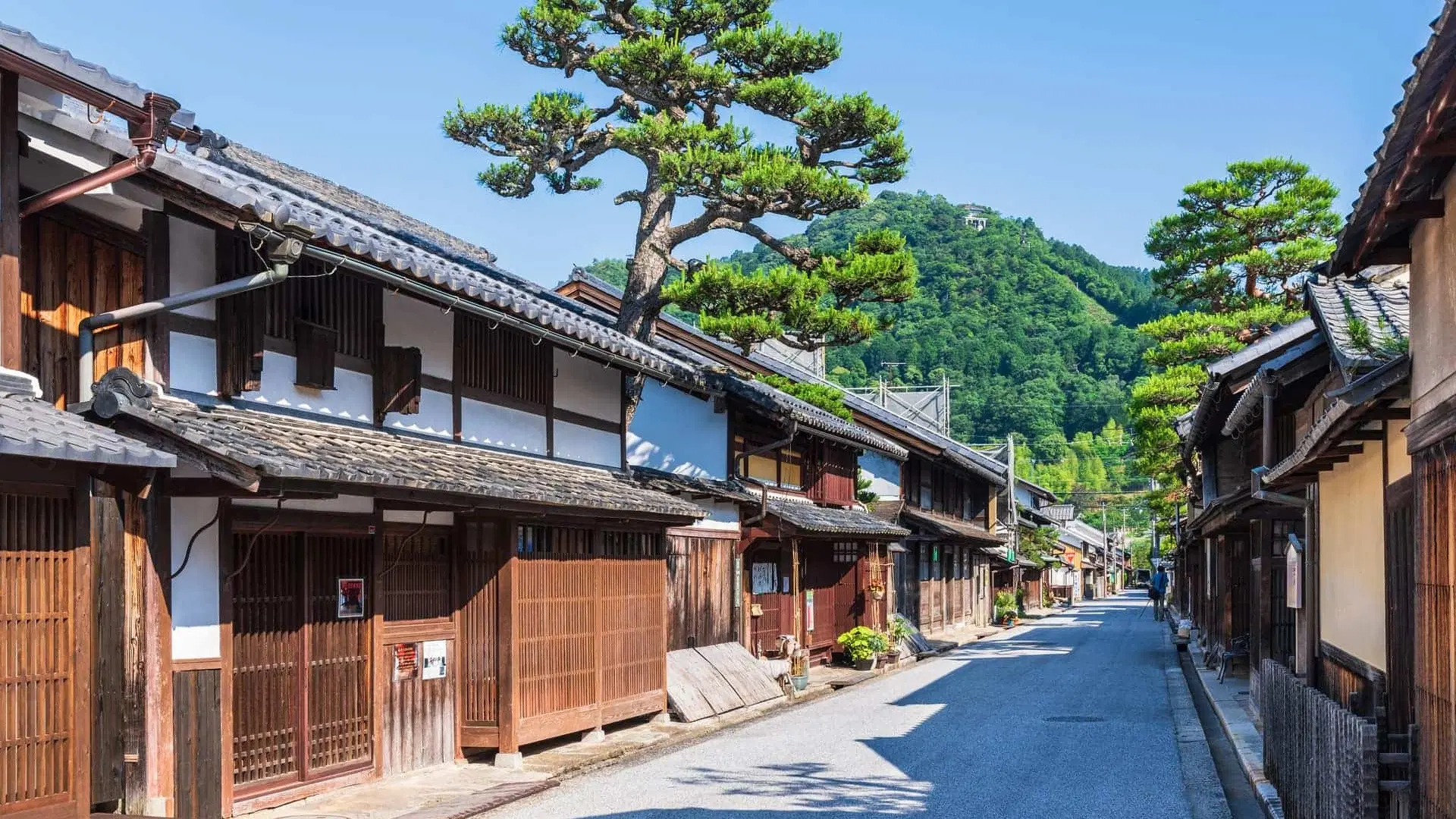
The procession of the floats through the narrow streets of the merchant quarter is a spectacle of its own order. The hikiyama, each weighing several tons, are maneuvered through turns and intersections by teams of pullers who coordinate their movements through a system of calls and signals refined across generations. The proximity of the floats to the traditional wooden buildings that line the route creates a visual intensity that is characteristic of Japanese float festivals: the lacquered and carved surfaces of the hikiyama passing within arm's reach of latticed shopfronts and tile rooftops, the accumulated artistry of the floats in dialogue with the accumulated domesticity of the streetscape.
The evening of April 15 brings the yoimiya, the night procession in which the hikiyama are illuminated by hundreds of paper lanterns and drawn through the darkened streets. The transformation from daylight pageantry to nighttime mystery is dramatic: the carvings and lacquerwork, vivid under the April sun, become mysterious and suggestive under lantern light, their details emerging and retreating with the movement of the flames. The sound of the procession changes too, the daytime energy of the crowd giving way to a quieter, more contemplative atmosphere in which the creaking of the wheels and the flicker of the lanterns carry the imagination back through centuries of identical evenings.