Niigata City
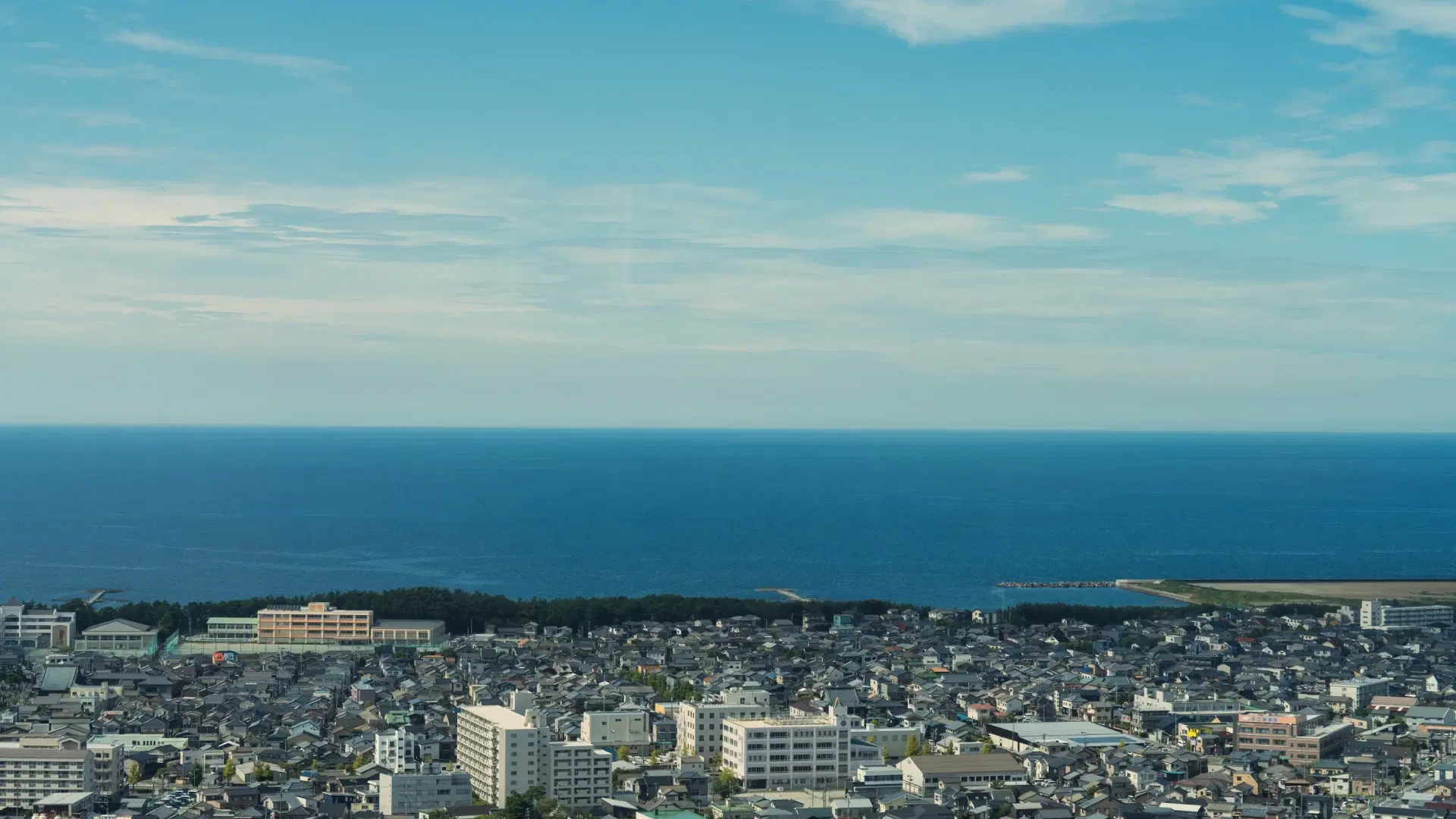
新潟市Niigata City is one of Japan's great port cities, though it wears this distinction with a modesty that belies its historical importance. Situated where the Shinano River, Japan's longest, empties into the Sea of Japan, the city served for centuries as a vital nexus of maritime trade, connecting the rice-producing interior of Echigo Province with markets in Osaka, Hokkaido, and across the sea in Korea and China. The merchants who built their fortunes on this trade created a city of canals, warehouses, and pleasure quarters that earned Niigata a reputation as the port of a thousand ships and a culture of cosmopolitan refinement unusual for a city on the Sea of Japan coast. The opening of the port to international trade in 1869, one of five cities designated under the Ansei treaties, confirmed an outward orientation that had existed informally for centuries.
The modern city of roughly 780,000 inhabitants retains the spatial logic of its mercantile past, though the canals have largely been filled and the waterfront transformed. The Bandai Bridge, spanning the Shinano River at the city's heart, remains the symbolic center, its stone arches connecting the old commercial districts on the south bank with the residential and cultural areas to the north. The Furumachi district, once the entertainment quarter where wealthy merchants hosted their guests, preserves a network of narrow lanes and traditional buildings that include several operating geigi houses, the establishments where Niigata's geisha, known locally as furumachi geigi, continue to practice the arts of dance, music, and conversation that have defined the city's cultural identity for generations.
Niigata's relationship with rice and sake is not merely commercial but existential. The Echigo Plain that surrounds the city is one of Japan's most productive rice-growing regions, and the grain that flows through Niigata's markets and warehouses is the foundation upon which the city's cuisine, its sake industry, and its sense of self have been built. The prefecture contains more sake breweries than any other in Japan, and many of the finest are clustered in and around the city, their production drawing on the same soft snowmelt water and premium rice that have defined Niigata's contribution to Japanese gastronomy.
Niigata City is one of Japan's great port cities, though it wears this distinction with a modesty that belies its historical importance.
Highlights
The Furumachi geigi district offers an encounter with a living tradition that has survived precisely because it never became a tourist attraction. Niigata's geisha culture, which reached its peak during the Meiji and Taisho eras when the port's prosperity supported hundreds of geigi, has contracted to a smaller but vital community of practitioners who perform at private gatherings, civic events, and, increasingly, at curated experiences that allow visitors to observe the arts of dance and shamisen without the awkwardness of manufactured authenticity. The ryotei restaurants of Furumachi, traditional establishments where meals are served in private rooms and the geigi perform, represent one of the last places in Japan where this culture can be experienced in something approaching its original context.
The Northern Culture Museum, Hoppo Bunka Hakubutsukan, located in the former residence of the Ito family, one of the wealthiest landholders in Echigo, provides a visceral understanding of the scale of wealth that rice cultivation produced. The estate's sixty-five rooms, its gardens designed to be viewed from specific tatami vantage points, and its collections of calligraphy, ceramics, and painting document a culture of landed aristocracy that disappeared with the postwar land reforms but whose aesthetic achievements remain intact in this preserved compound.
Ponshukan, located inside Niigata Station, offers a more immediate introduction to the prefecture's sake heritage. This tasting facility houses a wall of vending machines dispensing small cups from every brewery in the prefecture, and the experience of systematically working through the offerings, each cup revealing slight variations in rice polish, water source, and brewing philosophy, provides both pleasure and education. For deeper engagement, the breweries themselves, several of which are open for tours, reveal the craft behind the product and the deep relationship between sake production and the local agricultural calendar.
Culinary Scene
Niigata City's food culture operates on a foundation of rice and seafood so consistently excellent that the extraordinary becomes quotidian. The sushi served at the city's better establishments, from the high-end counters of Furumachi to the more accessible but equally serious kaiten shops near the station, benefits from the direct access to the Sea of Japan's fishing grounds and the quality of the shari, the vinegared rice, made with local Koshihikari. The nanban ebi, a sweet shrimp unique to the Sea of Japan, and the winter buri, yellowtail fattened in cold currents, are particular strengths, but the daily catch encompasses dozens of species that reflect the seasonal shifts in the offshore waters. The Niigata Fish Market, Pier Bandai, located along the Shinano River waterfront, functions as both a commercial market and a destination for visitors, its stalls offering everything from morning sushi to grilled seafood and the fresh produce of the Echigo Plain.
The city's relationship with sake extends beyond consumption to a cuisine that has evolved in dialogue with it. Niigata's food tends toward clean, direct flavors that complement rather than compete with the dry, delicate sake the prefecture is known for. Noppei jiru, a thick vegetable soup enriched with taro's natural starch and flavored with salmon roe, is the city's most characteristic home-style dish, a preparation that warms without heaviness and pairs with junmai sake in a combination that has sustained Niigata households through centuries of long winters. The wappa meshi, a rice dish steamed in a thin wooden container with seasonal toppings of salmon, ikura, or chicken, achieves an aromatic intensity through the cedar vessel that no conventional pot can replicate.
Niigata's Italian cuisine, unexpectedly, has earned national recognition. The city claims to have originated the now-ubiquitous Japanese pasta dish of thick noodles in a tomato-meat sauce, and several establishments that have operated since the mid-twentieth century serve these preparations with a proud disregard for Italian orthodoxy that has become, paradoxically, a legitimate culinary tradition in its own right.