Myoko Kogen
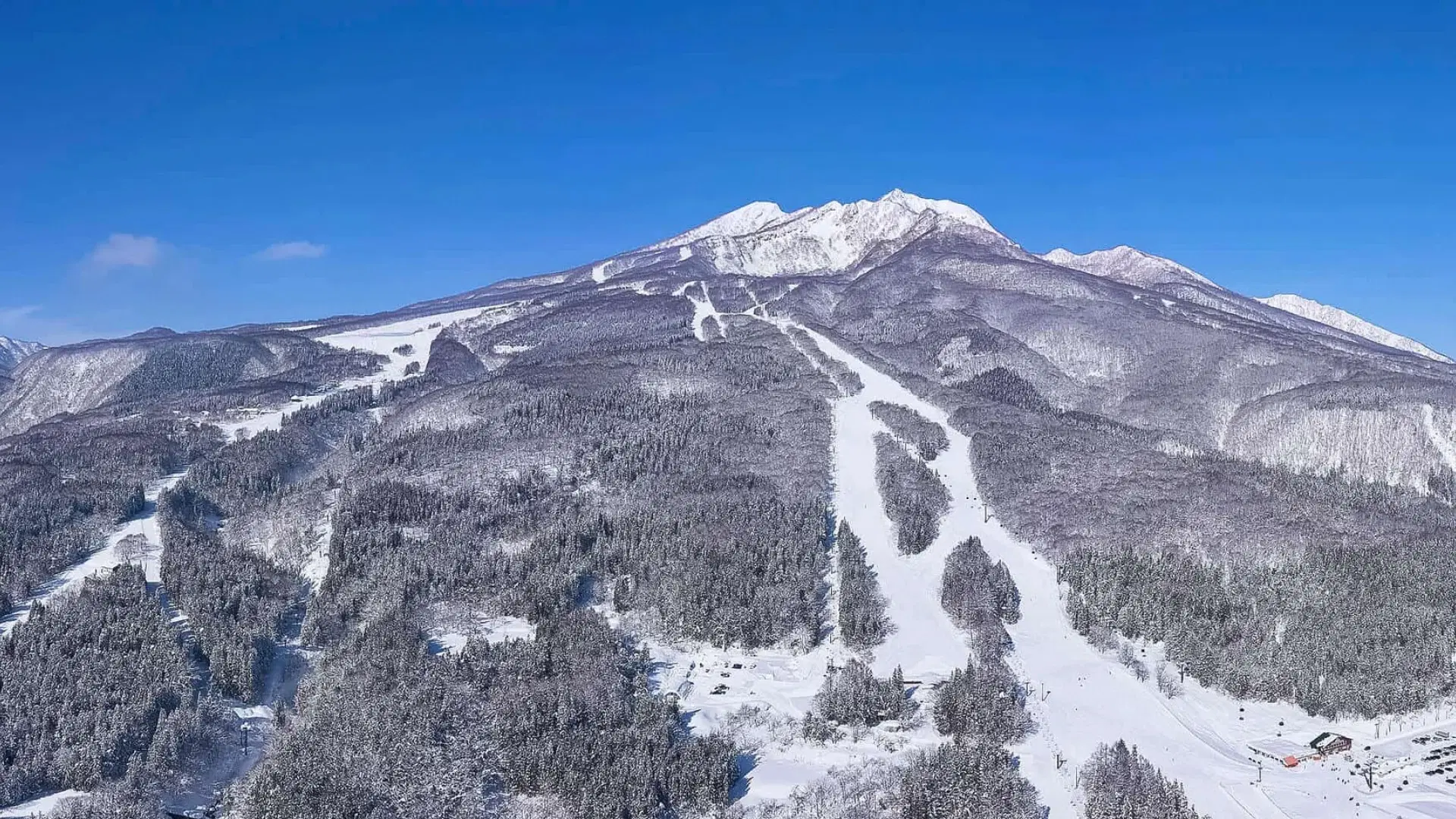
妙高高原Myoko Kogen occupies the flanks of Mount Myoko, a 2,454-meter stratovolcano in southwestern Niigata whose broad shoulders and reliable snowfall have made it one of the most respected skiing destinations in Japan and, increasingly, in the world. The mountain, known as Echigo Fuji for its symmetrical profile visible across the coastal plain, anchors a landscape that transitions from rice paddies and cedar forests at its base through dense beech woodland to the volcanic peaks and alpine zones above. Unlike the purpose-built resort developments that characterize much of Japanese skiing, Myoko's ski areas grew organically around existing onsen villages, and the result is a destination where the après-ski culture is not an engineered addition but an extension of bathing and dining traditions that have existed here for centuries.
The hot springs of Myoko are among the most varied and abundant in the Chubu region. Within a compact area, seven distinct onsen villages draw water of dramatically different character: the blood-red, iron-rich waters of Akakura Onsen, the sulfurous milky baths of Tsubame Onsen reached only by a mountain trail, the clear sodium-chloride springs of Myoko Onsen at the mountain's base. This diversity of water chemistry within a single volcanic system is geologically unusual and gives visitors the opportunity to experience, within a single day, bathing experiences that would normally require traveling between distant prefectures. The local practice of onsen hopping between these villages, each with its own atmosphere and therapeutic claim, constitutes a ritual of exploration that predates and outlasts the ski season.
Myoko's appeal extends well beyond winter. The mountain's hiking trails, which range from gentle forest walks to the challenging summit ascent, pass through landscapes of extraordinary seasonal variety. Spring brings wildflowers to the alpine meadows and the thundering snowmelt of Naena Falls, one of Japan's hundred finest waterfalls, whose 55-meter columnar basalt cliff face was formed by ancient lava flows. Summer offers cool temperatures and lush green canopy in the beech forests. Autumn ignites the mountainside in waves of color that descend from the summit over the course of several weeks, creating a slowly shifting canvas visible from the onsen villages below.
Myoko Kogen occupies the flanks of Mount Myoko, a 2,454-meter stratovolcano in southwestern Niigata whose broad shoulders and reliable snowfall have made it one of the most respected skiing destinations in Japan and, increasingly, in the world.
Highlights
The skiing at Myoko is defined by quantity and quality of snow rather than vertical drop or resort infrastructure, and this distinction appeals to a particular sensibility. The Myoko area receives an average annual snowfall exceeding twelve meters, producing a deep, consistent base and the light, dry powder that has earned the Sea of Japan side of Japan its growing reputation among international skiers. Akakura Onsen and Akakura Kanko resorts offer the most varied terrain, with long runs through the trees and open bowls above the treeline. Madarao Kogen, slightly north of Myoko proper, has gained a cult following for its ungroomed tree skiing through widely spaced birch and beech, an experience that combines the thrill of backcountry terrain with the accessibility of lift-served skiing.
Naena Falls, a twenty-minute drive from Myoko Onsen village, is a geological spectacle as much as a scenic one. The waterfall drops over a cliff of perfectly hexagonal basalt columns formed by the slow cooling of ancient lava, creating a natural colonnade that would not look out of place in a Roman ruin. In spring, when snowmelt swells the river to its fullest, the cascade is at its most powerful, but the columnar basalt is visible and impressive in every season. The surrounding trail network connects to longer hikes through forests of Japanese beech, whose smooth gray trunks and golden autumn foliage create some of the most beautiful woodland walking in the Chubu region.
The seven onsen villages, each with its own character, constitute a bathing itinerary that can occupy several days. Akakura's iron-tinged waters stain the bathing pools and towels a distinctive rust color and are prized for their warming effect on tired muscles. Tsubame Onsen, accessible only by a steep mountain path that is closed in winter, offers a wild rotenburo beside a rushing stream, its sulfurous waters and remote setting providing one of the most elemental bathing experiences in Niigata. Seki Onsen, the area's oldest spring, has maintained a communal bathhouse of austere simplicity where the water flows directly from the source at temperatures that test the uninitiated.
Culinary Scene
The cuisine around Myoko draws from the agricultural and foraging traditions of the Joetsu region, where the mountains meet the Sea of Japan coastal plain. The proximity to both ecosystems produces a table of unusual range: fresh seafood from the nearby port of Naoetsu, mountain vegetables harvested from the beech forests above the onsen villages, and the rice that thrives in the paddies below, irrigated by the same snowmelt that feeds the hot springs. The ryokans of the onsen villages serve kaiseki meals that trace these connections explicitly, their seasonal courses moving from sea to mountain to paddy in a progression that maps the geography onto the palate.
Sasazushi, sushi rice wrapped in bamboo leaves and topped with mountain vegetables, walnuts, and pickled ginger, is a preparation unique to the Myoko and Joetsu region, its origins in the portable food carried by farmers and travelers through the mountains. The dish survives as both a nostalgic comfort and a legitimate culinary experience, the bamboo leaf imparting a subtle fragrance that distinguishes it from any other form of sushi. The local sake, brewed by small kura in the foothills using Myoko's abundant spring water, tends toward a clean minerality that cuts through the richness of winter hot pot dishes and complements the delicacy of spring sansai, the wild mountain vegetables that appear on tables throughout the region as soon as the snow recedes.
Ryokans in Niigata
There are no ryokans in our guide listed in Myoko Kogen. See our selection across Niigata.
View ryokans in Niigata