Matsumoto
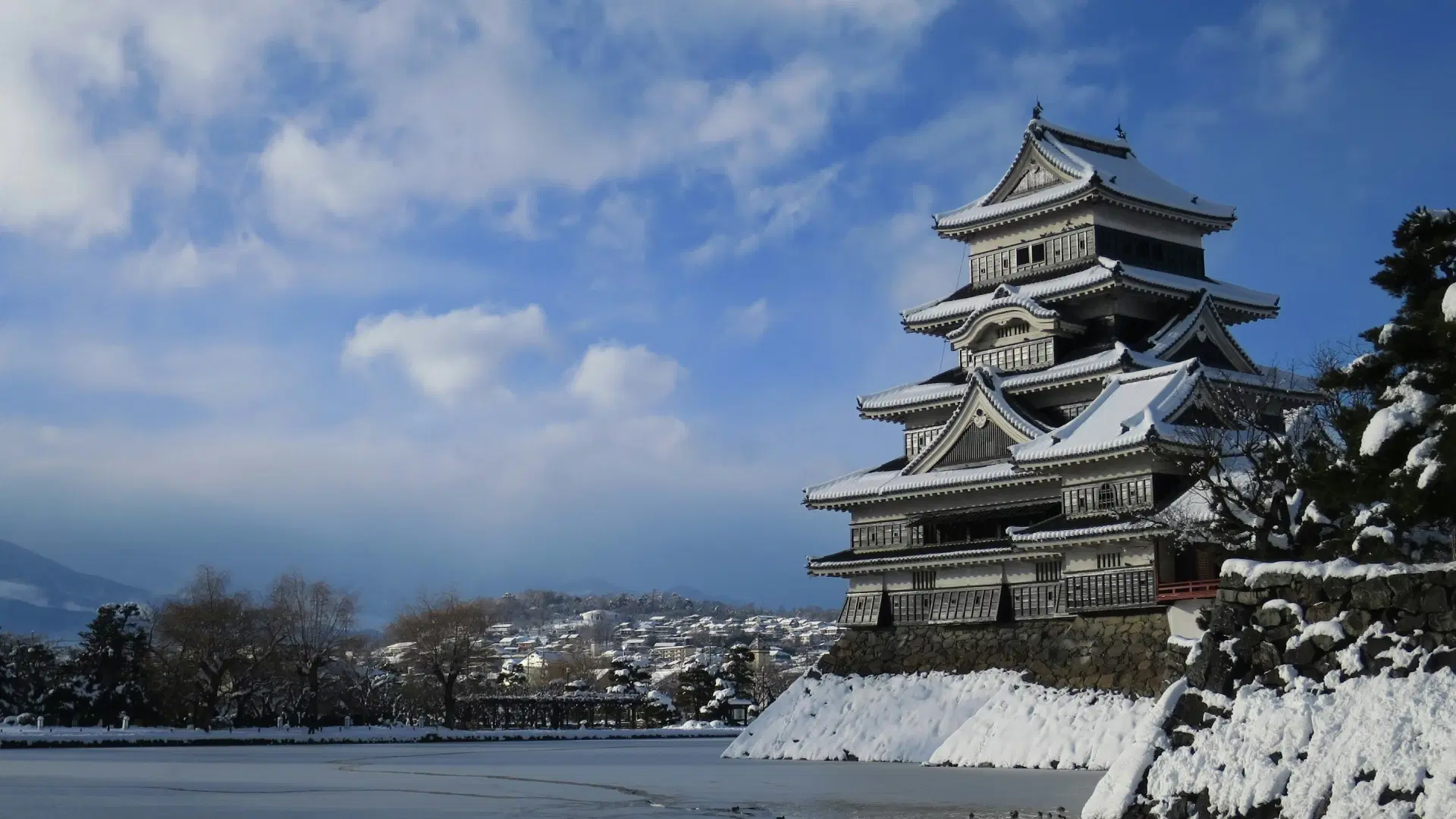
松本Matsumoto is a city that wears its history without pretension, a former castle town whose five-storied keep, darkened to near-black by centuries of lacquered timber, stands against the backdrop of the Northern Alps with a severity and beauty that immediately establishes the character of the place. The castle, one of only twelve original-construction keeps surviving in Japan, was built in the late sixteenth century during the tumultuous Sengoku period, and its design reflects the military pragmatism of an age when a fortress needed to withstand siege. But the town that grew around it developed a different kind of strength: a cultural confidence expressed in craftsmanship, education, and a commitment to beauty that persists with remarkable consistency into the present.
The Meiji period brought to Matsumoto a school system whose ambition exceeded the city's modest size, and the former Kaichi School, a striking Western-style building completed in 1876, testifies to a community that understood education as the foundation of civilization. This commitment to learning and culture extended into the arts, making Matsumoto a city where traditional craft, particularly lacquerware and woodworking, coexists with contemporary creative energy. The legacy of Yayoi Kusama, the avant-garde artist born here whose polka-dot installations have conquered the galleries of the world, adds a layer of international artistic significance to a city whose cultural depth might otherwise be overlooked.
For the traveler, Matsumoto offers the rare combination of world-class heritage, the castle and its surrounding quarter, with the relaxed accessibility of a small city whose best experiences are concentrated within walking distance. The streets radiating from the castle contain galleries, craft shops, cafes, and soba restaurants whose quality reflects a local clientele that demands excellence. The city functions as the gateway to the Kamikochi alpine valley and the hot spring villages of the Northern Alps, but it is itself a destination that justifies an unhurried stay.
Matsumoto is a city that wears its history without pretension, a former castle town whose five-storied keep, darkened to near-black by centuries of lacquered timber, stands against the backdrop of the Northern Alps with a severity and beauty that immediately establishes the character of the place.
Highlights
Matsumoto Castle is the city's commanding presence, its six-story keep and surrounding turrets rising from a broad moat that reflects the structure with mirror precision on still mornings. The castle's black lacquered walls, which give it the nickname Karasu-jo, Crow Castle, absorb the mountain light in a way that makes the building appear to change mood with the weather, dark and brooding under overcast skies, luminous with depth in the afternoon sun. The interior, accessed through a steep, narrow staircase system that was designed to impede attackers, reveals the castle's martial function through arrow slits, stone-dropping windows, and observation platforms that provided commanding views of approach routes from every direction. The top floor offers a panoramic view of the city and the alpine wall beyond, the snow-capped peaks of the Northern Alps framing the scene with a grandeur that makes the castle feel less like a historical artifact than a living element of the landscape.
Nakamachi-dori, a preserved street of former merchant warehouses converted into galleries, cafes, and craft shops, provides the architectural context for understanding Matsumoto's mercantile heritage. The buildings' characteristic namako-kabe walls, their surfaces patterned with geometric grids of raised plaster over dark tile, were designed as fireproofing but achieved an aesthetic distinction that has made them one of the most recognized architectural features of Japanese castle towns. Walking this street in the late afternoon, when the low light emphasizes the texture of the walls and the warm glow from shop interiors spills onto the pavement, reveals a townscape that has been maintained with care rather than reconstructed for tourism.
The Matsumoto City Museum of Art houses a permanent collection of works by Yayoi Kusama, whose connection to her birth city remains strong despite decades of life and work in Tokyo and New York. The museum's outdoor installation, a massive polka-dotted tulip sculpture, signals from the street the playful intensity that characterizes Kusama's vision, and the interior galleries trace her evolution from the infinity net paintings of the 1950s through the immersive installations that have made her one of the most visited living artists in the world.
Culinary Scene
Matsumoto's culinary identity is defined by soba, the buckwheat noodle whose cultivation in the surrounding highlands has produced a tradition of exceptional quality and seriousness. The city's soba shops, some operating for generations in the same location, practice a craft that begins with the selection and milling of grain and ends with noodles whose texture, aroma, and flavor reflect the specific conditions of their origin. The finest shops mill their own buckwheat daily, hand-cut the noodles, and serve them within minutes of preparation, the brief window between cutting and consumption being critical to the noodle's quality. Eaten cold with a dipping sauce of dashi and soy, or hot in a simple broth, Matsumoto soba is an exercise in the Japanese principle that the highest art lies in revealing the essential character of a single ingredient.
The city's location at the junction of mountain and basin provides a broader culinary range than soba alone. Shinshu salmon, a land-locked variety raised in the cold, clean waters of the highland rivers, is served as sashimi with a freshness that surprises visitors who associate raw fish with coastal cities. Basashi, raw horse meat, is a regional specialty whose deep red color and clean, slightly sweet flavor challenge preconceptions and reward the adventurous. The craft beer movement has established a presence in Matsumoto, with several breweries producing ales and lagers that draw from the same mountain water that makes the city's soba exceptional. The morning market at the Nawate-dori frog street, held on weekends, offers seasonal produce, pickles, and baked goods from local producers.