Karuizawa
軽井沢Karuizawa is the mountain retreat that the modern Japanese imagination constructed as its ideal of refined escape, a highland town on the slopes of Mount Asama whose cool summers, birch forests, and association with literary and diplomatic society have made it the country's most prestigious resort destination for more than a century. The town's transformation from a Nakasendo post station to an international summer colony began in 1886, when the Canadian missionary Alexander Croft Shaw discovered the area during a walking tour and recommended it to the foreign community of Yokohama as a refuge from the oppressive lowland heat. The foreigners who built the first summer villas imported with them a sensibility that valued nature, simplicity, and the contemplative pleasures of mountain air, and this sensibility merged with the Japanese aesthetic tradition to produce a resort culture that is neither purely Western nor entirely Japanese but something distinctively Karuizawa.
The town's literary associations are extraordinarily deep. The writers Hori Tatsuo, Muroo Saisei, and Tsuji Kunio set novels and poems in the birch forests and misty lanes of Karuizawa. The wedding of Emperor Akihito and Empress Michiko, who met on the tennis courts here in 1957, sealed the town's association with romance and refinement in the national consciousness. John Lennon and Yoko Ono spent summers here during the late 1970s, their quiet presence adding an international cultural dimension to the town's identity. These layers of association give Karuizawa a depth that transcends its function as a resort and makes it a place where the Japanese relationship with leisure, nature, and cultural aspiration can be read in the architecture, the landscape, and the quality of light.
The arrival of the Hokuriku Shinkansen, which placed Karuizawa within sixty-five minutes of Tokyo Station, transformed the town from a seasonal retreat to a year-round destination, its accessibility making it possible to experience the mountain atmosphere as a day trip rather than requiring the extended stay that once defined the Karuizawa experience. But the town's character is still best appreciated slowly, on foot or bicycle, moving through the birch-lined lanes and past the old villas whose weathered wood and moss-covered roofs speak of decades of summer afternoons.
Highlights
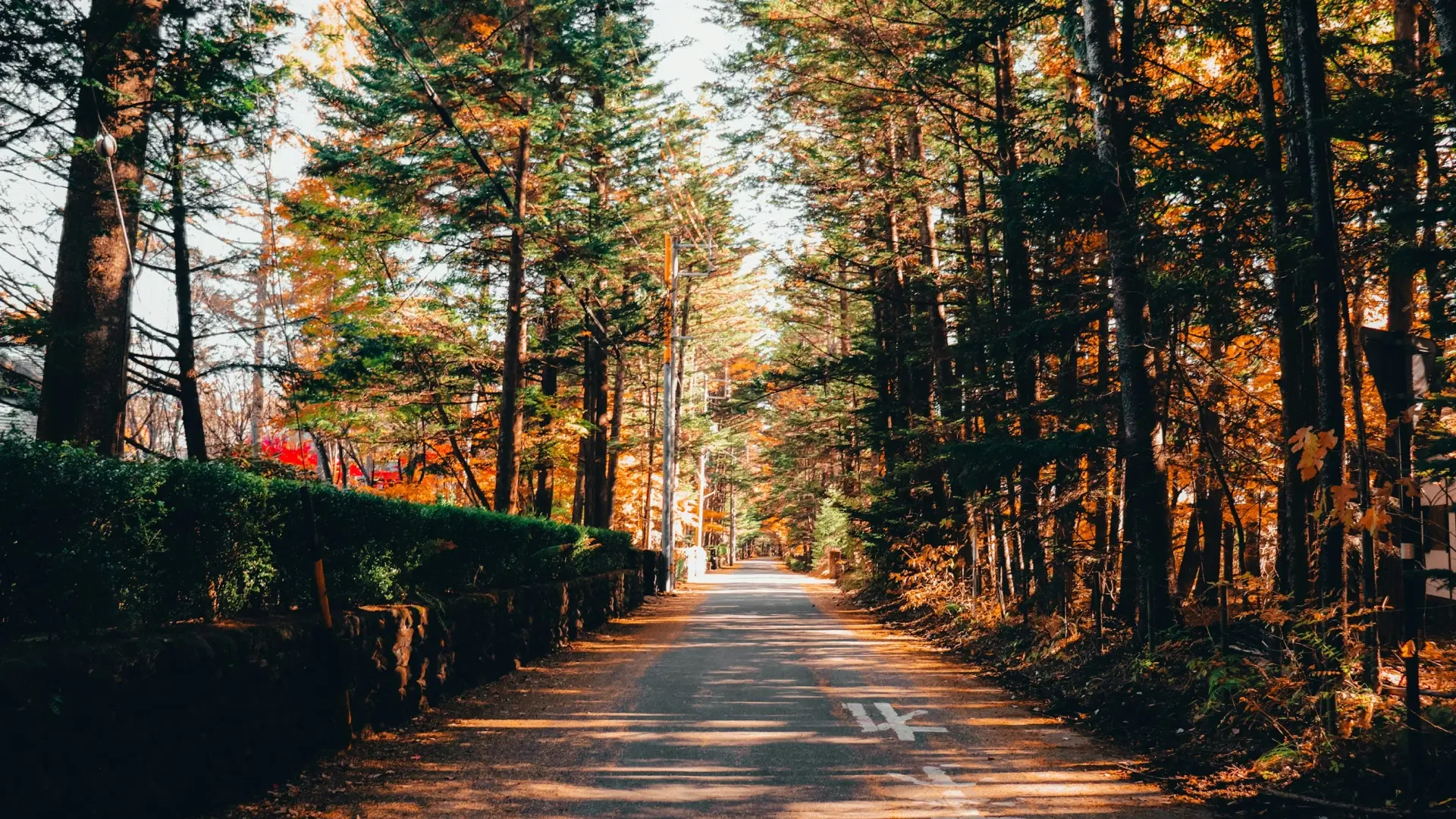
The Old Karuizawa district, Kyu-Karuizawa, preserves the atmosphere of the original summer colony in a landscape of birch forest, mossy lanes, and weathered villa architecture that feels removed from Japan's urban modernity by more than just distance. The Shaw Memorial Church, a simple wooden structure marking the site where the Canadian missionary first recommended the area, stands among trees whose canopy filters the light into the green-gold shafts that Karuizawa light is famous for. The surrounding lanes, many of them still unpaved, wind between properties whose hedges and gardens maintain the privacy and quietude that attracted the original summer residents, and walking them in the early morning, when the mist hangs in the birch trees and the only sound is birdsong, provides the purest Karuizawa experience.
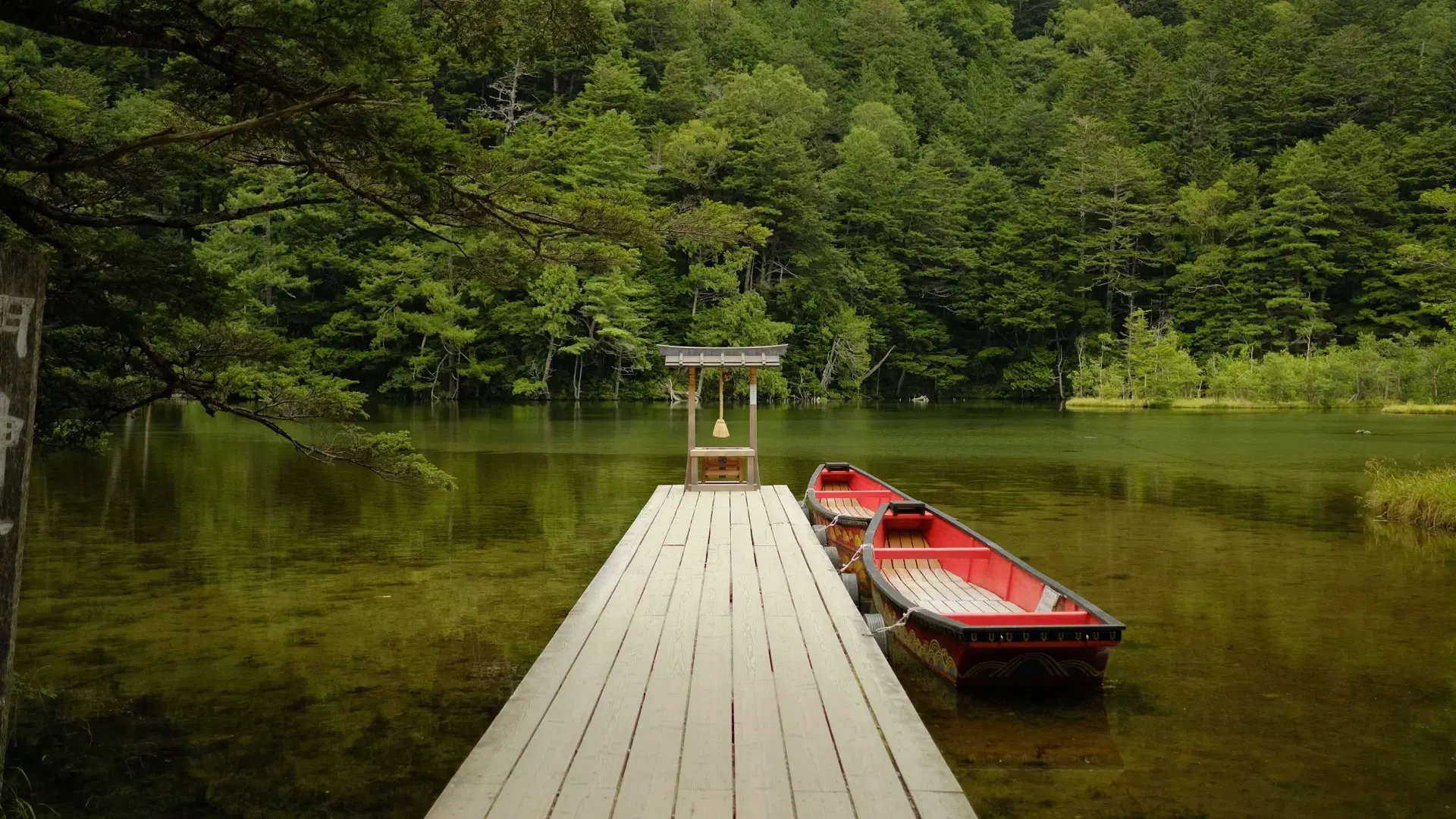
Kumoba Pond, a small lake at the edge of the old town, reflects the surrounding forest in water so still and clear that the reflection appears more vivid than the reality. The walking path around the pond takes approximately twenty minutes and passes through a landscape that changes dramatically with the seasons: fresh green in spring, deep shade in summer, fiery maples in autumn, and ice-fringed silence in winter. The pond is most celebrated in October, when the autumn foliage creates a circle of color around the water that photographers return to year after year.
Shiraito Falls, a series of springs that emerge from a lava cliff face and cascade in hundreds of thin white threads across a seventy-meter-wide curtain of rock, is one of the most delicate waterfall formations in Japan. Unlike falls that concentrate a single volume of water in a dramatic plunge, Shiraito disperses its flow across the width of the cliff, creating a curtain of water whose individual strands are visible and whose collective effect is one of gentle, continuous motion. The falls are fed by snowmelt that has filtered through the volcanic rock of Mount Asama, emerging at the cliff face with a temperature and clarity that testify to the purity of its underground passage.
Culinary Scene
Karuizawa's culinary scene reflects the town's identity as a meeting point between Japanese tradition and international sophistication. The local soba tradition, rooted in the buckwheat culture of highland Nagano, produces noodles of exceptional quality in restaurants whose settings range from rustic farmhouse conversions to contemporary design spaces. French and Italian restaurants of a quality rarely found outside Tokyo occupy converted villas and purpose-built premises, their chefs drawn by the altitude's clear water, the proximity to Shinshu's agricultural producers, and a clientele accustomed to the standards of the capital's finest tables.
The town's bakeries and patisseries have earned a reputation that extends far beyond the resort community, their products benefiting from the mountain water and the cool climate that favor precise baking. The craft coffee culture, sustained by a population that divides its time between Tokyo and Karuizawa, has produced cafes whose seriousness about sourcing, roasting, and extraction rivals the best in the capital. The Karuizawa Farmers' Market, operating on summer weekends, gathers the produce of the surrounding highland farms in an atmosphere that combines the pleasure of shopping with the social rituals of the resort community.
Shinshu cuisine provides the deeper culinary foundation: oyaki dumplings stuffed with nozawana pickles or wild mountain vegetables, basashi horse sashimi, Shinshu salmon, and the seasonal wild plants that highland foraging yields in spring and autumn. The combination of these traditional ingredients with the cosmopolitan cooking techniques available in Karuizawa produces a dining landscape of unusual range, from the austere discipline of a soba master's ten-seat counter to the elaborate tasting menus of the resort's most ambitious restaurants.
Ryokans in Nagano
There are no ryokans in our guide listed in Karuizawa. See our selection across Nagano.
View ryokans in Nagano