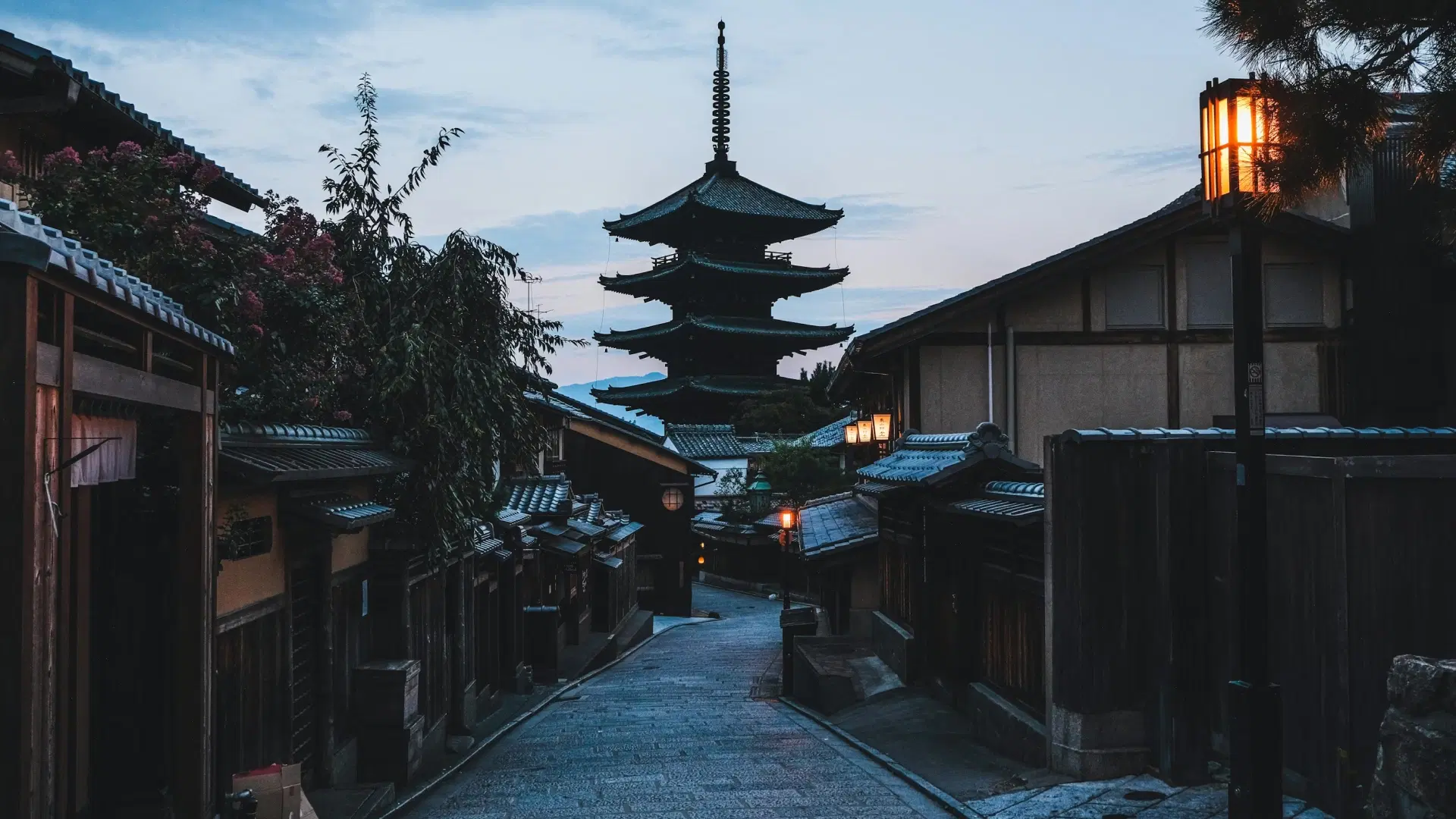
Kiyomizu-dera Night Illumination
清水寺夜間特別拝観The night illumination of Kiyomizu-dera is one of those rare events that takes a place already considered among the most beautiful in Japan and reveals it to possess an entirely separate register of beauty that daylight conceals. The temple, perched on the hillside of Higashiyama with its famous wooden stage cantilevered over the forest canopy, is transformed three times each year by carefully placed lights that render the architecture, the surrounding trees, and the Kyoto cityscape below in tones of gold, green, and deep shadow. A single beam of blue light projects from the temple into the night sky, cutting across the darkness like a prayer made visible, connecting the mountaintop sanctuary to the heavens in a gesture that is both theatrical and genuinely moving.
The spring illumination coincides with the cherry blossom season, when the hundreds of cherry and mountain cherry trees that clothe the hillside below the main hall are lit from beneath, their blossoms glowing translucent against the night sky in a display that seems to emanate light rather than merely receive it. The autumn illumination, timed to the peak of the maple foliage, transforms the same hillside into a tapestry of illuminated crimson and gold, the colors intensified by the darkness that surrounds them and reflected in the surface of the Otowa waterfall pool below. The summer illumination, quieter and less attended than its spring and autumn counterparts, offers the temple in a green, humid stillness that reveals the architectural bones of the building with a clarity that the busier seasons obscure.
Standing on the wooden stage at night, looking out over the illuminated forest with the lights of the city glimmering in the distance, produces a sensation of elevation that is simultaneously physical and spiritual. The temple's original purpose, a place of devotion to the bodhisattva Kannon, is felt more powerfully at night than during the day, when crowds and commerce can diminish the sacred atmosphere. In the darkness, with the wood of the stage underfoot and the illuminated trees falling away below, the temple recovers something of the isolation and intensity that its eighth-century founders intended.
The night illumination of Kiyomizu-dera is one of those rare events that takes a place already considered among the most beautiful in Japan and reveals it to possess an entirely separate register of beauty that daylight conceals.
History & Significance
Kiyomizu-dera was founded in 778 and has occupied its present hillside location since 798, when the temple was established under the patronage of the Shogun Sakanoue no Tamuramaro. The main hall, with its celebrated wooden stage, was rebuilt in 1633 by the Tokugawa shogun Iemitsu in the architectural style that visitors see today, its massive cypress pillars supporting the overhanging platform without the use of a single nail. The temple's name, "Pure Water Temple," refers to the Otowa waterfall that flows from the hillside below the main hall, and whose waters are believed to confer health, longevity, and success in studies upon those who drink from them.
The night illumination program began in the late twentieth century as a means of allowing visitors to experience the temple and its seasonal landscapes outside of regular daylight hours. The program was designed in consultation with lighting specialists who understood that the goal was not to make the temple brighter but to reveal the relationships between architecture, nature, and topography that daylight, with its democratic evenness, tends to flatten. The blue searchlight beam, which has become the signature image of the illumination, was introduced as a representation of the compassion of Kannon, whose mercy, in Buddhist teaching, extends in all directions like light from a single source.
What to Expect
The night illumination opens the temple grounds during evening hours, typically from 6:00 PM or 6:30 PM until 9:00 PM or 9:30 PM, depending on the season. Visitors enter through the main gate and proceed along the illuminated approach, past the three-story pagoda whose vermillion surfaces glow with particular intensity under the lights, to the main hall and its famous stage. The experience of stepping onto the stage at night, with the illuminated forest spread below and the blue beam cutting overhead, is qualitatively different from the daytime visit, the absence of the horizon and the concentration of light on the immediate environment creating an intimacy that the panoramic daytime views do not offer.
The hillside paths below the main hall wind through the illuminated cherry trees in spring and the illuminated maples in autumn, bringing the visitor into close contact with individual trees whose beauty is magnified by the selective lighting. The Otowa waterfall, lit from below, takes on a quality of liquid silver, and the sound of the water, more audible in the relative quiet of the evening hours, provides an acoustic counterpoint to the visual spectacle. The crowds during the illumination are significant but less overwhelming than the peak daytime hours, and the darkness itself provides a measure of privacy, each viewer enclosed in their own sphere of perception.
The approach streets of the Higashiyama district, lined with shops and tea houses, remain open during the illumination hours and provide opportunities for dinner or evening sweets before or after the visit. The combination of the illuminated temple and the lantern-lit streets of the surrounding neighborhood creates an extended evening experience that ranks among the finest nocturnal outings available in Kyoto.