Arashiyama Momiji Matsuri
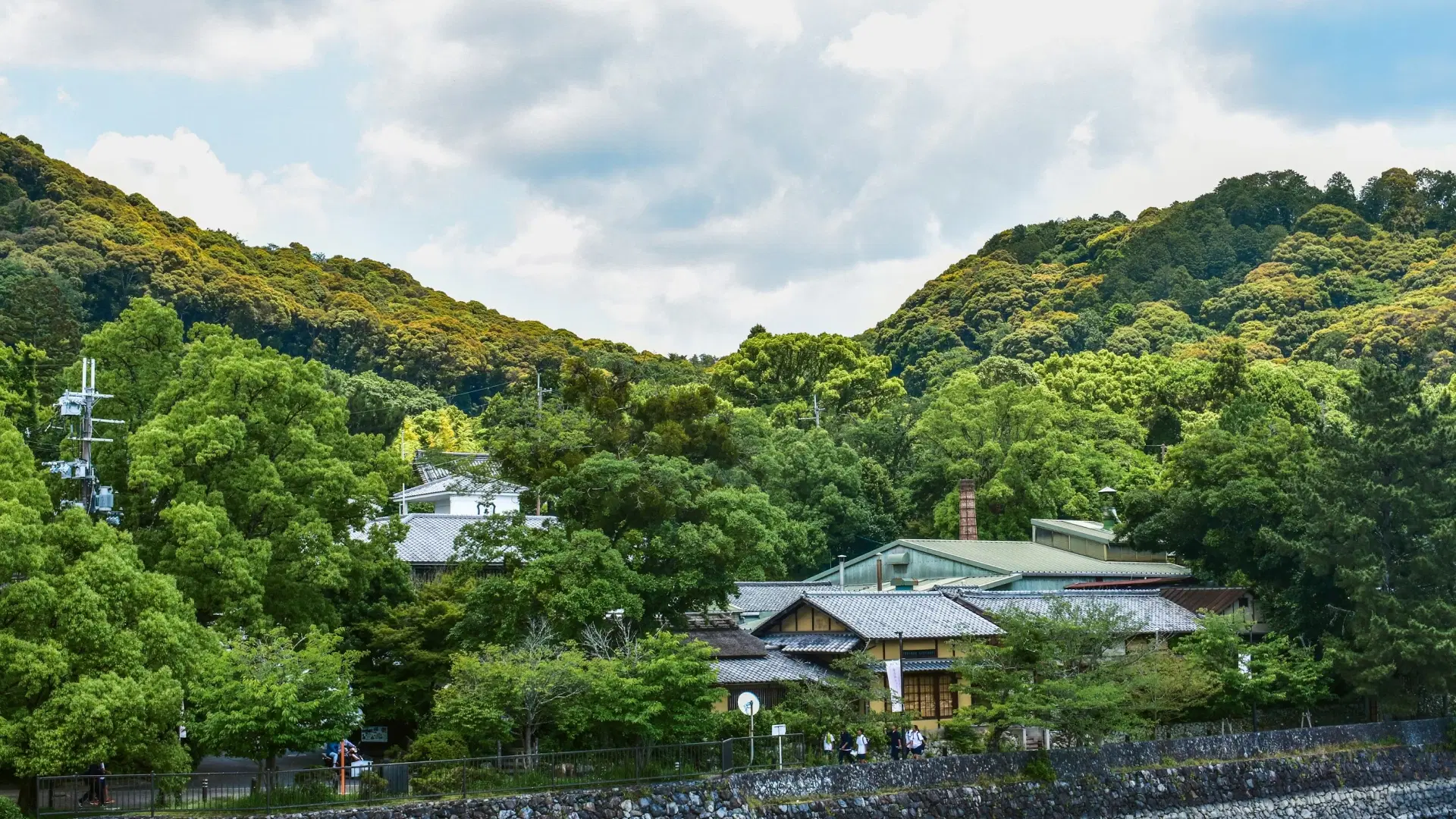
嵐山もみじ祭The Arashiyama Momiji Matsuri is autumn distilled to its purest theatrical form, a festival in which boats carrying traditional performers glide across the Oi River against a backdrop of mountains blazing with the crimson, gold, and amber of peak maple foliage. The festival transforms the broad, slow-moving stretch of river below the Togetsukyo Bridge into a floating stage, where musicians playing gagaku court music, dancers performing classical forms, and poets composing verse in real time present their arts from decorated boats that drift with the current, their performances framed by the most spectacular natural scenery that any stage in Japan can claim. The audience watches from the riverbanks, the bridge, and the surrounding hillside paths, their attention divided between the human artistry on the water and the natural artistry on the mountains, each intensifying the other in a dialogue between culture and landscape that is the essence of the Japanese aesthetic sensibility.
The choice of Arashiyama as the setting for this festival is not incidental but inevitable. The mountains on either side of the Oi River have been celebrated for their autumn color since the Heian period, when the aristocrats of the imperial court made the journey from the capital to view the maples and to compose poetry inspired by the transience that autumn color so eloquently represents. The Togetsukyo Bridge, whose name means "Moon Crossing Bridge," was originally built in the ninth century as an approach to the temples and aristocratic villas that lined the river, and the view from its span, upstream toward the mountains and downstream toward the open valley, remains one of the defining landscapes of Kyoto.
The festival's combination of performing arts and natural beauty creates an experience that operates on multiple registers simultaneously. The sound of the sho, the mouth organ of the gagaku ensemble, drifting across the water as the boat passes beneath a canopy of red maple, produces a conjunction of sound, color, and movement that feels less like entertainment than like a spontaneous expression of the season's own creative energy, as though autumn itself had commissioned the performance.
The Arashiyama Momiji Matsuri is autumn distilled to its purest theatrical form, a festival in which boats carrying traditional performers glide across the Oi River against a backdrop of mountains blazing with the crimson, gold, and amber of peak maple foliage.
History & Significance
The Arashiyama Momiji Matsuri was established in 1947 as a postwar effort to revive the cultural traditions of the Arashiyama district, which had served as a retreat and pleasure ground for Kyoto's aristocracy since the Heian period. The festival drew on the historical practice of funaasobi, river boating as a form of aristocratic entertainment, in which boats carrying musicians and dancers provided performances for audiences gathered on the banks. This practice, documented in the literature and painting of the Heian and Kamakura periods, was one of the signature pleasures of the Kyoto court, and its revival in the form of the Momiji Matsuri represented a conscious effort to reconnect the modern city with the aesthetic traditions of its past.
The festival has grown in scale and reputation since its founding, becoming one of the most photographed events of the Kyoto autumn season. The participating performers, drawn from Kyoto's traditional arts communities, include practitioners of gagaku, bugaku dance, kemari (the Heian-period court football), tea ceremony, and ikebana, each boat presenting a different art form as it moves across the river. The festival's endurance across more than seven decades reflects the strength of the public desire to experience the traditional arts not in the enclosed, formal settings of theaters and tea rooms but in the open landscape that originally inspired them, with the river as a stage and the autumn mountains as a backdrop of incomparable beauty.
What to Expect
The festival takes place on the Oi River in the Arashiyama district, centered on the stretch of water near the Togetsukyo Bridge. The boats launch from the upstream area and drift downstream, each one carrying a different group of performers whose art unfolds against the backdrop of the autumn mountains. The gagaku boat, with its musicians in Heian court dress playing the ancient instruments of the imperial court, provides the most historically resonant spectacle, the otherworldly tones of the sho and the hichiriki carrying across the water with a clarity that the enclosed space of a concert hall cannot match. The dance boats present classical forms, the performers' movements constrained and adapted to the gentle rocking of the vessel, adding an element of physical challenge that gives the familiar choreography a quality of fresh spontaneity.
The viewing experience varies depending on position. The Togetsukyo Bridge offers an elevated perspective from which the boats, the river, and the mountains can be seen as a single composition, a living painting in which the human figures on the water are set against the vast canvas of autumn color on the slopes. The riverbanks provide a closer encounter with the performers, the music and movement visible and audible at intimate range, the boats passing close enough that the details of costume, instrument, and expression can be clearly read. The hillside paths on either bank offer yet another perspective, the boats seen from above as they trace their slow lines across the surface of the river.
The autumn foliage in mid-November is typically near its peak in the Arashiyama area, and the festival provides a framework for experiencing the color that transforms simple viewing into something more structured and emotionally resonant. The combination of the traditional arts on the water and the natural beauty on the mountains creates a feedback loop of aesthetic pleasure, each element heightening the appreciation of the other, until the boundary between art and nature dissolves entirely and the entire landscape becomes a single, unified performance.