Uji
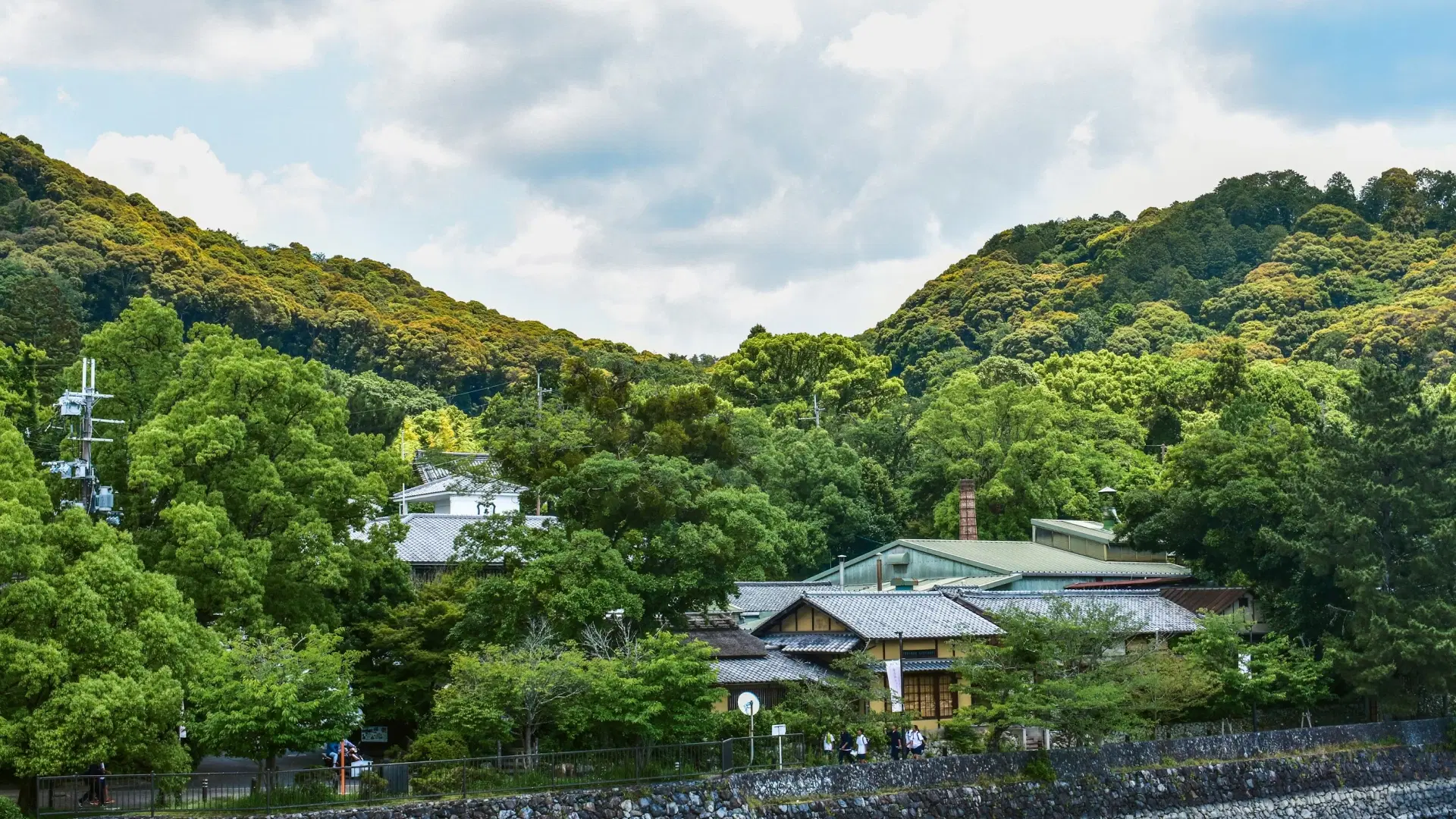
宇治Uji is a city of two transcendent inheritances: the finest green tea in Japan and one of the most beautiful buildings in the world. Situated along the banks of the Uji River where it emerges from the forested hills south of Kyoto, this small city has cultivated matcha and sencha since the thirteenth century, its tea gardens terraced across hillsides whose soil, moisture, and exposure to the morning mist produce leaves of a quality that has defined the standard for Japanese green tea for seven hundred years. The Byodo-in, the eleventh-century temple whose Phoenix Hall appears on the ten-yen coin, stands beside the river in a state of preservation so complete that visiting it feels less like encountering a historical artifact than stepping through a portal into the aesthetic world of the Heian aristocracy.
The Uji River itself is a presence that shapes every experience in the city. Wider and faster than the Kamo River in Kyoto, it flows through Uji with a purposefulness that gives the city its particular atmosphere of clarity and movement. The river was the setting for the final chapters of the Tale of Genji, Murasaki Shikibu's eleventh-century masterpiece, and the literary associations that cling to its banks and bridges give even casual walks along the water a quality of narrative depth. The Uji-bashi, one of the oldest bridge sites in Japan, spans the river at a point where the current narrows between wooded banks, and crossing it in the early morning, with the mist rising from the water and the forested hills emerging from the haze, is to experience the same landscape that inspired the greatest work of fiction in Japanese literature.
The tea culture of Uji pervades the city so thoroughly that it flavors not only the cuisine but the atmosphere itself. The scent of roasting tea leaves drifts through the streets near the old tea merchant houses, the green of the tea gardens is visible from the riverbanks, and the vocabulary of tea, its cultivation, processing, and preparation, provides the framework through which the city understands and presents itself. Uji is not merely a place where tea is produced; it is a place where tea has produced a culture.
Uji is a city of two transcendent inheritances: the finest green tea in Japan and one of the most beautiful buildings in the world.
Highlights
The Byodo-in Phoenix Hall is one of the supreme achievements of Japanese architecture, a building whose reflection in the pond before it creates an image of such symmetry and grace that it seems to hover between the real and the ideal. Built in 1053 by Fujiwara no Yorimichi as the centerpiece of his villa-turned-temple, the hall was designed to represent the Western Paradise of Amida Buddhism, and its delicate rooflines, extending like the wings of a phoenix over the water, achieve a lightness that seems to deny the physical weight of the timber and tile from which they are constructed. The interior, housing the great Amida Buddha sculpture by the master Jocho, is decorated with ceiling paintings and inlaid mother-of-pearl that document the aesthetic sensibilities of the Heian court at its zenith. The Byodo-in Museum, opened in 2001, displays the temple's extraordinary collection of Heian-period art, including the original phoenix roof ornaments and the cloud-riding bodhisattva panels, in a setting of contemporary architectural refinement.
The tea houses and merchants of Omotesando, the approach street to the Byodo-in, offer the most concentrated encounter with Uji's tea culture. Shops that have been blending and selling tea for generations display their seasonal offerings in wooden chests and ceramic jars, and the opportunity to taste gyokuro, Uji's highest grade of shaded green tea, prepared by an expert who adjusts water temperature and steeping time to extract the maximum sweetness and umami from leaves whose cultivation involved months of careful shading, is one of the most refined sensory experiences available in the Kansai region. The first sip of properly prepared gyokuro, dense, sweet, and almost brothy in its concentration, permanently recalibrates the drinker's understanding of what green tea can be.
Ujigami Shrine, the oldest surviving shrine building in Japan, stands across the river from the Byodo-in in a wooded enclave that feels removed from the commerce of the main street. The honden, dating to the late Heian period, preserves the architectural form of the era in which the Tale of Genji was written, its simple lines and natural materials communicating the Shinto aesthetic of purity and restraint that preceded the elaborate ornamentation of later centuries.
Culinary Scene
Uji's culinary identity is inseparable from its tea. The city's restaurants and teahouses incorporate matcha into virtually every category of food and drink, from the obvious, matcha parfaits, matcha ice cream, matcha lattes, to the unexpected, matcha soba noodles, matcha-infused tofu, savory preparations that use the tea's bitterness as a counterpoint to rich or sweet ingredients. The best of these preparations transcend novelty to achieve genuine culinary interest: matcha soba, made with buckwheat flour blended with stone-ground matcha, possesses a color, a fragrance, and a faint bitterness that distinguish it from any other noodle and that reward pairing with the light dipping sauces and seasonal garnishes of the Uji table.
The wagashi of Uji are among the finest in Japan, their quality a product of the same perfectionist culture that governs the tea production. Matcha-flavored confections, from the delicate namagashi served at formal tea ceremonies to the more accessible matcha mochi and matcha daifuku available from the shops along Omotesando, demonstrate the range of expression that a single flavor can achieve when handled by artisans whose standards have been calibrated across centuries. The combination of a bowl of ceremonial-grade matcha and a seasonal wagashi, taken in one of the city's traditional tea rooms overlooking the river, is not merely a snack but a complete aesthetic experience whose elements, taste, sight, texture, setting, have been composed with the same attention to harmony that governs the tea ceremony itself.
Ryokans in Kyoto
There are no ryokans in our guide listed in Uji. See our selection across Kyoto.
View ryokans in Kyoto