Hakone Torii Festival
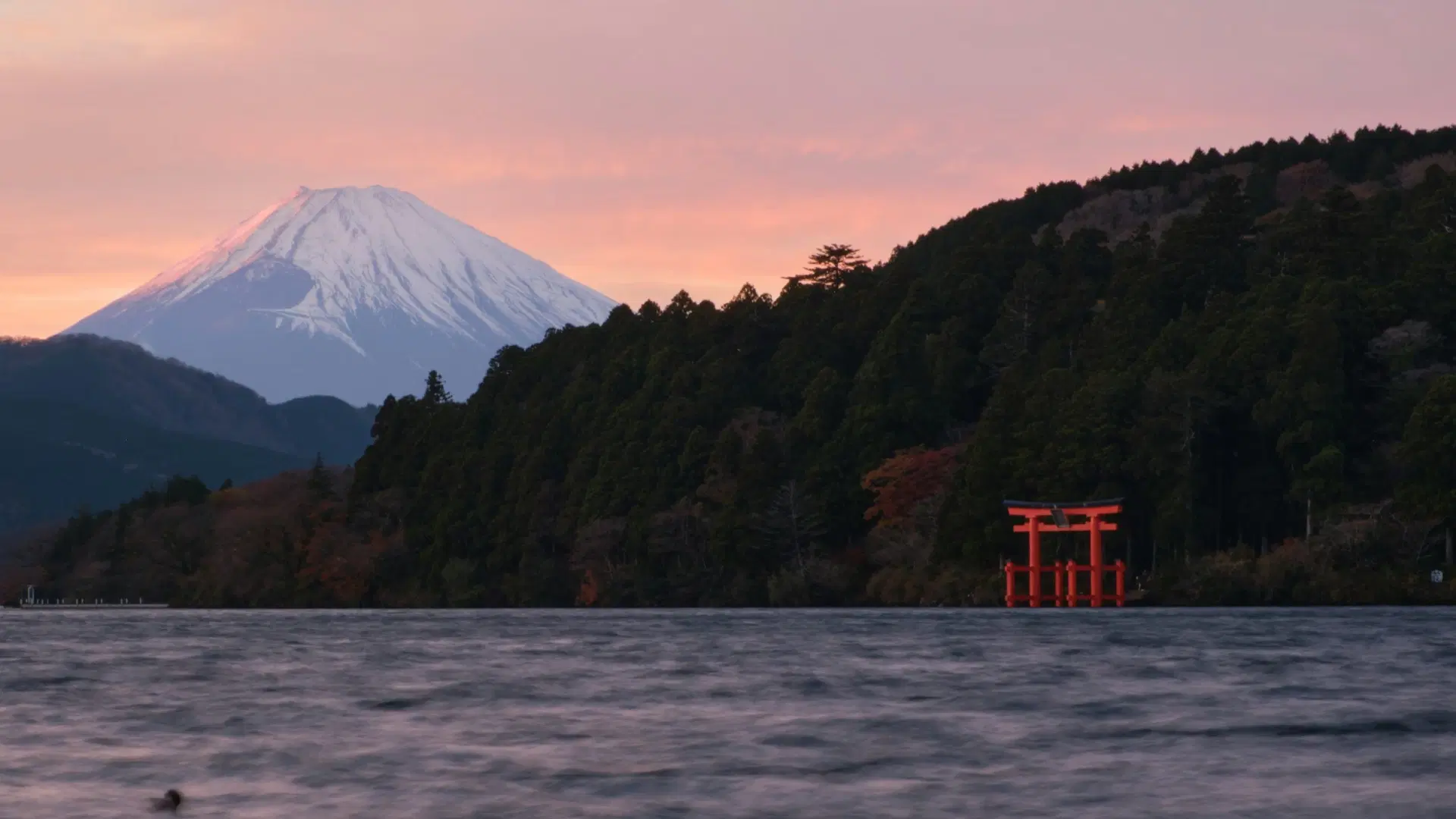
箱根神社湖上鳥居祭The Hakone Torii Festival centers on one of Japan's most evocative images: the vermilion torii gate of Hakone Shrine standing in the still waters of Lake Ashi, the forested caldera walls rising behind it and, on clear days, the symmetrical cone of Mount Fuji presiding over the scene from the northwest. The festival transforms this already remarkable setting into a stage for ceremonies and celebrations that include a fireworks display launched over the lake, a procession of illuminated boats, and Shinto rituals performed at the water's edge that honor the volcanic landscape's spiritual power.
The lakeside torii, standing in the shallows where the shrine's ancient approach meets the water, serves during the festival as a portal between the human world of the lakeshore and the spiritual realm of the mountains beyond. The ceremonies that unfold around it invoke the Hakone deity's protection over the waters, forests, and communities of the caldera, a prayer that carries particular resonance in a landscape shaped by volcanic forces whose creative and destructive potentials remain equally present. The hot springs that supply Hakone's onsen industry are a daily reminder that the ground beneath the town is geologically alive, the mineral waters heated by the same magmatic energy that built the mountains.
The evening fireworks, launched from boats on the lake and reflected in its dark surface, produce a display of intimate scale and extraordinary beauty. The caldera walls contain the sound of the explosions, amplifying and echoing them in a natural acoustic that makes the pyrotechnics feel more powerful than their modest numbers might suggest. The fireworks illuminate the torii gate, the surrounding forest, and the ancient cedars of the shrine approach in alternating bursts of color and darkness that reveal the landscape in fragments, each flash composing a different photograph of the sacred setting.
History & Significance
Hakone Shrine's origins are traditionally dated to 757 CE, when a Buddhist priest established a sanctuary on the shores of Lake Ashi to honor the deity of the Hakone mountains. The shrine's position at a critical point on the Tokaido highway, the main road connecting Edo with Kyoto, made it a place of importance for travelers who sought divine protection before crossing the Hakone mountains, one of the journey's most dangerous passages. The lakeside torii, marking the boundary between the terrestrial approach and the lake's spiritual waters, was established as part of this tradition of travel blessing.
The festival's modern form evolved from older observances that marked the transition from July to August, a period that in the traditional calendar corresponded to the beginning of the Obon season when the spirits of ancestors were believed to return to the world of the living. The fireworks and illuminated boat procession carry echoes of these Obon practices, the lights on the water serving simultaneously as entertainment and as guides for the returning spirits navigating the dark lake. The festival's timing at the height of summer, when Hakone's mountain elevation provides relief from the heat of the lowland cities, has made it a natural anchor for the region's summer tourism season.
What to Expect
The festival's daytime program includes visits to Hakone Shrine, whose approach through a forest of ancient cedars is one of the most atmospheric in the Kanto region. The path descends from the road above to the lakeside, passing through progressively larger and older trees whose scale creates a sense of entering a primordial landscape. The lakeside torii, usually photographed from the shore with the lake and mountains behind it, can be approached closely during the festival, its vermilion surfaces vivid against the green-black water and the dark forest.
The evening events begin as twilight settles over the caldera. Boats carrying lanterns and offerings move across the lake in a procession that traces ancient routes between the shore and the lake's deeper waters. The lanterns' warm light, reflected in the still surface, creates moving constellations that slowly traverse the dark water. The fireworks begin after full darkness, their launch from positions on the lake placing the explosions directly above the water and the torii, the vertical columns of light and the horizontal plane of the lake creating compositions of geometric clarity.
The surrounding onsen hotels and ryokan offer viewing positions from their terraces and outdoor baths, creating the possibility of watching fireworks reflected in Lake Ashi while soaking in volcanic hot spring water, an experience that synthesizes the festival's various elements of fire, water, and geological energy into a single, deeply sensory encounter.