Hakone
箱根Hakone is the Kanto region's premier onsen destination and one of Japan's most complete resort landscapes. Set within a volcanic caldera approximately 80 minutes from central Tokyo, it concentrates an improbable diversity of experiences into a compact mountain territory: seventeen distinct hot spring districts drawing from different volcanic sources, a serene crater lake with a floating vermilion torii, sulfurous steam vents where eggs are boiled black, open-air sculpture gardens set among forested hills, and ryokans that range from centuries-old wooden retreats to contemporary architectural statements. The Tokaido highway has passed through Hakone's mountain barriers since the Edo period, when the famous sekisho checkpoint controlled movement between Edo and the western provinces, and this history as a place of transit and pause continues to shape its character.
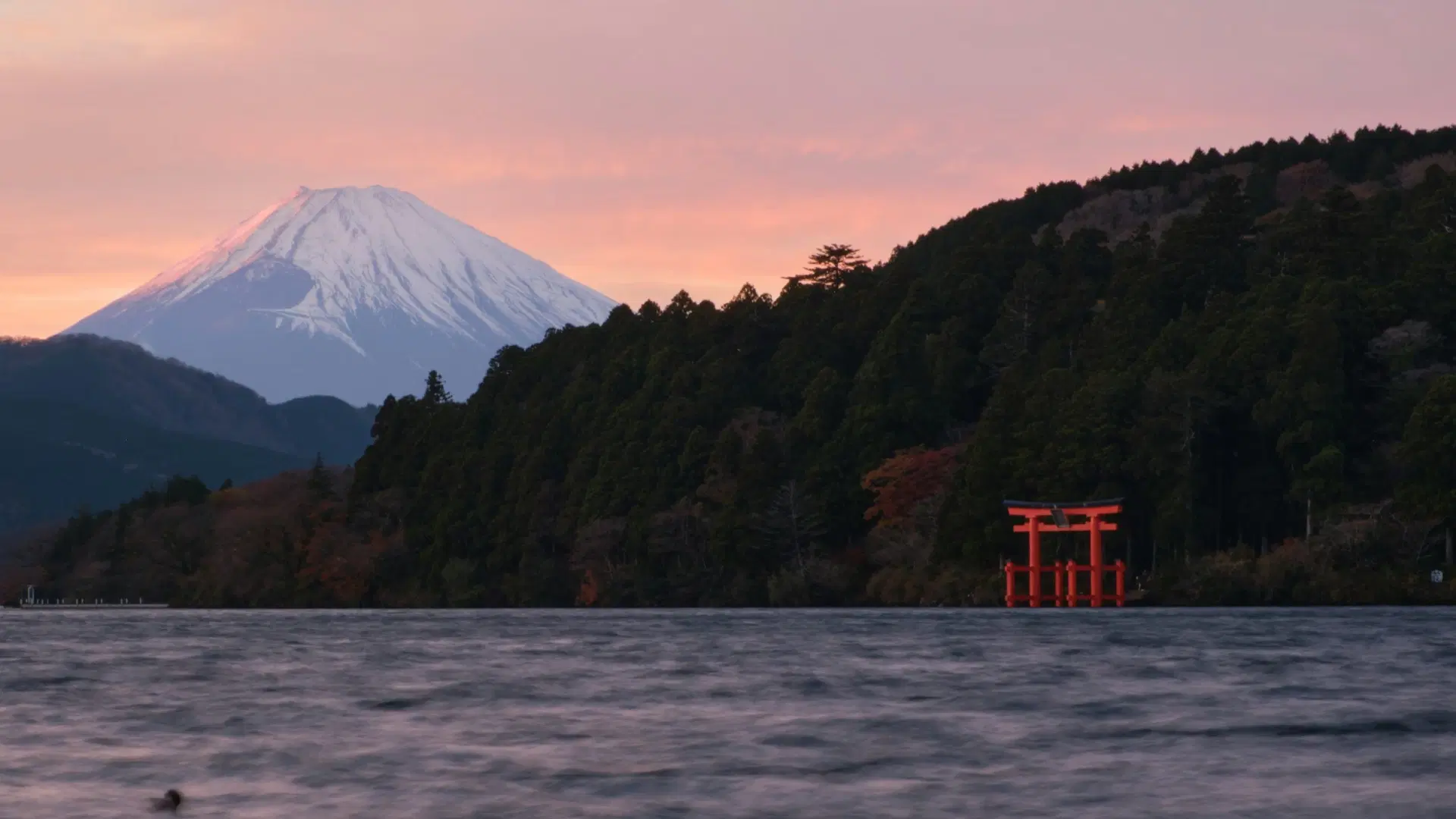
Lake Ashi, the caldera's centerpiece, offers the defining Hakone image: the vermilion torii of Hakone Shrine reflected in still water with Mount Fuji's cone rising behind, a composition so perfectly arranged it seems designed rather than geological. The Hakone Ropeway traverses the caldera from Gora to Togendai, passing over the active volcanic zone of Owakudani, where sulfurous gases escape from vents in the hillside and the landscape takes on a lunar desolation that contrasts sharply with the forested slopes below.
What distinguishes Hakone from other onsen resort areas is the depth of its cultural infrastructure. The Hakone Open-Air Museum, Japan's first outdoor sculpture park, the Pola Museum of Art with its Impressionist collection, and the Okada Museum of Art with its East Asian ceramics and paintings create a cultural circuit that enriches the bathing experience with intellectual stimulation.
Hakone is the Kanto region's premier onsen destination and one of Japan's most complete resort landscapes.
Highlights
The Hakone circuit, best experienced over two days, begins at Hakone-Yumoto and ascends via the mountain railway to Gora, continues by funicular and ropeway over Owakudani to Togendai, crosses Lake Ashi by boat, and returns via bus through the old Tokaido highway route. This circuit is not merely transportation but a curated journey through the caldera's geological and cultural landscape.
Owakudani's volcanic valley, where sulfur-tinged steam rises from vents in bare, mineral-stained earth, provides a reminder that Hakone's thermal bounty has a volatile source. The black eggs, kuro-tamago, cooked in the volcanic pools and said to add seven years to one's life, are the signature souvenir. The views from the ropeway over the valley, with Lake Ashi and Fuji beyond, are among the most dramatic in the Kanto region.
Hakone Shrine, approached from the lake shore via a path through ancient cedar forest, achieves its greatest impact in the early morning, when mist rises from the water and the torii appears suspended between the liquid and the ethereal. The shrine's peace gate torii, standing in the shallows of Lake Ashi, has become one of Japan's most recognizable images.
The Open-Air Museum's collection of over 100 sculptures, including major works by Henry Moore, Rodin, and Picasso, is displayed across a rolling hillside with the Hakone mountains as backdrop, an integration of art and landscape that elevates both.
Culinary Scene
Hakone's dining scene benefits from its proximity to both the mountain interior and the Sagami coast. Ryokan kaiseki here draws on an exceptional range of ingredients: Odawara's kamaboko fish cake, Sagami Bay's shirasu, mountain vegetables from the caldera slopes, and Ashigarashimo's wasabi. The onsen water itself plays a culinary role, used to prepare tofu, steam vegetables, and boil the famous black eggs.
Odawara, at Hakone's gateway, has produced kamaboko for centuries. The best specimens achieve a springy texture and subtle sweetness that elevates this humble fish cake to something approaching art. The town's kamaboko shops offer tastings and demonstrations. Hakone's bakeries, influenced by the area's history of hosting foreign visitors since the Meiji era, produce excellent bread and pastries.