Hotaru-ika Season
ホタルイカシーズンEach spring, the waters of Toyama Bay become the stage for one of the natural world's most improbable spectacles. The hotaru-ika, the firefly squid, rises from the deep waters of the Japan Sea to spawn in the shallows, and as it does, the bioluminescent photophores that line its body emit a blue light so vivid that the surface of the bay appears to glow from within. The phenomenon, which peaks in the predawn hours of March through June, transforms the dark coastline into a field of shifting, underwater constellations, the light produced by millions of individual creatures combining into a display that defies the boundary between marine biology and visual art.
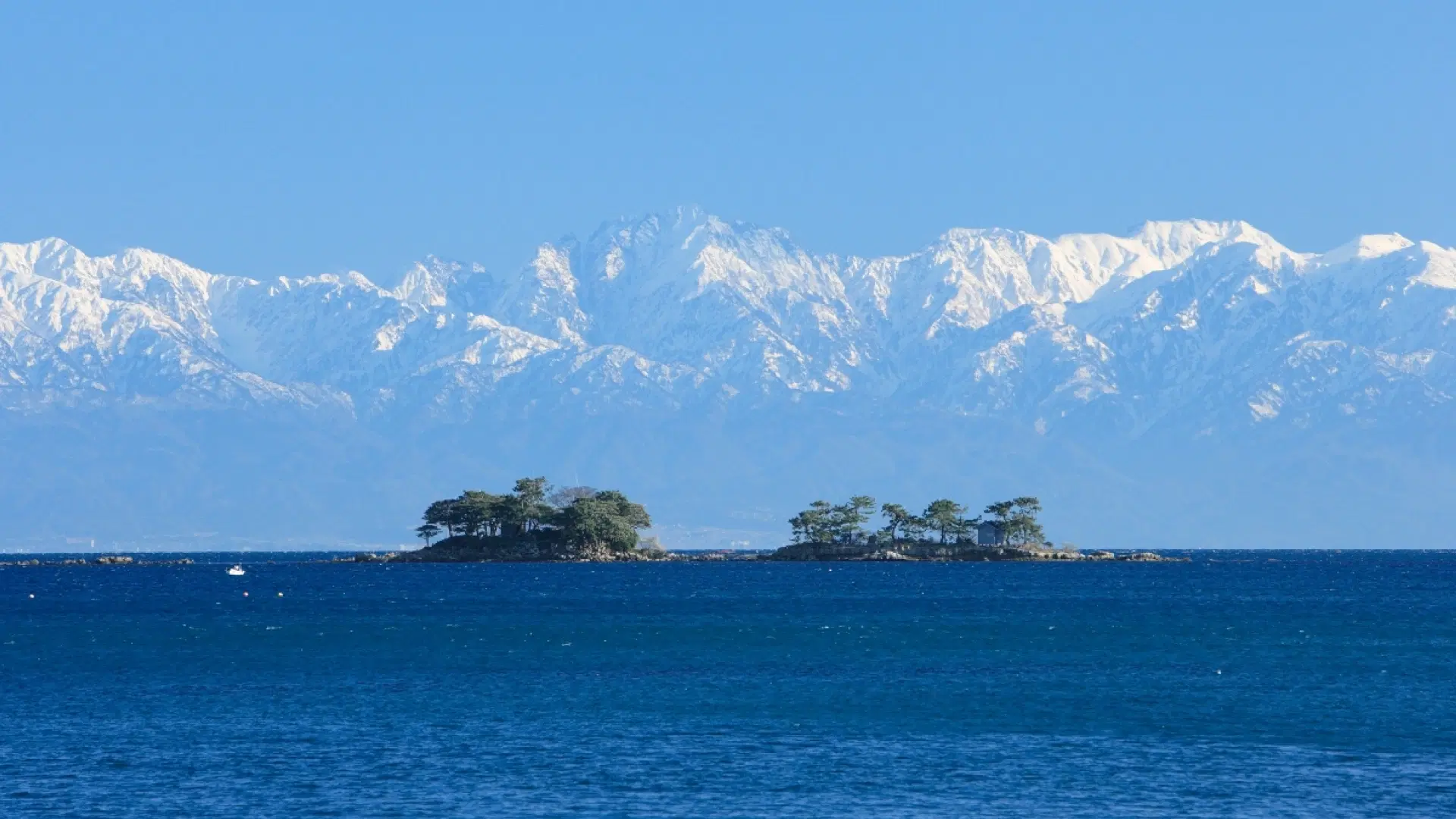
Toyama Bay's unique geography makes this spectacle possible. The bay's steep submarine canyon brings deep water close to shore, and the upwelling currents that flow along its walls carry the squid from their usual habitat at depths of several hundred meters to the spawning grounds near the surface. Nowhere else in the world does this species congregate in such density so close to land, and the Japanese government has designated the hotaru-ika population of Toyama Bay as a Special Natural Monument, a recognition that places these small, luminous creatures in the same category of national significance as the Japanese crane and the giant salamander.
The experience of witnessing the hotaru-ika illumination belongs to the category of natural encounters that rearrange one's understanding of what the living world is capable of producing. Standing on a dark beach at four in the morning, watching the waves wash ashore with a cargo of glowing blue light, the cold air carrying the salt smell of the sea and the faint, clean scent of the squid themselves, one is reminded that beauty does not require human intention, that the natural world contains spectacles that exceed anything art or technology can devise.
Each spring, the waters of Toyama Bay become the stage for one of the natural world's most improbable spectacles.
History & Significance
The hotaru-ika have been part of Toyama's coastal culture for centuries, their spring arrival marking the beginning of a fishing season that provided both sustenance and income to the bay's communities. The traditional fixed-net fishing methods used to harvest the squid were developed during the Edo period and remain largely unchanged, the nets positioned to intercept the squid as they move toward shore in the predawn hours. The catch has long been a cornerstone of Toyama's culinary identity, the squid prepared in dozens of ways: boiled whole and served with a vinegar-miso dressing, dried for preservation, pickled in soy sauce, or eaten raw as sashimi whose freshness is measured in minutes rather than hours.
The recognition of the hotaru-ika as a visual phenomenon, rather than merely a culinary resource, developed gradually during the twentieth century. The establishment of the Hotaruika Museum in Namerikawa in 1998 and the organization of predawn boat tours to observe the squid's luminescence transformed the seasonal catch into a tourist attraction, drawing visitors from across Japan who were willing to wake at three in the morning for the chance to witness the blue light of the bay. The designation as a Special Natural Monument formalized the squid's significance and provided a framework for balancing the competing demands of fishing, tourism, and conservation.
What to Expect
The primary viewing experience is the predawn boat tour, departing from Namerikawa or Takao fishing ports between three and four in the morning, when the squid's bioluminescence is most visible against the dark water. The boats motor out to the fixed-net positions where the fishermen draw in their catch, and as the nets are raised, the mass of squid within produces a display of blue light that illuminates the net, the boat, and the faces of the watchers in a glow that seems to originate from another world entirely. The intensity varies by night and by season, with the most dramatic displays typically occurring in April and early May, when the spawning activity peaks.
For those who prefer to remain on shore, the beaches between Namerikawa and Uozu offer the possibility of observing hotaru-ika that have washed ashore during their spawning runs. These strandings, called hotaru-ika no miagari, occur unpredictably and are most common on moonless nights with onshore winds and calm seas. When conditions align, the waterline glows with the blue light of thousands of stranded squid, a sight that is beautiful and faintly melancholic in its suggestion of individual sacrifice within the larger reproductive imperative.
The culinary dimension of hotaru-ika season is as rewarding as the visual. Restaurants throughout Toyama prefecture feature the squid prominently on their spring menus, and the preparations reveal the full range of what this small creature can offer the kitchen. The boiled squid, served whole with their internal organs intact and accompanied by sumiso, the vinegar-miso sauce that cuts through the richness, is the essential preparation. Sashimi of hotaru-ika, available only where the freshest catch can be guaranteed, offers a texture and sweetness that few other seafoods can match.