Gokayama
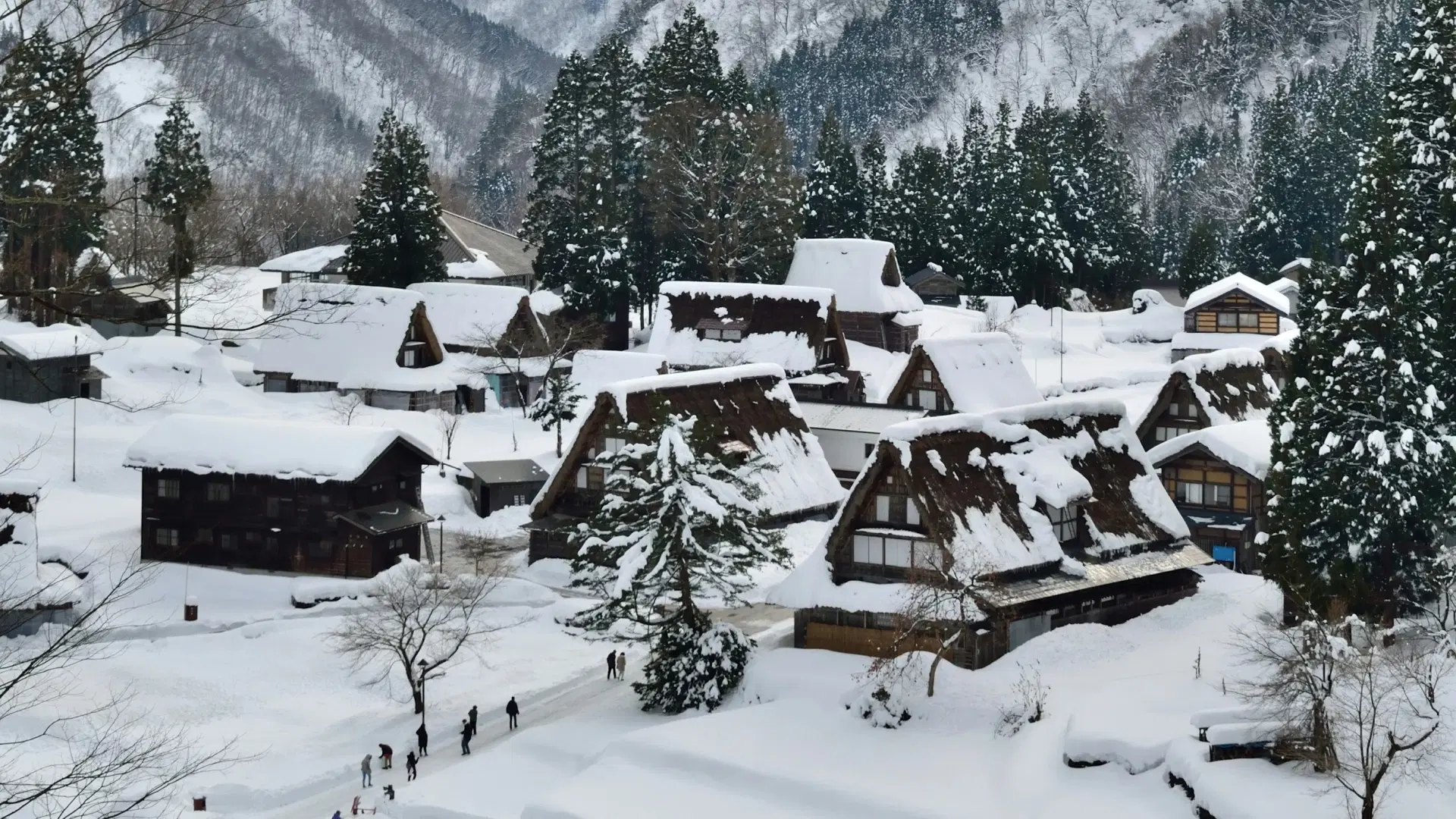
五箇山Gokayama is a landscape of survival. Tucked into the steep, narrow valleys of the Sho River in the mountainous southwest of Toyama Prefecture, this cluster of hamlets was, for centuries, among the most isolated settlements in Japan. The mountains that surround it are not gentle hills but walls of forested rock that, before modern roads and tunnels, could be crossed only on foot along paths that disappeared under meters of snow for nearly half the year. This isolation shaped everything: the architecture, the social organization, the music, the spiritual life, and the particular self-reliance of communities that could not depend on the outside world for months at a time.
The gassho-zukuri farmhouses that define Gokayama's visual identity are not quaint relics but engineering solutions to extreme conditions. Their steep thatched roofs, angled at sixty degrees to shed the region's extraordinary snowfall, create vast attic spaces that were historically used for silkworm cultivation and the production of gunpowder, activities that required warmth rising from the irori hearths below and ventilation provided by the roof's open structure. The name gassho-zukuri, meaning "constructed like hands in prayer," describes the roofline's resemblance to palms pressed together, and the spiritual resonance of the name is not accidental. These buildings embody a relationship between human habitation and natural force that is fundamentally reverential, their forms dictated not by aesthetic choice but by the mountain climate's absolute demands.
Gokayama was inscribed as a UNESCO World Heritage Site in 1995 alongside the neighboring Shirakawa-go in Gifu Prefecture, but the two sites differ significantly in scale and atmosphere. Where Shirakawa-go's Ogimachi village has become one of Japan's most visited heritage destinations, Gokayama's smaller hamlets of Ainokura and Suganuma retain a quieter, more contemplative character. Fewer visitors, fewer commercial establishments, and a landscape that feels more hemmed in by the mountains create an experience closer to what these villages have been for most of their existence: remote, self-contained, and profoundly shaped by the natural world that surrounds them.
Highlights
Ainokura, the larger of Gokayama's two primary heritage hamlets, contains twenty gassho-zukuri farmhouses set against a backdrop of terraced rice paddies and mountain forest. The village is best understood by walking its single main path from end to end, observing how each house is oriented to receive maximum light while presenting its narrow gable end to the prevailing winter winds. Several houses are open to visitors, their interiors revealing the logic of the gassho design: the ground floor centered on the irori hearth, the upper floors ascending through progressively smaller spaces dedicated to silkworm cultivation and storage. The Ainokura Folklore Museum occupies one of the finest houses and documents the daily rhythms of a community shaped by isolation, from the communal labor of roof re-thatching, which requires the cooperation of the entire village, to the musical traditions that provided entertainment during the long winter months.
Suganuma, smaller and more compact, sits on a river terrace above the Sho River and is reached by a tunnel cut through the mountainside, an approach that heightens the sense of arrival in a hidden world. The village's nine gassho-zukuri houses are clustered tightly, their massive roofs creating a skyline that seems to grow from the landscape rather than being imposed upon it. The Gokayama Washi papermaking workshop, located near Suganuma, preserves a tradition of handmade paper production that has been practiced in these valleys for over a thousand years, the clean mountain water and local kozo fibers producing paper of extraordinary durability and beauty.
The overlook above Ainokura, reached by a short but steep trail from the village, provides the definitive view of Gokayama: the thatched roofs arrayed across the valley floor, the paddies reflecting the sky, the mountains rising on all sides, and the overwhelming sense that this settlement exists by the sufferance of the landscape rather than in opposition to it.
Culinary Scene
Gokayama's cuisine is mountain food in its most essential form, shaped by the limitations and gifts of an isolated valley. Tofu is the cornerstone, and Gokayama tofu is unlike any other in Japan. Pressed until its moisture content is remarkably low, it has a density and firmness that allows it to be tied with rope and carried, a characteristic that was practical in a community where the nearest market was a day's walk away. The flavor is concentrated and nutty, best appreciated when grilled over charcoal with a brushing of miso, or served cold with grated ginger and soy sauce. The contrast between this robust, almost meaty tofu and the delicate silken varieties found elsewhere in Japan is startling and reveals how profoundly environment shapes even the most fundamental foods.
Iwana char from the Sho River and its tributaries, sansai gathered from the mountain slopes, and the buckwheat noodles produced from locally grown grain complete the core of the Gokayama table. The soba here tends toward the rustic, with a coarse texture and assertive buckwheat flavor that reflects the altitude and soil of the fields where the grain is grown. Meals at the village's minshuku, the family-run guesthouses that occupy working gassho-zukuri farmhouses, are served beside the irori hearth, the charcoal fire providing both warmth and a cooking surface, and the experience of eating food produced within sight of where it was grown, in a building constructed centuries ago from the surrounding forest, creates a continuity between landscape, architecture, and nourishment that modern dining can rarely achieve.
Ryokans in Toyama
There are no ryokans in our guide listed in Gokayama. See our selection across Toyama.
View ryokans in Toyama