Nagatoro Fire Festival
長瀞火祭りThe Nagatoro Fire Festival is one of the most visually intense religious ceremonies in the Kanto region, a Shingon Buddhist fire-walking ritual in which yamabushi mountain ascetics build an enormous bonfire, chant sutras as it burns, and then walk barefoot across the smoldering embers, followed by lay participants who cross the coals as an act of spiritual purification and renewal. The ceremony, held at the foot of Mount Hodosan in the scenic gorge town of Nagatoro, combines the esoteric power of Shingon Buddhism's fire rituals with the physical courage of the Shugendo mountain ascetic tradition, creating a spectacle that communicates spiritual intensity through the most elemental of mediums.
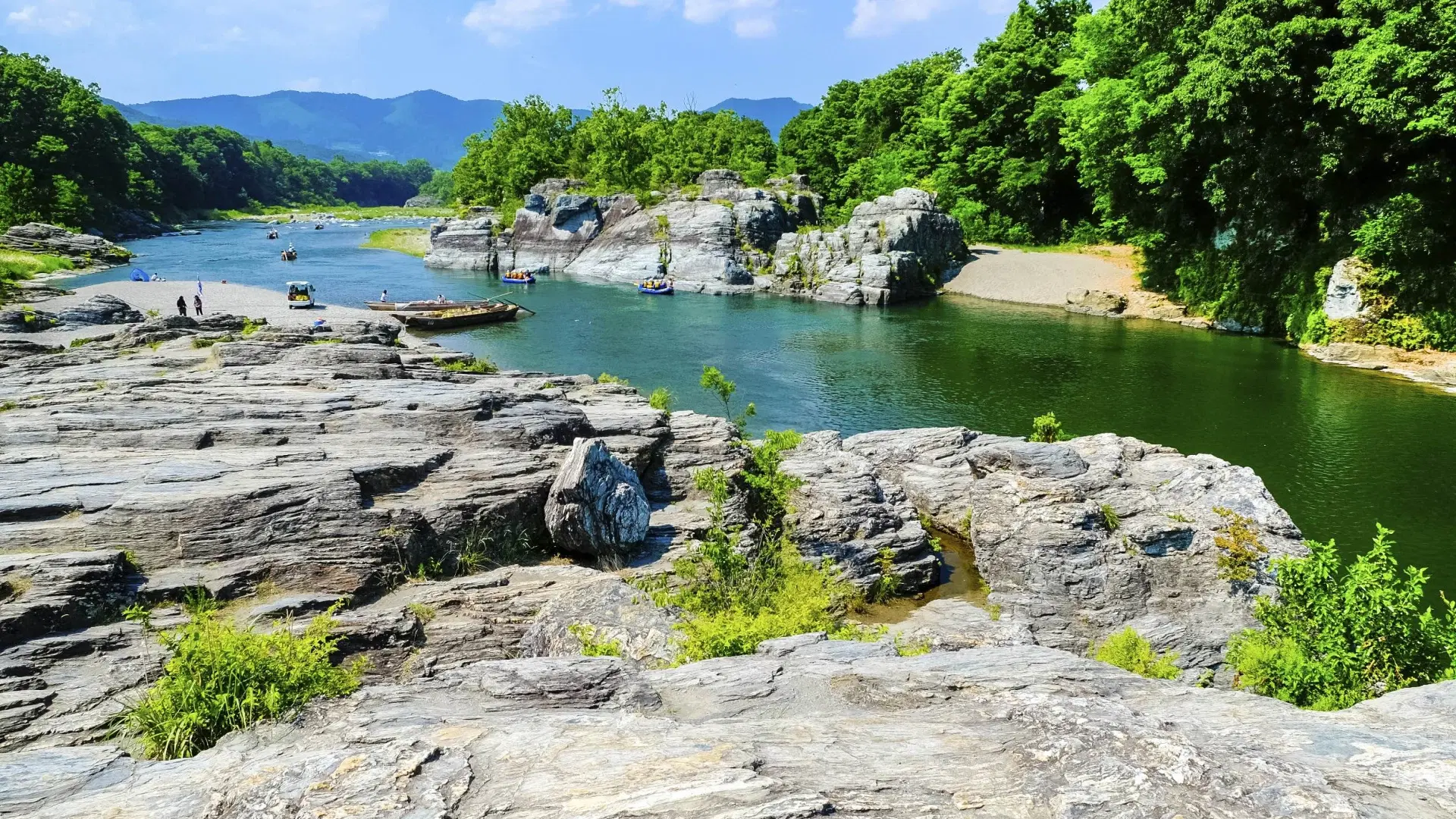
The setting amplifies the ceremony's power. Mount Hodosan rises behind the ritual ground, its forested slopes providing a wilderness backdrop that contextualizes the yamabushi's role as intermediaries between the human and natural worlds. The Arakawa River, whose crystal waters have carved the rock formations that give Nagatoro its scenic fame, flows nearby, the presence of water providing an elemental counterpoint to the fire that dominates the ceremony. The early March timing places the ritual at the boundary between winter and spring, a liminal moment in the natural calendar that mirrors the spiritual threshold the fire-walking represents.
The festival's participatory dimension distinguishes it from events that can only be observed. After the yamabushi have crossed the coals, ordinary visitors are invited to walk across the cooled but still warm embers, an experience that combines genuine physical sensation with the psychological impact of performing an act that appears, from the safety of the sidelines, impossible. The crossing is brief, lasting only seconds, but the memory of heat underfoot and the ceremonial gravity of the surrounding ritual creates a sensory and spiritual impression that visitors describe as transformative.
History & Significance
The Nagatoro Fire Festival is rooted in the Shingon Buddhist tradition of goma, the fire ritual in which prayers and offerings are consumed by sacred flames, their transformation into smoke and ash symbolizing the purification of earthly desires and the release of spiritual merit. The fire-walking element derives from the Shugendo tradition, the syncretic mountain ascetic practice that combines Buddhist, Shinto, and folk religious elements in a discipline centered on physical endurance in natural environments. The yamabushi of Mount Hodosan maintained these practices through the centuries of political upheaval and religious transformation that reshaped Japanese Buddhism, their continuation at Nagatoro representing an unbroken thread of esoteric practice.
The modern festival was formalized in the postwar period as a public ceremony that opened the traditionally private rituals of the yamabushi to broader participation and observation. This opening reflected a broader trend in Japanese religious culture, in which esoteric practices that had been restricted to initiated practitioners were shared with the public as a form of spiritual service and cultural preservation. The festival's growth into a regional event has not diluted its religious sincerity; the yamabushi who conduct the ceremony are genuine practitioners whose preparation includes extended periods of ascetic training in the mountains, and the rituals they perform are the same as those conducted in private ceremonies throughout the year.
What to Expect
The ceremony begins in late morning with a procession of yamabushi from Hodosan Shrine to the ritual ground, the ascetics wearing their distinctive checked robes and small black caps, carrying conch shells whose deep, resonant blasts announce the ceremony's commencement. The ritual ground is prepared with a large pyre of cedar branches and ritual objects arranged according to esoteric Buddhist principles, each element placed with deliberate care that communicates the ceremony's precision beneath its apparent wildness.
The lighting of the fire is preceded by extended chanting and the performance of mudra, the ritual hand gestures of esoteric Buddhism whose forms channel spiritual energy. When the flames are ignited, they consume the pyre rapidly, the cedar burning with a heat that pushes spectators back from the edges of the ritual space. The smoke rises in thick columns, carrying the chanted prayers and the offerings' spiritual essence skyward. As the flames subside and the embers glow, the yamabushi rake the coals into a path, their actions accompanied by continued chanting that transforms the glowing bed from a physical hazard into a spiritual threshold.
The yamabushi cross first, walking slowly and deliberately across the coals with an composure that communicates the depth of their training and faith. Spectators who wish to participate are then invited to remove their shoes and cross the ember bed, guided by attendants who ensure safe passage. The sensation is of intense warmth rather than burning pain, the crossing quick enough that the brief contact with the coals produces heat without injury. The experience, lasting perhaps five seconds of actual walking, carries an emotional impact disproportionate to its duration, the act of stepping onto what the mind registers as danger producing a surge of awareness that participants describe as clarifying and exhilarating.