Nagatoro
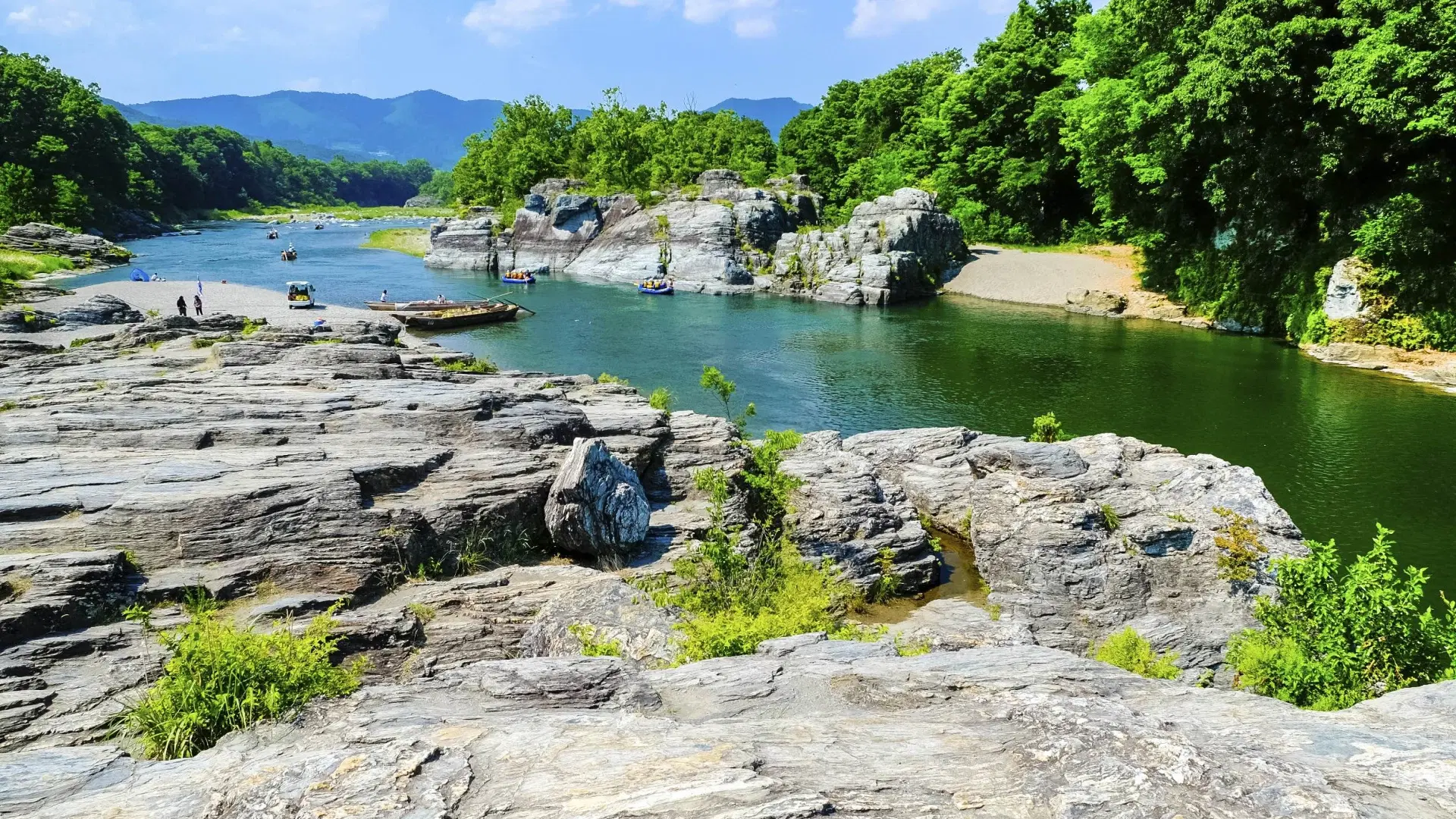
長瀞Nagatoro is a small town on the upper Arakawa River where the water has spent millennia carving through layers of crystalline schist, creating a gorge of geological distinction that earned designation as a national scenic spot and a natural monument. The exposed rock strata, twisted and folded by tectonic forces, form the walls of a narrow passage that geologists regard as an open textbook of the earth's deep history. Visitors experience this history not through museum displays but from the deck of a traditional wooden boat, guided by oarsmen who navigate the rapids with a practiced calm that makes the thrilling seem routine.
The gorge and the town that serves it are modest in scale, which is part of their appeal. Nagatoro has not been developed into a resort; it remains a river community where the rhythms of the water govern daily life. In summer, families picnic on the flat rocks along the riverbank, children wade in the shallows, and the grilled sweetfish stands send smoke curling through the trees. In autumn, the surrounding hills ignite with maple and zelkova, and the boats drift through a corridor of reflected color.
Hodosan Shrine, set on a hillside above the town, adds a spiritual dimension to the natural landscape. The shrine's annual fire-walking ceremony in March, when yamabushi mountain ascetics stride across beds of smoldering embers, marks the transition from winter austerity to spring renewal with a visceral drama that no amount of description can fully prepare you for.
Nagatoro is a small town on the upper Arakawa River where the water has spent millennia carving through layers of crystalline schist, creating a gorge of geological distinction that earned designation as a national scenic spot and a natural monument.
Highlights
The river boat ride through Nagatoro Gorge is the essential experience. The boats, poled and paddled by skilled oarsmen, navigate approximately three kilometers of river that alternates between calm stretches and moderate rapids. The rock formations on either side display the geologic record with unusual clarity: layers of green schist, quartz veins, and pothole formations carved by centuries of water and stone. The ride takes about twenty minutes and is available from March through November.
For a different perspective, the Nagatoro Iwadatami, the "tatami rocks" at the gorge's widest point, provide a natural platform from which to observe the river and the folded strata at close range. These flat, layered rocks are popular for picnicking and photography, particularly in autumn when the surrounding foliage is at its most vivid.
Hodosan Shrine, reached by a ropeway or a forest trail from the town, offers panoramic views of the Chichibu mountains and the river valley below. The shrine's grounds include a garden and a small museum of regional history. The ropeway summit provides one of the finest autumn viewpoints in Saitama.
Culinary Scene
Sweetfish is Nagatoro's defining taste. The ayu, caught in the clear waters of the upper Arakawa, are grilled whole on bamboo skewers over charcoal, their distinctive bitter-sweet flavor a product of the algae-rich river diet. Riverside restaurants serve the fish from late spring through autumn, and the simplicity of the preparation, salt, fire, patience, allows the quality of the ingredient to speak without interruption.
Soba from local buckwheat, served cold with a clean dipping sauce, is the other pillar of Nagatoro's food culture. The mountain water used in the noodle-making process contributes a softness of texture that distinguishes it from lowland varieties. Kakigori shaved ice, made with natural ice harvested from the Chichibu mountains in winter, is a summer specialty of remarkable purity and texture.

Ryokans in Saitama
There are no ryokans in our guide listed in Nagatoro. See our selection across Saitama.
View ryokans in Saitama